

According to Kordpress, Türkiye was in a relatively isolated position in the Middle East and Europe in 2020; But over the past six years, the country has once again become one of the leading players in the region.
Türkiye's foreign policy today has almost nothing in common with five years ago. Having spent much of the past decade in increasing regional isolation, Ankara is now undergoing a diplomatic transformation that relies more than ever on realism, pragmatism and engagement.
This change can be seen most of all in Türkiye's policy towards Libya. Ankara, which previously supported the "Government of National Accord" based in Tripoli, has now apparently moved to simultaneously support the rival government of General Khalifa Haftar in Tobruk. Just a few years after Turkish-made drones helped the GNA break the siege of Tripoli, those same drones are now being sold directly to Haftar's forces.
Reaching out for reconciliation and presenting diplomatic initiatives were not the main features of Turkish foreign policy in the past. Ankara's foreign policy ambitions in the 2010s were controversial for many countries in the region, leading to ongoing diplomatic rifts with its neighbors. The President of Türkiye, Jeb Tayyip Erdogan, was interested in reviving a kind of "Ottoman-Islamic civilization" and in line with this goal, Islamist currents throughout the region; Among others, he supported Muhammad Morsi and the Muslim Brotherhood in Egypt and the Ennahda movement in Tunisia. Countries such as Egypt, Saudi Arabia, and the United Arab Emirates considered Erdogan's behavior a threat against them; A behavior that, from their point of view, was both populist and conflicted with their desired interpretation of Sunni Islam. In Syria, Erdoğan's desire to arm jihadist groups intensified these tensions.
In other fields as well, Türkiye was rarely willing to back down to maintain its diplomatic relations. Ankara's tensions in the Eastern Mediterranean during 2019 and 2020 brought this country to the brink of confrontation with Greece, Cyprus and France. Türkiye's support for the Government of National Accord in Libya also put Ankara in indirect but open conflict with Egypt and other regional supporters of Haftar. At the same time, Turkey's ongoing and often violent operations against Kurdish groups in Syria, such as the People's Protection Units (YPG) and the Syrian Democratic Forces (SDF), which Ankara considers to be sponsors of terrorism, have increased tensions between Turkey and its NATO allies.
Now, however, many of those developments are similar to the distant past. On the one hand, Ankara has entered into the most promising and comprehensive peace negotiations with the Kurdistan Workers' Party (PKK); Negotiations aimed at reducing domestic political restrictions and expanding Erdogan's political coalition in the post-2028 era. Although this process is presented as an attempt to end the long conflict with the PKK, Erdogan's real goals seem to go beyond mere reconciliation and have more to do with his personal political interests than anything else.
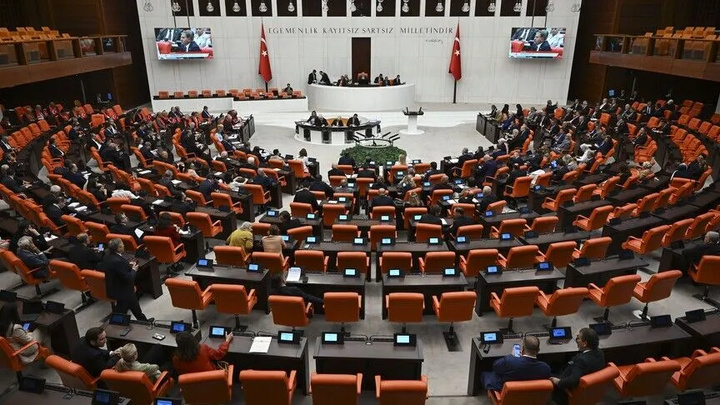
In order to run for re-election, Erdogan must bypass the constitutional limit of two presidential terms; A move that will probably require the parliamentary support of the People's Equality and Democracy Party with 64 seats. On the other hand, Erdogan has promised to implement internal reforms to bring Türkiye's Kurds back into the political arena. Among other things, these reforms can include the release of Abdullah Ocalan, the leader of the PKK. He is now serving his life sentence.
But beyond Türkiye's borders, Ankara has started a wide-ranging campaign to de-escalate tensions. Erdogan in a diplomatic turn, Ankara's relations with Cairo; He also restored relations after 12 years and has visited Egypt four times in the last two years. Türkiye also resumed relations with Riyadh and Abu Dhabi in 2022, ending the period of tension caused by the murder of Jamal Khashoggi in 2018. In addition to the symbolism of these high-level meetings, the negotiations between the parties have also included important economic and security agreements; Agreements that were difficult to imagine until a few years ago.
In Libya, Erdogan's approach to the country's civil war - which has continued to divide and isolate Libya - has gained new dimensions, although Turkey's goals and interests have not changed much. Türkiye's presence in Libya is rooted in historical ties. The state of Tripoli was one of the main centers of Ottoman naval power for nearly four hundred years; A region that both produced wealth for Constantinople and expanded Ottoman power in the Mediterranean. This symbolic legacy has made Libya an important stage for Erdogan's so-called "neo-Ottoman" vision, which aims to restore Turkey's cultural, political and military influence in former Ottoman territories. By intervening to save the government of national unity and defeat the forces supported by Egypt and the UAE led by Khalifa Haftar, Erdogan was able to turn Turkey into one of the key players in North Africa, which both advanced his neo-Ottoman project and weakened his regional rivals.
Libya's geopolitics also provides another reason for Ankara's attention to this former Ottoman colony. Since 2003, the Eastern Mediterranean has become the scene of fierce competition between countries trying to control newly discovered oil and gas reserves. Türkiye, which has limited natural resources, needs these resources as much as others; But due to the long-term dispute with Cyprus, it has so far been sidelined from any serious regional cooperation in the field of hydrocarbons.
On the other hand, Egypt, Israel, Cyprus and Lebanon have divided the maritime borders among themselves through bilateral cooperation and have started exploration operations. The discovery of gas reserves off the coast of Cyprus in the 2010s increased tensions, and in 2018, Türkiye blocked the drilling activities of the Italian energy company ENI with military action.
Shortly after, in 2019, Ankara signed a maritime agreement with the Government of National Accord, defining a joint exclusive economic zone that broke Türkiye's isolation. This agreement created a maritime corridor between Turkish and Libyan waters; An action that clearly contradicted international maritime law and similar agreements between Cyprus, Israel and Greece. However, the effectiveness of this agreement remained limited; Because as long as Libya was divided between East and West, Khalifa Haftar's support for this maritime corridor seemed unlikely.
This situation from 2023; That changed when Erdogan welcomed Aqila Saleh, the speaker of the parliament based in eastern Libya. This action was a sign of reducing tension with Haftar. The process of rapprochement between the two sides included bilateral meetings between senior Turkish military officials and Saddam Haftar, the reopening of the Turkish consulate in Benghazi, holding joint naval exercises, and finally the meeting of Ibrahim Kalin, the head of the Turkish Intelligence Organization, with Khalifa Haftar to discuss the approval of the 2019 naval agreement.
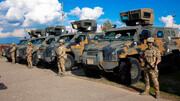
Ankara's military approach also shows that Türkiye is ready to move beyond the diplomatic use of gas fields. From providing Bayraktar drones to holding joint military exercises with a leader Erdogan once called a "coup d'état," Turkey's strategic goals in Libya have shifted from simply breaking out of isolation to a broader show of power. In a few short years, Turkey has been able to expand its presence in Libya to the point where it has now become one of the main players in the possible unification process of this country and has further established its influence in Africa.
Türkiye's turn towards pragmatism shows that Ankara has been able to move beyond purely ideological alliances and cooperate even with former rivals to secure its interests; A capability that many regional powers such as Egypt, Qatar and the UAE have not yet fully achieved. After a decade of supporting Islamist currents in the region, Türkiye's alliances today are no longer based solely on ideological alignment. Former rivals, even those with deep historical differences with Ankara - such as Khalifa Haftar, Egypt and Saudi Arabia - are now once again in Türkiye's calculations.
But Libya, more than anywhere else, shows how Turkey is trying to reconcile pragmatism with ideology, to creatively overcome diplomatic obstacles and realize its foreign policy goals. The Ottoman Empire's successor state is now once again on a path to become a major regional power with real—not marginal—leverages.
National Interest



Your Comment