

According to Kurdpress, this process has been started practically under the supervision of the federal governments of Baghdad and Damascus and with the coordination of the Turkish side.
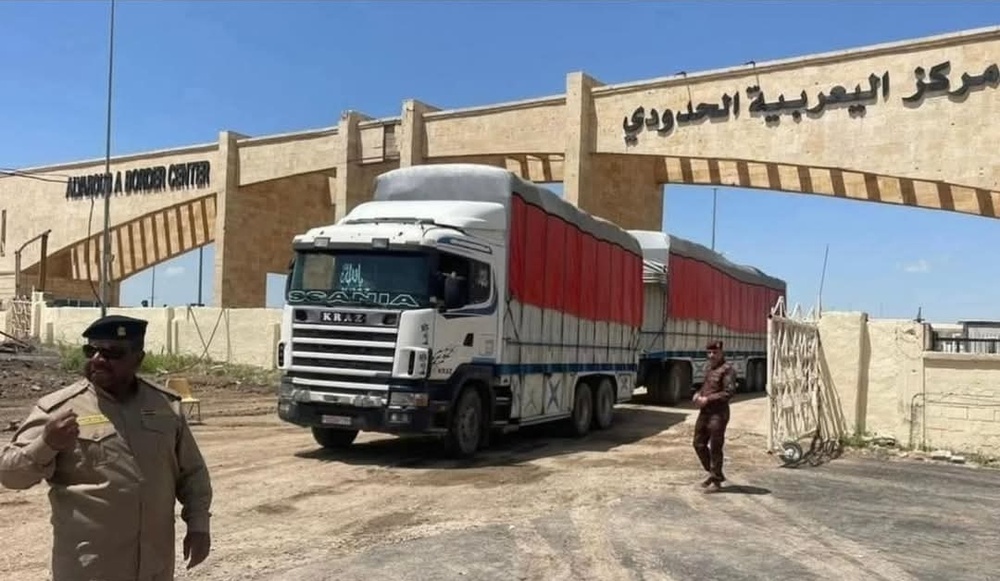
Panjere wrote: The first convoy, which was carrying food, marked the starting point of its movement from Türkiye and through the border of "Aqche Qala".
This convoy then entered the territory of Syria through the "Gari Sepi" crossing (Tal Abiz). From there, the trucks continued their route on the international highway (M4) and passed through several important towns, including (Ain Issa, Tel Tamer, Qamishli, Qahtanieh and Javadiyeh). Finally, they reached the town (Tal Kocher) and entered Iraq through the border terminal "Rabia".
Time and cost: faster and cheaper
Although this route is about 130 to 150 km longer than the Ebrahim Khalil route (the total length of this route is about 640 km), it is much faster in terms of time.
The arrival of these trucks took only 48 to 72 hours. This high speed is due to the use of the TIR (Transit International) system. In this system, trucks are sealed in the country of origin (Türkiye) and at other border points only their seals and documents are inspected; In addition to saving time, this also reduces costs by 30%.
Profits for countries and losses for the climate
This path will bring different benefits for all three countries; Turkey sells more goods, Syria becomes an active trade route, and Iraq, in addition to increasing its income, is freed from dependence on the single crossing (Ibrahim Khalil) that it has with Turkey and that is not under its control.
But on the other hand, this route is considered a serious threat to the economic situation of the Kurdistan Region; Because the region was the only land route between Ankara and Baghdad for several decades, and now this "geographical monopoly" has been broken.
This fact causes the Kurdistan region to lose a lot of customs revenues. Especially, the merchants are turning to the Syrian route, because there is no more "double taxation" (regional government + federal government), but they only pay taxes to Baghdad once. In addition to reducing administrative bureaucracy, this issue also increases the speed of doing things.
This issue will affect the position of the Kurdistan region in the political dimension, especially that the border crossing was considered one of the region's powerful playing cards in political conflicts.
Does this path replace Ibrahim Khalil?
This path has the capacity to develop and expand more, especially if the security situation in Syria becomes more stable. The use of the electronic system "ASYCUDA" at the Rabia terminal makes the customs formalities much faster than Ibrahim Khalil; where trucks often wait in line for days due to congestion and outdated administrative procedures.
If the Kurdistan Regional Government does not review the amount of taxes, duties and the speed of carrying out customs measures, the route (Turkey-Syria-Rabia) will become not only an alternative, but the "main highway". In that case, the Kurdistan region will only become a passage to meet the needs of its three provinces and will lose its role as an "international transit" for central and southern Iraq.




Your Comment