

According to the Kurdpress news agency, the recent parliamentary elections in the Kurdish regions of northeastern Syria have once again revealed the country's political, ethnic and demographic divisions and raised important questions about the future position of the Kurds in the political structure of Syria after the war.
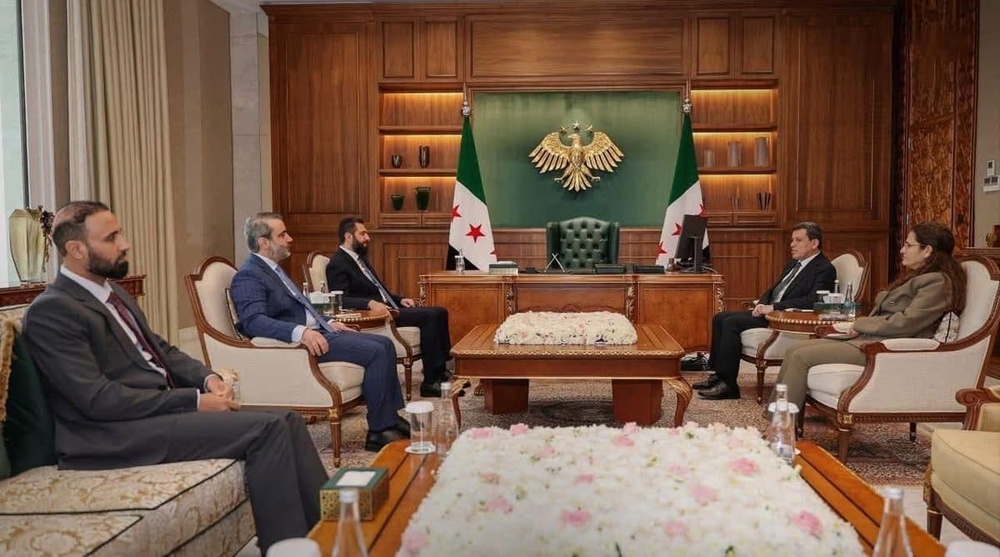
The Supreme Election Commission of the Syrian Parliament, after months of delay, held parliamentary elections on May 24 in Hasakah province and Kobani region in the outskirts of Aleppo, which were still under the control of the Syrian Democratic Forces (SDF) during the October 2025 general elections and where voting had not been done.
These elections were held in a situation where the political future of Syrian Kurds is still facing serious uncertainties. Although the process of negotiations between the government of Damascus and the Kurdish autonomous administration in northeastern Syria continues, fundamental differences remain unresolved. Among them, the question of the linguistic and cultural rights of the Kurds, the amount of real authority in the decentralization system, the fate of the armed forces affiliated to the SDF, and the share of the Kurds in the official institutions of the central government.
Limited and controlled election
The participation statistics and the voting mechanism showed the limited and non-competitive nature of the elections above all. In Haskeh district, 13 candidates competed for three seats, but only 150 people were members of the selection committee. In Qamishli, seven candidates competed for four seats with the votes of 198 people, and in Kobani, 12 candidates for two seats were elected by only 100 people. In this way, elections were not seen as a public and popular process, but rather as a selective mechanism controlled by the government.
ethnic balance; Arabs more than Kurds
The election results also highlighted the ethnic and demographic sensitivities of the region. In Hasakah, two Arab candidates and one Kurdish candidate affiliated with the "National Council of Syrian Kurds" (KNC/ENKS) won seats. In Qamishlo, two Arabs, an independent Kurdish figure and a candidate close to KNC won. A similar pattern was seen in other regions.
In total, only four Kurdish representatives entered the parliament from Haskeh province, while the number of Arab representatives reached five. Accordingly, in the three northern provinces of Hasakah, Raqqa and Aleppo, only about 8 to 9 Kurdish representatives will be present among the 140 elected representatives. This ratio implicitly indicates the Syrian government's estimate of the Kurdish population at about 6% of the country's total population; A figure that is heavily disputed. Many independent estimates put the Syrian Kurdish population at between 10 and 12 percent of the country's population of about 26 million.
The absence of an official census since 2004, the widespread wave of displacement caused by the civil war, as well as the decades of exclusion of some of the stateless Kurds from official registration, have made the exact population statistics in Syria still a matter of dispute.
An informed Kurdish source told (Eye on Kurdistan) that Syrian President Ahmed al-Shara may use his authority to appoint one-third of the members of parliament and increase the share of Kurds to around 10-15%; However, no official position has been announced yet. Another notable point of the election was the lack of representation for religious minorities in northeastern Syria, especially Christians and Yazidis. This issue is particularly sensitive considering the historical ethnic and religious diversity of the region.
The situation of Yazidis is more complicated due to the fact that the Syrian government still registers them as "Muslims" in official identity documents.
A deep rift between the SDF and the Kurdish Patriotic Council
The election also revealed the political divide between the main Syrian Kurdish streams. Currents close to the SDF and the Democratic Union Party (PYD) boycotted the elections, and as a result, most of the Kurdish seats went to candidates affiliated with or close to the Syrian Kurdish National Council.
At least three elected Kurdish representatives were directly members of the KNC, and another representative was described as close to this movement.
The PYD officials considered boycotting the elections to be a protest against the "lack of justice in representation" and turning the parliament into an institution without real function. Aldar Khalil, one of the leaders of the PYD, stated that this sanction does not mean opposing the principle of political participation or elections, but rather a protest against a structure that lacks justice and transparency.
On the other hand, figures close to the KNC welcomed the election process. Abdul Hakim Bashar, the former head of this council, described the elections as a sign of the entry of the Syrian Kurdish movement into a new and important stage on the way to participate in the future political order of Syria.
"Elections" or appointment mechanism?
An important part of the criticism is directed at the general nature of the voting process. Critics believe that what was held in Syria was a kind of selection process under the control of the government rather than a free and competitive election.
In this model, not only candidates, but even the body of voters were determined in a limited and selective manner; An issue that, from the point of view of many, distances elections from the modern concept of public participation and people's sovereignty.
Some observers have compared this model to the traditional "council" structures in the political history of Islam; A mechanism in which a limited group of elites, tribal elders and influential figures make decisions on behalf of society.
Although the new Syrian parliament is supposed to play the role of the Constituent Assembly and participate in drafting the constitution and overseeing the government, the widespread concentration of power in the hands of Ahmed al-Shora and the current political structure of Syria have created many doubts about the degree of independence and real effectiveness of this institution.
Source: eye on Kurdistan


Your Comment