

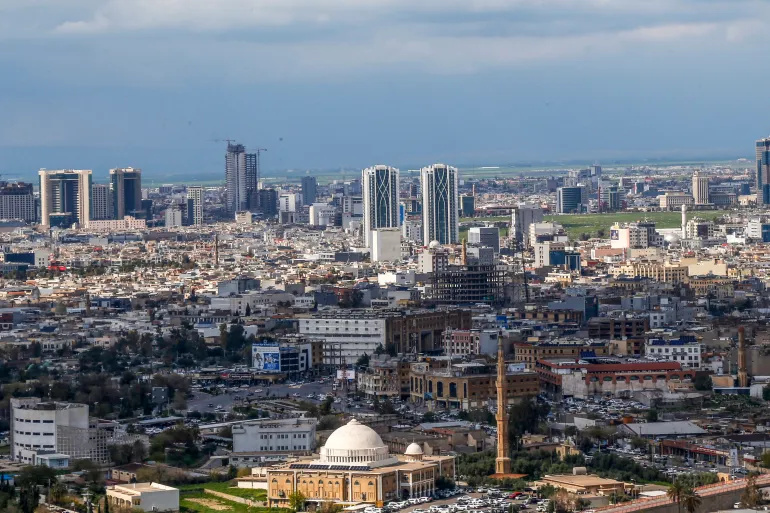
According to Kurdpress, despite the increase in security threats in recent years and the Kurdistan Regional Government's repeated emphasis on the necessity of protecting critical infrastructure, Erbil is still denied access to independent air defense systems. While the recent developments related to the joint attack of the United States and Israel against Iran, once again revealed this security gap, the main problem of the climate in not having these weapons is the complex political and legal obstacles that have blocked the way to access defense systems.
The new report of the Inspector General of the US Department of Defense on Operation "Resolute Determination" has once again highlighted the structural weakness of the Kurdistan Region in the field of air defense. The report emphasizes that the Peshmerga forces do not have sufficient ability to provide aerial coverage of different regions of the country, and critical infrastructure, energy facilities and sensitive centers remain vulnerable to missile and drone attacks.
But the main problem is not simply the lack of equipment. The Kurdistan Region is facing many legal and political restrictions that prevent it from acquiring defense systems.
The first obstacle is the legal position of the region in the structure of Iraq. As Paul Idon's report in the American Forbes magazine points out: "Since the Kurdistan Region is not an independent country, it cannot purchase or receive any advanced military equipment, even purely defensive systems, without the permission of Baghdad."
This restriction has made Erbil, unlike many regional actors, unable to directly enter into negotiations or arms contracts to meet its defense needs, and any decision in this regard depends on the approval of the Iraqi central government.
Meanwhile, although the US Defense Budget Act of 2024 provided for the training and equipping of Iraqi and Peshmerga forces to deal with missile and drone threats, no known air defense system has yet been delivered to the Peshmerga forces.
Many observers consider the reason for this situation to be the opposition and obstruction of political currents in Baghdad; Currents that do not welcome the strengthening of the military power of the region and in the past years have repeatedly prevented the progress of the security plans needed in Erbil.
Another factor is the uncertainty about the future of the US military presence in the region. The defense systems base Meanwhile, there is not much hope for Baghdad's support. Idon states in his report: "The climate of Kurdistan certainly cannot count on the central government to provide air defense systems after the withdrawal of the coalition."
This assessment comes in the context that Baghdad has followed an independent path to strengthen its air defense in recent years and has signed contracts with South Korea and Turkey for the purchase of defense systems. However, there is no sign of the central government's plan to deploy these systems in the region or hand over part of them to the Peshmerga forces.
This situation becomes more important especially regarding the protection of climate energy infrastructure. The Kormor gas field and the power grid of the region are of strategic importance not only for the residents of the region, but also for part of Iraq's energy needs. Despite this, the proposed plans to establish a joint defense system between Baghdad and Erbil have not yet been implemented.
As a result, the Kurdistan Region is facing a security paradox today; On the one hand, due to its legal status, it is not possible to provide defense systems independently, and on the other hand, there is no guarantee that the Iraqi central government or its international partners will compensate for this gap in the future. For this reason, the issue of air defense remains one of the most important security and strategic challenges of the Kurdistan region. d in Erbil have played an important role in protecting the coalition facilities and to some extent the sky of the city during the past years, but the withdrawal plan of the coalition forces by September 2026 has raised the question of what institution will be responsible for protecting the skies of the region after the possible withdrawal of the United States.






Your Comment