

According to Kurdpress, a report recently published by the Kurdish Peace Institute examines the consequences of the integration of northern and eastern Syria in the structure of the country's transitional government and its impact on the local governance system, minority rights, and women's participation. The authors of this report warn that the achievements of the past decade in the field of political participation of different ethnicities and religions, gender equality and protection of cultural diversity may face serious challenges in the current process of integration.
This report was written by "Megan Bodet", the research director of the Kurdish Peace Institute, "Nadine Mainza", a member of the advisory board of this institute and a well-known activist in the field of religious freedom, and "Ghasan Bazo", a journalist and researcher based in the north and east of Syria. Relying on field interviews with local officials, civil activists and representatives of various ethnic and religious communities, the authors have evaluated the current situation of the former self-governing regions of northern and eastern Syria and have warned against the reduction of the role of women, Christians, Yazidis and other minorities in the new governance structure.
Simultaneously with the progress of the process of integration of the northeastern regions of Syria in the transitional government structure of this country, it has become more important to pay attention to the experience of local governance, which during the past decade was able to maintain the coexistence between different ethnic groups and religions in the conditions of war, displacement, economic crisis and security threats.
While most of the attention of the international community in recent years has been focused on the military developments and the fight against ISIS, less attention has been paid to the local governance mechanisms in the areas under the administration of the "Democratic Autonomous Administration of North and East Syria"; The structures that, according to its supporters, had provided the basis for the wide participation of women, ethnic and religious minorities and the protection of religious freedoms.
The authors of this report believe that the implementation of the integration agreement and the fate of the existing local institutions will not only affect the future stability of northeastern Syria, but will also be an important measure to measure Syria's ability to move towards a sustainable, inclusive and stable peace.
Governance structure based on the participation of ethnic groups and religions
This report mainly focuses on the island region; A region that includes a large part of Haskeh province and is considered one of the most diverse regions in Syria in terms of ethnicity and religion. This area remains under the control of the Syrian Democratic Forces (SDF) after the January 29 merger agreement, and for this reason, many of its administrative institutions are still operating.
In the framework of the self-governing administration, the council system was designed to distribute power among different ethnic, religious and political groups. The People's Council of the island region included 57 Kurds, 24 Arabs, 17 Assyrian-Syrians, one Armenian, one Chechen and one Yazidi.
One of the prominent features of this structure was the "joint presidency" system, based on which all management positions were held by one woman and one man. In addition to guaranteeing the participation of women, this mechanism also helped to increase the presence of different ethnicities and religions in management levels; Because the joint presidents were often chosen from different communities.
In the island region, the executive council was run by a Kurdish co-chairman and a Syrian co-chairman, and two Arab and Kurdish deputies were also present. This council consisted of heads of 13 executive institutions and a total of 122 co-chairs, including 61 women and 61 men, worked in it.
In addition, the self-governing administration had set a quota of at least 40% for the presence of women in various institutions.
Laws to protect women and minorities
According to local officials in Jazeera and Kobani regions, the "social contract" of the autonomous administration was the main basis for protecting the rights of women, ethnic and religious minorities, and religious freedoms.
One of the Kurdish administrators in Kobani says that the laws implemented in Kobani and Jazeera were set based on the principles of the social contract in North and East Syria; A framework that was based on international standards of women's rights, coexistence between ethnic groups and religions, and legal equality of all citizens.
The important point was that ethnic and religious minorities, as well as women, played a direct role in drafting these laws. One of the Yazidi women, who was the co-chair of one of the institutions of the self-governing administration, says that women were directly involved in drafting family laws, special laws for women, and even the regulation of the social contract, and did not have a merely symbolic role.
According to an Assyrian-Syriac Christian woman who previously worked in the structure of the self-governing administration, the existing governance model was chosen after discussion and voting among the representatives of different communities, because many believed that this method would allow for a more balanced representation of minorities.
Concerns about the integration process
In spite of the participation of some local figures in the new structure, the report reports the reduction of the role of women and religious minorities in the integration process. According to this report, none of the candidates nominated by the Kobani administration have been accepted for the positions of regional director or head of regional security.
Also, the two most important positions that have been assigned to figures close to the Syrian Democratic Forces and the Autonomous Administration - the governorship of Haskeh and the deputy minister of defense - have been assigned to two Sunni Kurdish men. This is despite the fact that the negotiators of the self-governing administration initially proposed female candidates for these positions.
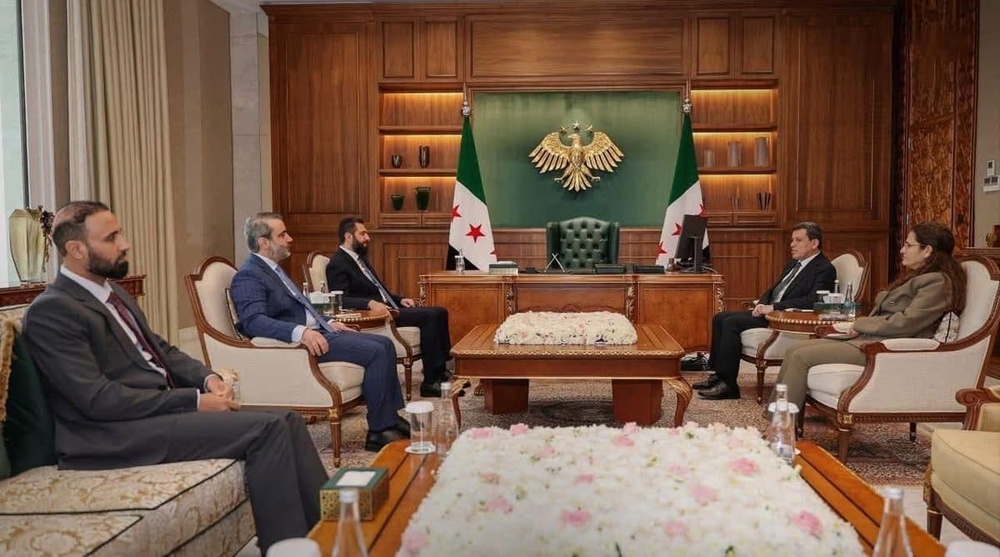
Currently, the only woman to hold an official position in the integration process is Almaz Rumi, who was appointed as the mayor of Kobani.
The report also emphasizes that so far no Yazidis or Christians have been appointed to managerial positions within the framework of the integration process, and many appointments have been made without consulting local institutions. Additionally, a number of appointees are not from the communities they now govern.
On the other hand, the Syrian transitional government does not recognize the joint presidency system; An issue that critics believe has eliminated one of the most important means of guaranteeing the participation of women and minorities.
Some officials of the autonomous administration say that they are considering informal solutions similar to the pro-Kurdish parties in Türkiye; This means that a man is formally introduced as the head and a woman as the deputy, but in practice both assume equal responsibilities.
Gradual elimination of local languages
Another concern raised in this report is the decrease in the position of Kurdish and Syriac languages in the public arena.
While in the structure of the autonomous administration, Arabic, Kurdish and Syriac languages were all considered official languages, the transitional government of Syria has recognized only Arabic as the official language.
The Christian community has announced that in Haskeh, the Syriac language has been removed from some public signs and this language has no official place in the new structure.
Although the Kurdish language is recognized as the "national language" according to Syrian Presidential Decree No. 13, critics say that this title lacks a clear legal definition and does not guarantee its use in education, government offices, or public life.
Also, this decree has limited the teaching of the Kurdish language to two optional classes per week; While many Kurds want the continuation of the bilingual or multilingual education system.
In recent weeks, protests have been held in Haskeh and Qamishlo in response to the replacement of bilingual Kurdish-Arabic signs with only Arabic signs.
Yazidis worry about the return of discrimination
The Yezidi community of northeastern Syria has also expressed concern about its future. Before the formation of the self-governing administration, Yazidis in Syria faced extensive restrictions. They could not register their religion in official documents, they were deprived of freely holding some religious ceremonies, and in legal matters such as marriage, divorce, and inheritance, they were considered subject to Islamic Sharia courts.
Now, many Yazidis are worried that by integrating into the new structure, the legal protections and identity they have gained over the past years will be lost; Especially since the transitional government of Syria has not yet recognized Yazidi as an independent religion.
Christians and the concern of immigration
Assyrian-Syrian Christians, who have participated in civil and security institutions since the beginning of the self-governing administration, express concern about the future of their presence in Syria.
Over the past years, this community has formed its own special security forces and has played a role in protecting churches, villages and Christian neighborhoods, as well as fighting ISIS.
Many Christian leaders believe that direct participation in local security and administrative structures has been an important factor in maintaining a sense of security among Christians in northeastern Syria.
However, they warn that if the role of Christians in governance and security structures is reduced, the migration process of this community will intensify.
Recommendations to the transitional government of Syria
The authors of the report have asked the United States and the international community to encourage the Syrian transitional government to comply with several key principles; including:
maintaining ethnic, religious and gender diversity in local and regional governance institutions;
ending unilateral appointments and making appointments in consultation with local bodies;
Delegating responsibilities to people who are from local communities and will be accountable to them;
Protection of Kurdish and Syriac languages in education, government offices and public arena;
meaningful participation of Kurds, Christians, Yazidis and other ethnic and religious groups in Syrian national institutions;
Guaranteeing the presence of the real representatives of the communities of northeastern Syria in the process of drafting the country's future constitution.
This report concludes that the way to manage the process of integration of northeastern Syria into the structure of the new government will be an important test for the future of Syria and will show whether this country can create a model based on the participation of all ethnic, religious and gender groups or will once again move towards the concentration of power and the exclusion of the marginalized.




Your Comment