

According to Kurdpress, while the Kurdistan Democratic Party of Iraq tried to regain its administrative and political influence in Shengal after many years in May 2026, the newly established coalition "Yazidi Aspirations Coalition" stopped this effort by massively mobilizing the Yazidi community. An event that many consider to be a turning point in the political transformation of the Yazidis of Iraq after the ISIS genocide.
Matthew Travis Barber, a researcher of Yazidi issues, explains in a detailed analysis how the Yazidi community of Shengal is now more than ever against the return of the Democratic Party and considers this party not just a political rival, but part of the structure that provided the ground for the 2014 genocide.
According to Barber, the recent crisis started from a series of behind-the-scenes meetings between some Yazidi figures close to the Democratic Party and its leaders. These meetings took place while the majority of the Yazidi community still considers the withdrawal of Peshmerga forces from Shingal during the ISIS attack as "treason"; An event that led to the death of thousands of people, the captivity of women and widespread displacement.
Arman Coalition of Yazidis, which is now considered the most important Yazidi political block in Shengal, in a rare and harsh statement, announced the return of the Democratic Party as "rejected". This coalition emphasized that the return of the security and party structures of the Democratic Party means the reproduction of the same conditions that prevailed in Shingal before the genocide.
In this statement, the Democratic Party is accused of trying to weaken the independent identity of Yazidis by expanding its party, security and intelligence influence in Shingal since 2003. The coalition also claims that this party, instead of accepting responsibility, suppressed critics and imposed its official narrative on the Yazidi community after the ISIS attack.
Barber writes that tensions escalated when Naif Saidu, the party's appointed governor of Shengal, attempted to resume his administrative duties in a clandestine move. But local leaders and Yazidi activists reacted quickly and warned that the Shengal society will not allow the return of the party structures of the Democratic Party.
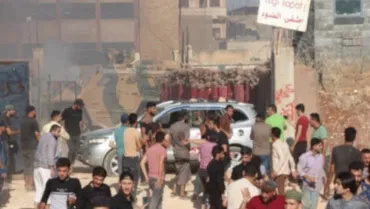
Later, massive protests were held in the city of Senoni and then among Yazidi immigrants in Germany. Carrying placards, the protesters stressed that "the land of the victims is not a place for those who abandoned their duty to return."
According to the author, the importance of recent developments is not only limited to preventing the return of the Democratic Party, but also indicates the emergence of a kind of "Yazidi political independence"; A process that tries to remove the Yazidi community from historical dependence on major Kurdish parties.
The leaders of the coalition have emphasized in a conversation with Barber that now the majority of Yazidis in Shengal support this movement. They point to the results of the recent elections, in which the candidates supported by the Democratic Party were defeated for the first time and the coalition managed to get about 50,000 votes.
This analysis also points to the deep concern of Yazidis about the behind-the-scenes agreements between Baghdad and Erbil. Many in Shingal fear that the Iraqi central government, in the framework of political deals with the Democratic Party, will once again provide the basis for the return of the influence of this party or even the Peshmerga forces.
Barber believes that part of the problem comes back to the way Western powers look at the Shingal issue. According to him, many western officials follow the developments of the Yazidis without being directly present in Shengal and mainly through figures close to the Democratic Party; An issue that has caused the independent narrative of the Yazidi community to be heard less.
In their conversations with this researcher, the leaders of the coalition have accused the US and some international actors of always supporting the "Kurdish control" over the Yazidis and ignoring the call of the Shingal community for political independence.
In the end, Barber emphasizes that the May 6 statement of the Yazidi cause coalition, beyond a political stance, has become a historical document to break the "silence caused by fear" in the Yazidi community; The silence that, according to Yazidi activists, has prevented them from openly expressing their narrative of the genocide and the role of various actors in it.





Your Comment