

Kordpress- Today, the Middle East is in the middle of one of its most profound structural transformations since the end of the Cold War. The regional order that was formed during the past three decades based on the superiority of the United States is gradually giving way to a more complex, multi-layered and multi-polar structure. In such a situation, all regional players are forced to revise their strategic calculations.
For the Kurds, the main question is no longer whether Washington is a reliable ally or not; Rather, it is what kind of strategy can guarantee the interests of the Kurds in the coming decades when the entire power structure of the region is changing.
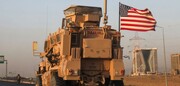
Since the Persian Gulf War in 1991 until about a decade ago, America was the dominant player in the Middle East. Almost all regional actors, from governments to non-governmental forces, adjusted their strategy based on how they interacted with Washington.
It was in this framework that the Kurdistan Region of Iraq was able to become one of the most stable regions of Iraq under the security umbrella of the United States, and the Syrian Kurdish forces became Washington's main partner on the battlefield in the fight against ISIS.
But since the end of the last decade, signs of a gradual transformation have become apparent. America no longer has the past desire to play the role of "Middle East police". Washington's strategic priorities have shifted to competing with China, containing Russia, and issues in the Pacific region. This development does not mean the complete withdrawal of the US from the region, but it means a reduction in direct commitments and an increase in the desire to manage crises indirectly.
For the Kurds, this development has a clear message: the era of absolute reliance on the American security umbrella is coming to an end.
Kurds and the geopolitical issue
In order to understand the current situation of the Kurds, one fundamental fact must be taken into account. Kurds are not just an ethnic minority; They are a biogeographical people with a geopolitical position.
In geopolitical theories, geopolitical nations are communities whose geographical location creates a role beyond their population weight in regional equations. The geographical location of Kurdistan in the heart of the fertile crescent, between Anatolia, Mesopotamia and the Iranian plateau, has made the Kurdish issue always tied to regional security.
As a result, the Kurds have always had two types of value for the great powers:
First, the geopolitical value; As an actor who can affect the balance of power in the region.
Second, geostrategic value; As a force that can play a role in managing crises, fighting extremism or establishing stability in sensitive areas.
But this geopolitical importance has also created a chronic vulnerability. Whenever the balance of power has changed, the view of foreign powers on the Kurds has also changed.
Many analyzes limit the crisis of trust between a part of the Kurdish society and America to the decisions of the Trump era. Although this view explains part of the reality, the issue is deeper than a president or a government.
The main problem lies in the asymmetry of interests. For Kurds, security and political future is an existential issue. But for America, the Kurdish issue is only one of dozens of foreign policy cases.
When one side of the relationship defines the problem at the survival level and the other side defines it at the interest management level, naturally the expectations of the two sides from the alliance will not be the same.
One of the most important variables for the Kurds in the next decade will be the role of Türkiye.
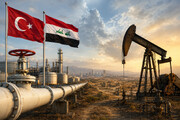
Ankara is no longer just a regional power; Rather, he tries to become one of the architects of the new order in the Middle East. Türkiye's foreign policy in Iraq, Syria, Caucasus, Eastern Mediterranean and even Africa shows that this country is expanding its strategic depth.
This development has two contradictory consequences for the Kurds. On the one hand, the security pressures on the Kurdish forces will increase, and on the other hand, the geopolitical importance of the Kurds will increase for regional and international actors. In other words, the same factor that creates a threat can also create an opportunity.
If the past decades were the era of seeking foreign patronage, the coming decades will probably be the era of balancing. Balancing does not mean being in the camp of one power against another; Rather, it means simultaneously maintaining communication channels with different actors and preventing exclusive dependence on each of them.
In the new order, the successful actor is not the one with the most allies; Rather, a successful actor is the one who has the least dependence on the decisions of others. This is the same lesson that many middle powers of the world have learned in recent years.
Probably the most important development facing the Kurds in the next decade will be the transition from the position of "subject of competing powers" to the position of "independent regional actor". This transition will not be easy. Because it requires a change in many traditional patterns of Kurdish politics.
But at the same time, it has also provided unprecedented opportunities. The old order in the Middle East is eroding and the new order has not yet fully formed. Such periods in history provide the best opportunity for actors to adapt to new conditions.
One of the historical challenges of the Kurdish movement has been the gap between field power and political power. Kurds have been able to create significant military and security capacities at different times, but it has always been difficult to transform this capacity into sustainable political achievements.
In today's world, international legitimacy, efficient institutions, economic development, good governance and social cohesion are as important as military power. In fact, hard power without institutional power cannot create sustainable security.
Tom Barrack's comments may be out of the headlines within days, but the questions they re-raised will linger for years.
Kurds are on the verge of entering a new phase of their political history. A stage in which success will not be measured by the degree of proximity to Washington, Moscow, Ankara, Tehran or any other power, but by the ability to create a balance, strengthen internal institutions, increase political legitimacy, and transform geopolitical capital into sustainable power.
Perhaps the most important fact of the new order in the Middle East is that the era of "support" is coming to an end and the era of "strengthening" is beginning. The basic question facing the Kurds is the same: can they change from a field ally for the big powers to an independent and decisive actor in regional equations? The answer to this question will determine the fate of the Kurdish issue in the coming decades.



Your Comment