

According to Kurdpress, the visit of Dilan Yeşilgöz-Zegerius—the Dutch Defense Minister and Deputy Prime Minister—to the NATO summit in Ankara was no ordinary diplomatic trip. It marked the first time a politician of Kurdish descent born in Turkey, serving as the defense minister of a NATO member, met with the country's senior military officials in the Turkish capital; notably, the visit proceeded without any official controversy, despite Ankara’s long-standing sensitivities regarding Kurdish identity and her family background.
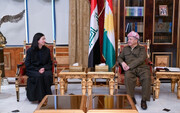
According to Kurdpress, Dilan Yeşilgöz-Zegerius, the Dutch Minister of Defence and Deputy Prime Minister, met with Turkish Defence Minister Yaşar Güler during a NATO summit in Ankara. The Turkish Ministry of Defence released official images of the meeting, describing it as one of the bilateral discussions held on the sidelines of the NATO defence ministers' gathering. Notably, the statement and images released by the Turkish ministry made no mention of the Dutch minister's Kurdish background; the meeting was framed strictly within the context of NATO cooperation.
Yeşilgöz-Zegerius was born in 1977 in Ankara to a Kurdish family from the Dersim region. Her family left Turkey and sought asylum in the Netherlands following the 1980 military coup, a move prompted by the political activities of her father, Yücel Yeşilgöz. After entering the Dutch political arena, she emerged in recent years as a prominent figure within the People's Party for Freedom and Democracy (VVD)—a party that has led the Dutch government for many years. Prior to assuming the role of Minister of Defence, Yeşilgöz served as the Dutch Minister of Justice and Security and is known for her hardline stances on immigration, security, and counter-terrorism. In its profile of her, the official website of the Dutch Ministry of Defence—without referencing her ethnic background—emphasizes the need to bolster Europe's defense capabilities and implement the largest military investment program in Dutch history.
Prior to the NATO summit, Yeşilgöz had also met with Yaşar Güler at NATO headquarters in Brussels on June 18, 2026—a meeting for which the Turkish Ministry of Defense had released images. During her visit to Ankara, official Turkish media outlets—including the Ministry of Defense, Anadolu Agency, and state-run media—referred to her solely as the Dutch Minister of Defense, refraining from mentioning her Kurdish roots or family background. Despite the silence of official institutions, Dilan Yeşilgöz has long been a well-known figure in certain nationalist Turkish media circles. The reason for this is not her political stance, but rather her family background; her father, Yücel Yeşilgöz, was a Kurdish jurist and human rights activist who left Turkey following the 1980 coup. In recent years, certain Turkish media outlets and nationalist factions have alleged that she sympathizes or is close to the PKK; however, such claims have never surfaced in the form of judicial documents or official Turkish government statements regarding Dilan Yeşilgöz herself.
Conversely, within Dutch domestic politics, Yeşilgöz is known for adopting a hardline stance against terrorism. During her tenure as the Dutch Minister of Justice, she advocated for the prosecution of Dutch ISIS members within the Kurdish-controlled regions of Syria and opposed their repatriation to the Netherlands. An analysis of the media coverage surrounding this visit reveals that, contrary to some speculation, the presence of a Kurdish-origin defense minister in Ankara did not escalate into a diplomatic dispute. Reuters, which covered the NATO defense ministers' meeting, highlighted increased defense spending, the development of European military industries, and cooperation among NATO members as the summit's primary focus, making no mention of the Dutch Defense Minister's ethnic background. Similarly, official Turkish media outlets—including the Ministry of Defense—characterized the meeting between Yeşilgöz and Yaşar Güler as entirely routine and consistent with relations between two NATO allies.
Ultimately, the visit demonstrated that security considerations and the imperatives of NATO cooperation—at least at the level of official relations—have prevailed over Turkey's long-standing sensitivities regarding the Kurdish issue and the family background of a high-ranking Dutch government official.


Your Comment