

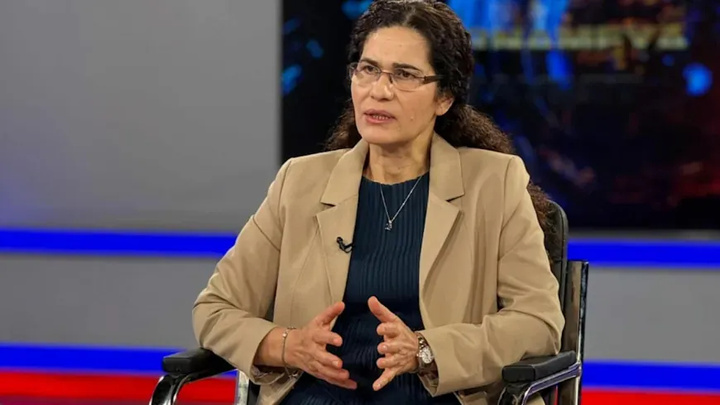
According to KurdPress, Dr. Muslim Abdul-Talas pointed out in an article that the approach of the two Kurdish political philosophies in past centuries was ineffective and emphasized the need to adopt a new political philosophy that is different from the state-nation building approach. According to him, history sometimes forces a person to stop for a moment and review all his beliefs.The Kurds are also at one of the same historical turning points today; a point that perhaps more than ever requires a rethinking of the concepts that have determined the course of Kurdish political struggles over the past century.
The developments of the last decade, especially the experience of the autonomous administration of northern and eastern Syria, the transformations of Iraq, and the changing regional balances, have posed the question to the Kurds as to whether their main problem was essentially what they had always imagined? Perhaps the problem was not that the Kurds had failed to form their own independent entity, but rather that they had always followed a model to achieve freedom that was not fundamentally designed for their historical and geographical conditions; namely, the classic model of the nation-state.
The Kurdish issue is not just an ethnic or cultural issue; it is above all a geopolitical issue. Historical experience confirms this fact. From the emirates of Soran, Baban and Butan to Mahabad, the Kurdistan Region of Iraq and the Autonomous Administration of North and East Syria, a common pattern has almost always been repeated: whenever the Kurdish political structure approaches a stage of stability and authority, the concerns of regional actors increase and new coalitions are formed to limit it. A symbol of this reality can perhaps be seen in the words of Mullah Mustafa Barzani after the defeat of the Iraqi Kurdish revolution following the Algiers agreement, when he said: The Kurdish uprising is not over; we are only taking a breath to renew our strength. My role is over, but the Kurds will remain and will choose another leader to continue the path.This sentence is more about the survival of a Kurd than about a leader. Leaders come and go, movements fail, but society can rebuild itself.
Today, the experience of the Iraqi Kurdistan Region has shown that it is possible to create relatively stable institutions, an economy, and a governance structure, but still remain within the framework of the balances of Baghdad, Ankara, and Washington.
In Syria, the autonomous administration, despite its success in governing large areas and its decisive role in defeating ISIS, eventually realized that the support of great powers is not permanent and that as interests change, so do the equations. Therefore, perhaps it is time to change priorities. According to Dr. Abdul-Talas, the goal should not be to abandon the right to self-determination or other demands; rather, it should be accepted that the creation of a state is only one of the means to protect the people, and the creation of independent governance is not superior to the protection of its people.
What has preserved the Kurdish identity over the centuries has not been merely mountains or military might, but language, culture, historical memory, and social bonds. But in the 21st century, these factors alone are not enough. Today, real power is defined by economics, technology, education, capital, knowledge, efficient institutions, and the ability to generate wealth. In the author's view, the Kurds must move more than anything else toward building economic and cultural strength and resilience; a society that can be economically, scientifically, culturally, and institutionally powerful even without an independent state; a society with a production-oriented economy, capable universities, scientific elites, large companies, professional institutions, and extensive communication networks that can also be effective in the countries where the Kurds live.
The greatest task of today's generation of Kurds is not simply to try to add the name of a new country to the world map, but to build a civilizational project; a project that is based on a strong, self-reliant, and sustainable society, not on temporary balances of international power.
Your Comment