

Between 2014 and 2026, the Kurdistan Press News Agency has examined developments related to US and Western policy towards the Kurds in the form of more than 120 exclusive interviews with university professors, researchers at think tanks, and prominent experts on Kurdish issues in the United States and Europe.A review of this collection of conversations shows that while different US administrations have differed in tactics, they have shared one principle: Washington and its Western allies’ view of the Kurds has been largely driven by security and geopolitical considerations rather than a sustained commitment to Kurdish political demands.
Today, these exclusive conversations with some of the most prominent scholars of Kurdish issues and international relations provide a remarkable picture of the West’s view of the Kurdish issue, given the start of a new peace process between Turkey and the Kurdistan Workers’ Party (PKK), developments in Syria, the reduction of the US military presence in the region, and the redefinition of Washington’s foreign policy.During this time, KurdPress has interviewed prominent figures such as David Romano, a professor at the University of Missouri, Thomas Jeffrey Miley, a professor at the University of Cambridge, Gunay Yildiz, a researcher at the Middle East Institute, Ben Priest, a professor at Indiana University, Vera Akarios Kelly, a professor at the University of Siena, Italy, Nicholas Heras, a researcher at the Center for a New American Security (CNAS), Wim Zwinenberg, a researcher at the Pax Netherlands Institute, Gina Lennox, an Australian researcher on Kurdish issues, and Timur Akhmetov, a researcher at the Russian Council on Foreign Relations; a collection that constitutes one of the most extensive Persian archives on the assessment of the Kurdish issue by Western experts.America; an important ally but not a guarantor of the Kurds' future
A review of these discussions shows that almost all experts, despite differences in their analysis, agree on one thing: America has never been willing to turn support for the Kurds into a long-term commitment that goes beyond its own security interests.
Thomas Jeffrey Miley and Gunay Yildiz believe that there is no guarantee that the US will continue to be present in northern Syria, and the experience of withdrawing from Afghanistan should be a serious warning to the Kurds. They recommend that the Syrian Kurds, instead of being completely dependent on Washington, also regulate their relations with regional actors and neighboring governments.Ben Priest has also emphasized in several separate interviews with Kurdistan Press that even the Joe Biden administration has not prioritized Kurdish independence or autonomy, and that Washington's priorities have continued to be Iran, Russia, China, and its regional security. He has also warned of the possibility of a repeat of the Afghanistan scenario in Syria and Iraq.
On the other hand, David Romano believes that US policy in Syria has lacked a long-term strategy from the beginning, and that Washington has mainly cooperated with the Kurds to defeat ISIS. In his opinion, the future of the Syrian Kurds' achievements has depended more than anything on the continued presence of the US and preventing Turkish attacks.Geopolitical interests: the determinant of Western policy
In this series of interviews, Vera Akarios repeatedly emphasizes that the reason for Europe and America’s reluctance to seriously engage with the Kurdish issue in Turkey is not mere indifference, but rather the priority given to issues such as NATO, the war in Ukraine, containing Russia, energy security, and economic relations with Turkey. In her view, in such circumstances, the Kurdish issue and even human rights are marginalized.
This view is also confirmed from another angle by Wim Zwinenberg, head of major cases at the Pax Institute in the Netherlands. He believes that Turkey’s membership in NATO and the PKK’s inclusion in the US list of terrorist organizations are the main reasons for Washington and Europe’s limited response to Turkey’s military operations in the Kurdistan Region of Iraq.
The Kurds: Security Partner or Strategic Actor?
Perhaps the most explicit conclusion was provided by Nicolas Horas.In an interview with Kurdistan, he emphasizes that the United States and Russia consider the Kurds as second-rate actors in regional equations until they have an independent political entity and prefer their relations with established governments over the national demands of the Kurds.
In the same context, Gina Lennox also believes that although the United States has played an important role at various times in protecting the Iraqi Kurdistan Region and fighting ISIS, ultimately the geopolitical weight of countries such as Turkey, Iraq, and Iran remains much greater for Washington than the Kurdistan Region.If we look more closely at the content of the interviews, the analysis of the content of the series of exclusive interviews with researchers, university professors, and prominent experts on Middle East and Kurdish issues from different countries (America, Britain, the Netherlands, Canada, and Australia) shows that the resulting view of these analysts regarding the approach of the West, and especially the United States of America, towards the Kurds, is based on several key and common axes:
1.Instrumental and tactical view; cooperation for short-term goals
Many of these experts believe that the West and the US relations with the Kurds have never been a strategic, permanent or moral commitment, but have been based on an “instrumental view” and a “tactical function”:
Dr. David Romano and Nicholas Haras state that the United States (along with other major powers) has always had an instrumental and “second-class citizen” view of the Kurds and has only supported them as long as it served Washington’s security or regional interests.
Dr. Nicholas Panayotides points to the experience of fighting ISIS and believes that after the direct threat from ISIS ended, the US and the Western powers abandoned the Kurds or left them alone in the face of regional pressures.Dr. Bemo Nouri, by tracing the historical roots of this approach, shows that the West's instrumental use of the Kurds as a means of political pressure has a historical precedent and pattern that has been repeated since the Napoleonic era, the Sykes-Picot Agreement, and the Kissinger era to the present day.
2. Prioritizing the preservation of the "nation-state" structure and the territorial integrity of countries
Experts emphasize that the red line of Western foreign policy is to maintain the existing regional order and not to tamper with international borders:
Joel Wing recalls that Washington's principled policy has always been to support the territorial integrity of Iraq and to firmly oppose the independence or disintegration of this country, so much so that the United States did not support the Kurdish demand for independence during the 2017 referendum.Dr. Jeanne Bajalan explains that the structural priority of the international system and the West is to maintain the "nation-state" system, and therefore the ethnic or independence demands of the Kurds at the regional level are second or even third in the West's calculations.
3. Preference for relations with central governments and NATO allies (especially Turkey)
The complex relations of the United States and Europe with central governments (such as Baghdad) and especially strategic allies such as Turkey are the main obstacle to comprehensive Western support for the Kurds:
Dr. Vera Akarios Kelly and Wim Zwinenberg point out that the economic, security and geopolitical considerations of Europe and the United States towards Ankara have caused the West to remain silent or passive in the face of Turkey's military actions and to be unwilling to sacrifice its relations with a NATO member for the Kurdish issue.Dr. Jagar Hasan and Timur Akhmetov also believe that in the power chess between the United States and other players, the macro interests associated with central governments always outweigh the desires of the Kurds.
4. Change of governments in the United States and stability in the macro approach
Dr. Thomas Jeffrey Miley and Dr. Gunay Yildiz, together with Dr. Ben Priest, compare the approaches of different US governments (from Obama and Trump to Biden) and conclude that although the behavior and decision-making patterns of presidents differ (for example, sudden withdrawals or unpredictable approaches), the macro principles of US foreign policy towards the region have not fundamentally changed and risks such as the withdrawal or reduction of the presence of American forces always exist.
5.Vulnerability from Internal Kurdish Disputes
Some analysts point to the role of internal Kurdish factors in facilitating the abuse of power by Western powers:
Diliman Abdul Qadir and Dr. Gina Lennox believe that partisan disputes (such as party and unity tensions), tribalism, and internal disunity in the Kurdistan Region have increased the possibility of political exploitation of the Kurds by Western and regional powers and have weakened their bargaining position in the international arena.
Conclusion: From the combined views of these experts, it follows that from the perspective of the West and the United States, the Kurds are tactical partners, valuable in times of security crises (such as the fight against terrorism) and a tool for balancing power; but in formulating macro and long-term strategies, the West always prefers its own interests, relations with ruling governments, and maintaining international order over the broad political demands of the Kurds.An Archive for the Analysis of Western Policy on the Kurds
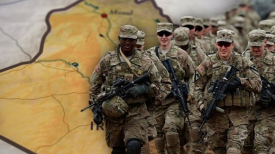
The collection of more than 120 exclusive interviews published in Kurdistan over the past twelve years shows that the majority of Western experts’ perceptions of US policy towards the Kurds do not differ much from each other; the Kurds have been an important partner for Washington at various times, from the fight against ISIS to the developments in Syria and Iraq, but this partnership has always been defined within the framework of US security interests.
In contrast, almost all of these researchers have emphasized that the political future of the Kurds will depend more than any external factor on internal cohesion, effective interaction with central governments, and reduced dependence on foreign powers, which has become more important than ever today, with the new developments in the region.








Your Comment