

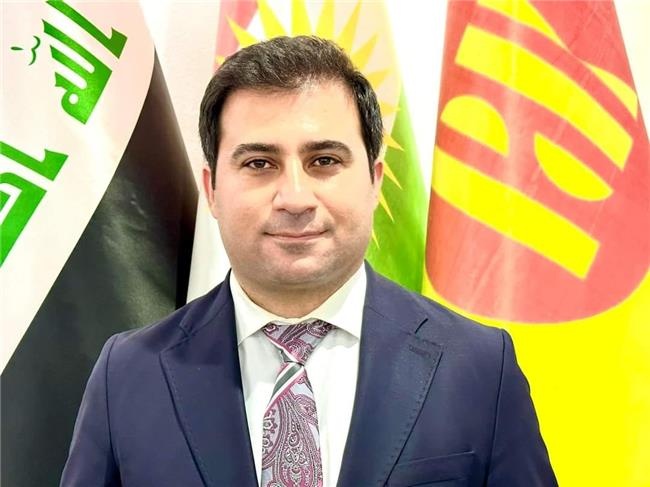
According to KurdPress, although the coalition between the Patriotic Union of Kurdistan and the New Generation Movement has been introduced by the leaders of the two parties as a new model for political reorganization in the Kurdistan Region, analysts believe that this agreement, rather than breaking the traditional power structure, indicates the continuation of the same mechanisms that have limited Iraqi Kurdish politics between the two main parties, the Kurdistan Democratic Party and the Patriotic Union, over the past two decades.The leaders of the Patriotic Union of Kurdistan (PUK) and the New Generation Movement (NGM) announced a high-profile political alliance on July 2, 2026, promising that the deal would change the balance of power in the Kurdistan Region of Iraq. The PUK leader, Bafel Talabani, and the NGM leader, Shaswar Abdul Wahid, presented the alliance as a new model for politics in the region. However, political observers believe that the deal is more a sign of the structural limitations of Iraqi Kurdish politics than a fundamental change, where over the past two decades the KDP and the PUK have created a clear ceiling for the growth of opposition movements by dividing power, absorbing smaller movements, and controlling major institutions. The new alliance shows that although the traditional two-party system has faced crises in recent years, the main tools for maintaining power remain intact.The Patriotic Union’s Effort to Rebalance with the Democratic Party.
For the Patriotic Union of Kurdistan, which is based in Sulaymaniyah, joining the New Generation Movement is a strategic move to rebuild its position against the Kurdistan Democratic Party. Critics of the Democratic Party believe that Masrour Barzani, the Prime Minister of the Kurdistan Region and deputy leader of the party, has been able to concentrate the administrative, financial and security powers of the regional government in the prime minister’s office more than before after the 2018 elections. Taking advantage of the internal divisions within the Patriotic Union after the death of its charismatic leader, Jalal Talabani, the Democratic Party increased its influence in the regional institutions and used its position as the largest party in parliament as a basis for controlling the executive branch. But the Kurdistan Regional Government’s parliamentary elections in October 2024 will once again challenge this balance.These elections, which were held after months of disagreement between the Democratic Party and the Patriotic Union over the structure of the electoral commission, were held for the first time under the supervision of the Independent High Election Commission of Iraq.
Coalition of 38 seats against 39 seats of the Democratic Party
With the official agreement of the Patriotic Union and the New Generation Movement, the two parties hold a total of 38 seats in the regional parliament, only one seat less than the KDP faction, which has 39 seats. The importance of this alliance is not limited to the number of seats, but the geographical composition of the voting bases has also created a new balance. In the province of Dohuk, the traditional base of the Democratic Party, the party received about 402 thousand votes, while the combined votes of the Patriotic Union and the New Generation Movement were about 75 thousand votes. The Democratic Party therefore continues to have a clear advantage in this region. However, in the province of Sulaymaniyah, the new coalition received nearly 400 thousand votes, while the Democratic Party received less than 58 thousand votes.
The New Generation Movement; From Opposition to Power Partner
On the other hand, for the New Generation Movement, this agreement comes with significant political risks. The party, which presented itself as an opposition to the traditional power structure, has now entered into cooperation with one of the two main ruling parties. In their agreement, the two parties promised to implement an economic program centered on social demands; including paying deferred salaries of employees, providing marriage loans to young people, creating job opportunities for university graduates, and approving the regional budget law; a law that the Kurdistan Parliament has failed to pass since 2013. However, this agreement was formed in a situation where Shaswar Abdul Wahid had previously faced political and judicial pressure. He was arrested in August 2025 by security forces affiliated with the Patriotic Union in Sulaymaniyah and released on bail a few months later.A day after his release, Abdul Wahid called for the unification of movements outside the Democratic Party to form a new provincial government, a proposal that Bafel Talabani immediately welcomed.
The historical ceiling of the opposition in the Kurdistan Region
The experience of the New Generation Movement is very similar to the fate of the Change Movement (Goran), a movement that emerged after 2009 as the most important reformist challenge to the Democratic Party and the Patriotic Union. In the 2013 elections, Goran even surpassed the Patriotic Union by winning 24 seats and became the second largest force in the regional parliament. However, after joining the coalition government led by the Democratic Party in 2015, it failed to introduce serious reforms in the fight against corruption or reduce party control over the security forces. As a result, some of the disgruntled supporters distanced themselves from the party and the New Generation Movement was able to challenge Goran's position in the 2018 elections.
This trend shows that the main problem of the Kurdish opposition in Iraq is not only a lack of popular support, but also a lack of access to sources of power.Opposition parties, from the New Generation Movement to Islamist parties, the New Generation Movement and the remnants of the Gorran, hold about a third of the seats in parliament, but lack resources such as oil revenues, state financial networks and independent armed forces. For this reason, many opposition movements, after initial growth, have either been absorbed into the power structure or have faced serious limitations in becoming a real alternative to the two main parties.
Overall, the Patriotic Union and the New Generation Movement coalition could change the electoral equation in the Kurdistan Region, but the experience of the past two decades shows that changing the balance between the ruling parties does not necessarily mean changing the power structure. This agreement is more likely to be the end of the two-party system than a new stage of competition within that system.
Source: Amwaj Media
Your Comment