

According to Kurdistan Press, while Ankara and Baghdad are seeking to design a new framework for energy cooperation after the end of the 1973 oil agreement, Turkey's most important achievement is not the promise of transferring one million barrels of oil per day, but the entry of the country's state oil company into the ownership structure of the development of the Kirkuk oil fields; a move that elevates Ankara's position from a transit route to a direct player in northern Iraq's oil production.According to Forbes magazine, the 1973 agreement between Iraq and Turkey, which for more than five decades set the framework for transporting Iraqi oil through the Kirkuk-Ceyhan pipeline, has now ended, and the two countries are negotiating a more comprehensive energy agreement; an agreement that, unlike the old framework, does not focus only on oil transportation and also includes areas such as gas, electricity and joint investment.
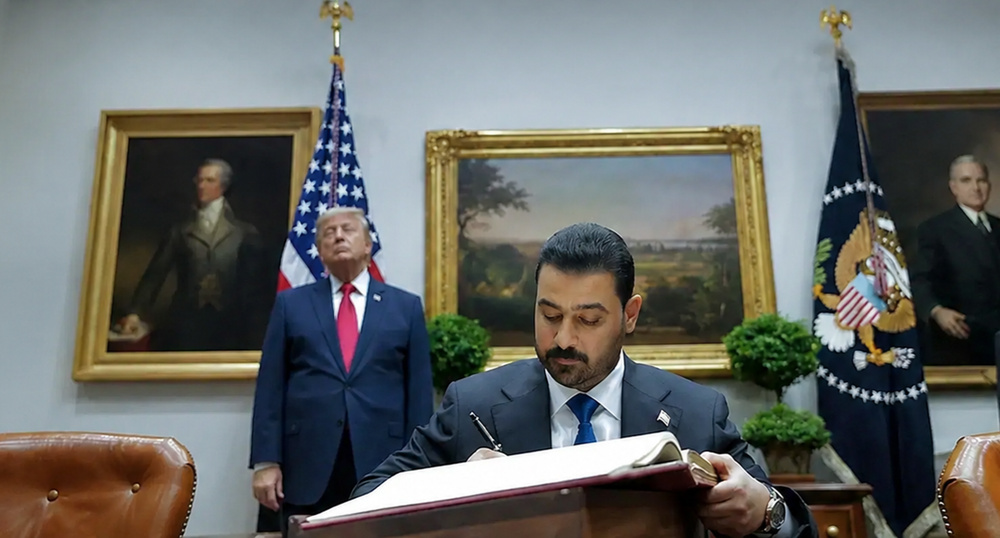
After meeting with Iraqi Prime Minister Ali al-Zaidi, Turkish President Recep Tayyip Erdogan announced that the oil agreement between the two countries had ended and a new framework for energy cooperation should be established. From the perspective of Forbes magazine’s analysis, this development is not simply the end of a technical agreement, but rather a sign of Ankara’s efforts to redefine its role in the energy equations of northern Iraq.
The most important part of this development is the entry of the Turkish State Oil Company (TPAO) into the Kirkuk oilfield development project.Under the agreement, the company will acquire a 15 percent stake in the Kirkuk Oilfields Development Company, which, once its ownership structure is finalized, will be held by British BP at 43 percent, American ConocoPhillips at 42 percent, and Turkish TPAO at 15 percent.
The project involves developing major Kirkuk oilfields, including the Baba and Awaneh domes and the Bay Hassan, Jambur, and Khabbaz fields. While the 15 percent stake does not mean Turkey will control Kirkuk oil, it does give Ankara a formal position in the oil production chain in northern Iraq for the first time. Turkey, which previously played a mainly host role in the route for Iraqi oil to global markets, is now also involved in upstream and production ownership.For this reason, Forbes’ analysis emphasizes that the real significance of the new agreement should be sought in the ownership structure, not in political figures about future export volumes.
In recent weeks, Turkish and Iraqi officials have spoken of the possibility of transporting 1 million barrels of Iraqi oil per day to Turkey, a figure that at first glance indicates a large capacity for cooperation between the two countries. But Forbes believes that this figure is more of a political goal than an operational reality in the current situation.
There is a big difference between the nominal capacity of the Kirkuk-Ceyhan pipeline, the long-term production goals of oil companies and the actual amount of oil that can reach the market. The capacity of a pipeline does not necessarily mean that it can be transported immediately; producing fields, sales contracts, route security and legal agreements must also be in place.This issue has become even more important after the legal dispute between Baghdad and the Kurdistan Region over independent oil exports. In 2023, the International Court of Arbitration in Paris ruled that Turkey had violated the pipeline agreement by transporting Kurdistan Region oil without the approval of the Iraqi federal government. After this ruling, oil exports from northern Iraq were suspended for a long time, and financial and legal disputes remain one of the main obstacles to a full return to exports.
For this reason, any new agreement between Baghdad and Ankara must, in addition to the issue of oil transportation, also specify important issues such as the role of the Iraqi Oil Marketing Company (SOMO), the mechanism for issuing export licenses, and how to resolve past disputes.
However, the importance of the northern Iraqi corridor is not limited to economic issues.Forbes sees the deal as part of a broader energy competition in the region, especially as potential insecurity in the Strait of Hormuz has heightened the importance of alternative energy export routes.
In this light, the Kirkuk-Ceyhan pipeline is not just a route for transporting oil to Turkey, but part of a strategic network that could strengthen its role in regional energy security. TPAO’s presence in the Kirkuk project also allows Ankara to participate in the corridor’s oil production source in addition to managing the route.
Ultimately, the key issue in the new Iraq-Turkey energy deal is not whether the pipeline will be reactivated, but who will set the future rules for the route; who will decide on export volumes, transportation costs, investment, and resource ownership.For Forbes, the end of the 1973 agreement marks the beginning of a new era in which competition for “energy corridor sovereignty” will take shape, in which the pipeline, gas and electricity partnerships, and ownership stakes in the Kirkuk oil fields will be the main elements of power. In this context, Turkey’s 15 percent stake in Kirkuk is a more tangible achievement than the promise of transporting 1 million barrels of oil per day.








Your Comment