

According to KurdPress, the one-year agreement between Baghdad and Ankara to extend the operation of the Iraq-Turkey pipeline, although it has prevented an immediate crisis in Iraq's oil exports, has not yet resolved any of the main knots in the oil case between Baghdad, Erbil and Ankara.A new report by OilPrice, titled “Iraq’s Oil Artery Saved, But for How Long?” sees the agreement not as a permanent solution but as a temporary opportunity to continue negotiations, negotiations whose fate will affect not only the future of the Kurdistan Region’s oil exports but also Iraq’s geopolitical position.
According to OilPrice, the new agreement will allow the continued export of more than 200,000 barrels of oil per day via Turkey’s Ceyhan port, a route that has become more important to the Iraqi economy after exports from the Persian Gulf were restricted. However, the agreement is only valid for one year, and fundamental differences between the parties remain.
The author of the report believes that Ankara is now in a position to demand more concessions from Baghdad.In his view, Turkey is seeking to increase oil transit tariffs, guarantee a certain volume of daily exports through Ceyhan, compensate for damages resulting from international arbitration awards, and also participate more widely in Iraqi energy projects. Although these claims are based on quotes from anonymous sources and have not yet been officially confirmed, they do not seem far-fetched given the increasing importance of the Ceyhan route for Iraq.
The report then returns to the historical roots of the dispute between Baghdad and Erbil. According to the author, the Iraqi central government’s opposition to the Kurdistan Region’s independent oil exports was not only due to a dispute over oil revenues, but Baghdad was concerned from the very beginning that the region’s financial independence would pave the way for its political independence.From this perspective, the 2013 Kurdistan Oil and Gas Law, the establishment of independent mechanisms for managing oil revenues, and ultimately the 2017 independence referendum are considered links in a single chain.
This analysis is defensible from a historical perspective, but it does not provide a complete picture of the current situation in the Kurdistan Region. The reality is that the Kurdistan Region has been forced to reconsider its priorities after the failure of the 2017 referendum, the cessation of oil exports in 2023, and the resulting financial crisis. Now, rather than focusing on political independence, the regional government is seeking to revive oil exports, secure its share of the Iraqi budget, attract foreign investment, and develop the gas industry.
In another part of the report, OilPrice analyzes developments in the context of the competition between global powers, and speaks of the decline in the influence of China and Russia and Iraq’s gradual return to closer cooperation with the West.This assessment, however, should be viewed with more caution. Although Western companies have signed important contracts in Iraq’s energy sector in recent months, China remains the largest buyer of Iraqi oil, and Chinese and Russian companies remain important players in the country’s energy industry. Therefore, it seems premature to speak of a complete geopolitical turn.
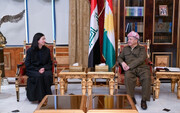
Perhaps the most important conclusion that can be drawn from this report is its connection to the new foreign policy of the Kurdistan Region. In a situation where the future of oil exports remains uncertain and the path of Ceyhan is more influenced by political considerations than in the past, Erbil is trying to expand the range of its economic and political partners. The significant increase in trips by Nechirvan Barzani and Masrour Barzani to the United Arab Emirates and Qatar can be assessed in this context.Attracting investment, developing gas projects, expanding financial cooperation, and reducing dependence on a single export route or a foreign partner have gradually become the main pillars of the region’s economic policy.
In summary, the OilPrice report correctly highlights an important point: the agreement between Baghdad and Ankara has only bought time, not solved the crisis. As long as structural differences over oil management, revenue sharing, and the Kurdistan Region’s place in Iraq’s energy system are not resolved, any agreement will be the beginning of a countdown to the next crisis rather than the end of one. Therefore, Erbil’s diplomatic moves in the Arab Gulf countries should also be seen as part of the region’s efforts to prepare for a future in which sole reliance on oil and a single export route will no longer meet the region’s economic and political needs.





Your Comment