

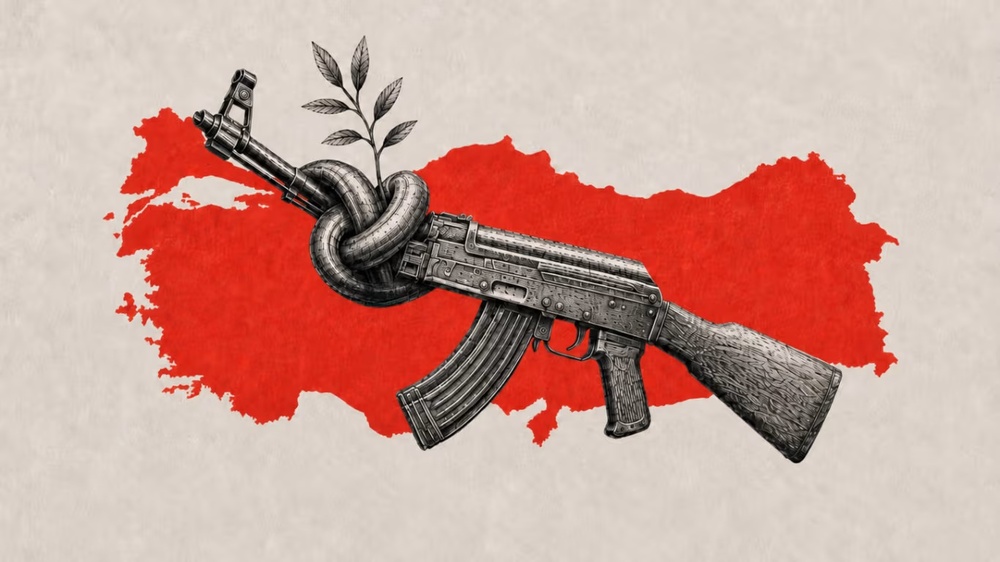
According to KurdPress, according to the analysis of the National Context magazine, the draft "Law on Strengthening National Solidarity and Social Integration" is not simply a criminal law to end the activities of the PKK, but rather the legal framework of the first stage of a multi-stage political and security process that aims to resolve the difficult case of the Kurds in Turkey and rearrange the structures affiliated with the PKK at the regional level.According to this analysis, the most important feature of the law is its language and writing style, which deliberately avoids using words like “amnesty” or “pardon” so that the government can present the process not as a pardon for PKK members, but as a conditional implementation of the law and a controlled end to a security threat.
In this framework, criminal convictions are not overturned at the very beginning of the law’s implementation, crimes are not renamed, and individuals’ criminal liability is not immediately extinguished. The government keeps the criminal case of the individuals involved open for five or ten years, and if the person returns to terrorist activities, the case can be reactivated.However, National Context believes that the end result of this mechanism is very close to a structured amnesty in practice, as if the conditions are met, investigations are stopped, ongoing trials are concluded, prisoners are released, sentences are deemed to have been served and the restrictions imposed by the conviction are lifted. In other words, the government initially retains criminal liability as a guarantee of compliance, but after the end of the supervision period, that same liability is converted into full closure of the case.
The report then compares this model with the Northern Ireland peace process. In the 1998 agreement, the scope of prisoner releases was much wider, and even those convicted of murder and life prisoners could be eligible for release. Their releases also began before the complete dissolution of the Irish Republican Army (IRA) and without waiting for all weapons to be handed over.Of course, the convicts remained under the “parole” system and could be returned to prison at any time. Turkish law, on the other hand, has set stricter entry requirements. The dissolution of organizations and the surrender of weapons must first be approved, those convicted of murder are excluded from the scope of the law, and Abdullah Öcalan is not covered by the law at this stage. However, for those who are found eligible, Turkish law creates a more definitive legal situation at the end of the path, because after five or ten years, investigations are closed, prosecutions are terminated, and sentences are considered executed. Moreover, Turkish law does not only cover prisoners, but also people who have not yet been convicted.From this perspective, the main difference between the two models is the order of the steps and their scope; Northern Ireland granted a faster and more extensive release, but kept convicts under constant supervision, while Turkey introduced a more limited group after meeting strict conditions and charted a clear path towards the full conclusion of the legal case.
National Context emphasizes that the real significance of the law lies in the phrase “first step”. The official justification for the law states that these provisions are only the first step in a series of legal reforms needed to implement the process, and that parliament can adopt new amendments or laws as the process progresses. Therefore, the law’s silence on sensitive issues such as the status of Abdullah Öcalan, senior commanders of the PKKThe PKK, convicted murderers, some former life prisoners, the system of state guardianship over Kurdish municipalities, political and civil rights reforms, the social reintegration of former members, and the future of regional structures affiliated with the PKK should not be seen as permanently eliminating these issues; rather, these cases have been set aside for later stages of the process.
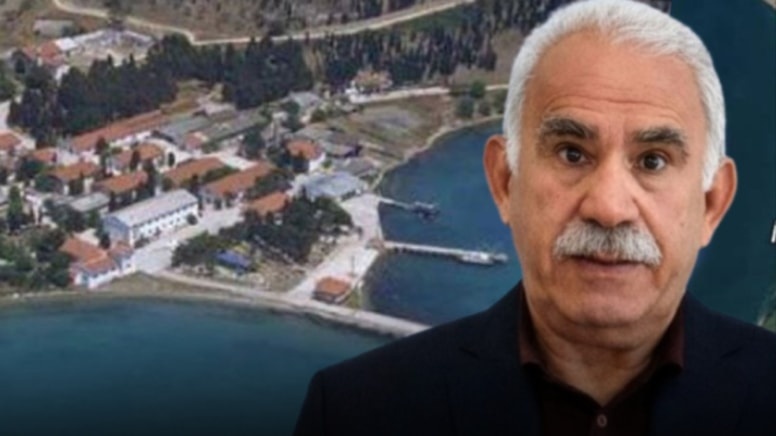
According to National Context, the statements of Turkish officials on August 5 reinforce this perception. By referring to the need to find a separate solution for Abdullah Öcalan, the Bahçeli government effectively indicated that the situation of the PKK leader would be examined outside the current twelve-article framework. His reference to dismissed mayors also suggests that the system of appointing state guardians over Kurdish municipalities may also be reviewed in later stages.At the same time, Yaşar Güler has also spoken of the possibility of a gradual improvement in Öcalan’s practical conditions; meaning that before any change in his legal status, it is possible to expand his access to meetings, communications and public activities through administrative decisions, while any change in his prison sentence would require the adoption of a new law. Accordingly, National Context concludes that the process will likely proceed as follows: first, the legal status of the main body of the organization will be determined, and then, in subsequent stages, the issue of leaders, sensitive prisoners, municipal administration and the Kurdish political space will be examined.
The analysis also emphasizes that the scope of the law is not limited to Turkey’s borders. The text of the law from the PKK, K.C.The law mentions the PKK and all its affiliated or subordinate structures, and the explanatory introduction states that the goal of this process is to establish peace in the entire region surrounding Turkey. Therefore, the law has a regional dimension and also includes Iraq, Syria and Iran; areas where, according to the Turkish government, the main military infrastructure of the PKK was formed over the past decades, and Ankara considers some Kurdish groups active in these countries to be part of the wider PKK network.
From the perspective of National Context, this law seeks to achieve two simultaneous goals. First, to create a legal path for PKK members to transition from armed activity to civil life and legal politics within Turkey, and second, to dismantle or reorganize the PKK’s cross-border command structure throughout the region. But this regional part is also the most important ambiguity of the law.The law does not specify what exactly is meant by the end of the “practical existence” of the organization and all affiliated structures. This phrase could mean the complete dissolution of all affiliated branches or simply the dismantling of the PKK’s central command, the end of the military threat against Turkey, and the independence of regional structures from the central command. Although the text of the law is absolute, the determination of whether these conditions have been met is left to the Turkish security agencies and the National Security Council, a matter that allows the government to determine for itself when the process has reached a point of no return.
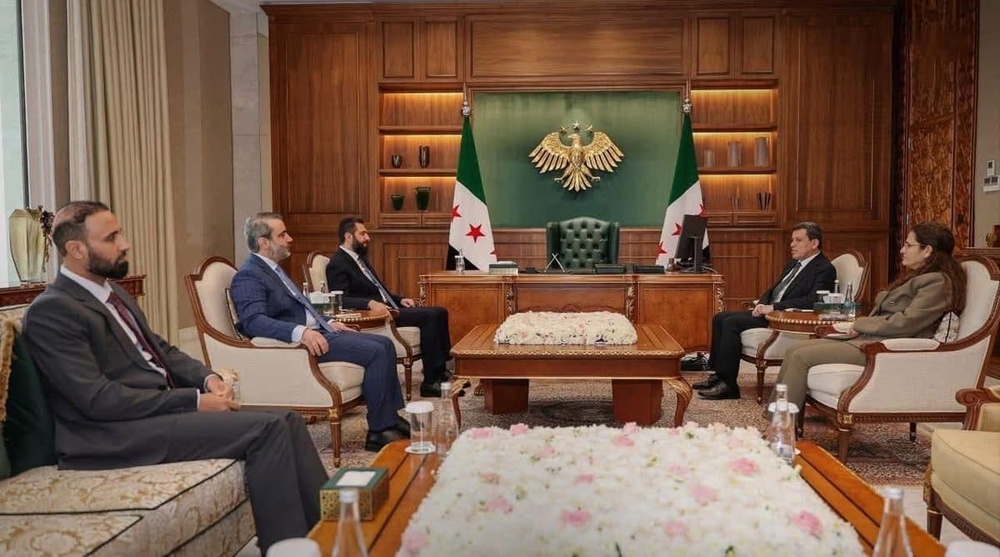
In the section on Syria, the analysis says that the path of the SDF has been largely determined by the process of integration into the Syrian state structure, but Turkish law does not specify whether the severance of its organizational ties with the PKKThe question is whether Ankara will be satisfied with the dissolution of the PKK or whether Turkey ultimately wants to completely dissolve it or integrate it into the official Syrian institutions. The situation is similar with other PKK branches, which, although they have not been active on Turkish soil, are considered by Ankara to be part of a PKK-related network and have stated that they are monitoring its activities.
Finally, National Context concludes that the twelve-article law should be seen as the legal cornerstone of a broader, multi-stage process. In the first stage, the law links the confirmed dissolution of the PKK’s organizational structure with a conditional path out of criminal liability for a large part of its members and civilian network. Although this mechanism is formulated in security terms and avoids the word “amnesty,” in practice it will lead to results that are close to a structured amnesty for eligible individuals.However, the most important political and regional issues, including the status of Abdullah Öcalan, senior commanders, dismissed mayors, excluded prisoners, as well as the future of Kurdish structures in Iraq and Syria, are still postponed to the next stages of negotiations and political decisions. Therefore, this law is not the end of the process, but the starting point of a broader political and security project to resolve the Kurdish issue inside Turkey and redefine the position of PKK-related structures at the regional level.





Your Comment