

Kurd Press- A real journalist is neither a nuisance to society nor a spokesperson for those in power; a real journalist is the hidden and sometimes silent voice of society. He is the watchful eye of the people who may not have the opportunity, possibility, or platform to express their problems themselves.If a journalist is faithful to his professional mission, he must be able to bring the voices of those in power who are not heard in the daily noise.
Of course, there are differences between "reporter" and "journalist", although these two fields are closely related in practice. A journalist is more concerned with analyzing, explaining, criticizing, satirizing, and examining social phenomena; while a reporter is a narrator of events and happenings in the field. A reporter, in a sense, is a field interpreter of the journalist and an objective chronicler of society; someone who is present in the context of the incident, sees, hears, asks questions, and narrates what he has seen and heard to society.
A journalist is present in the joy of the people and also in their cries.In natural disasters, social crises, protests, elections, battlefields, and critical historical moments, it is the journalist who sometimes appears on the scene before many others. He or she must see the truth and convey it to the audience; even if the truth is not pleasing to those in power.
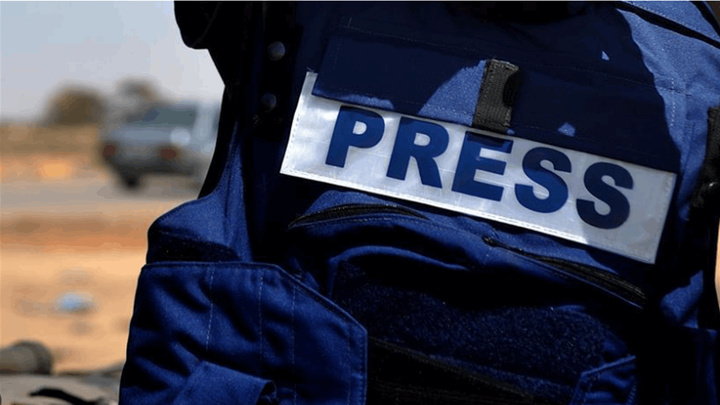
That is why the profession of journalism has been a costly profession in many junctures of history. In wars, journalists and photojournalists have repeatedly risked their lives to record and convey the truth. Many of the lasting images of world wars and historical crises are the result of the presence of these very people who took the camera and pen to the field so that human suffering would not be lost in the din of war.
In the Gaza-Israel war, the world media community has also witnessed the heavy cost of journalists’ activities.A large number of journalists and media activists have lost their lives in this conflict; according to reports, 262 Palestinian journalists were martyred by the Zionist regime in this war. This issue once again showed that telling the truth in the field of crisis sometimes costs the life of the narrator.
Sometimes, a picture, a report, or a story has more impact on public opinion than hundreds of statements and speeches. History has repeatedly shown that a picture can shake the public conscience of the world and a report can reveal a reality that has been hidden behind the walls of power for years.
From this perspective, journalism is not just a job; it is a kind of social responsibility. Journalism can be considered similar to a teacher in some ways. A teacher leads a person from ignorance to awareness, and a journalist leads society from ignorance to awareness. Both, if they fulfill their mission correctly, are “guides.”How beautifully Saadi (may Allah have mercy on him) says:
"If you show the way, the whole world is the way
If you do not take the hand, the whole world is a well"
Guidance, of course, is not always easy and free of cost. How many people throughout history have paid for, suffered, and sometimes lost their lives to show the right path. A journalist, in his original sense, is one of these guides of society; a guide whose duty is to show reality, not to create a reality according to the wishes of others.
But this "guidance" sometimes conflicts with the interests of those who prefer that society not see some wells.
In every society, there are wells; wells that may have been dug in the way of people's rights, justice, administrative health, and public interests.Corruption, rent, abuse of power, violation of public rights, and encroachment on people's property are the same wells that become deeper and more dangerous if they are not seen.
The duty of a free-thinking journalist is to shine a light on this path. It is natural for those who benefit from the darkness not to welcome the light. The well-diggers do not like guides.
They are afraid of a journalist who asks questions, asks for documents, makes demands, and narrates the truth; because a journalist can expose what is hidden in the darkness to the public.
That is why a free-thinking journalist is often the object of the wrath of corrupt people and those with unhealthy interests. But the problem is not limited to the corrupt and the abusers. Sometimes, journalists are also misunderstood by managers and rulers.Some managers consider a journalist merely an “informant” for the executive branch; someone who must publish news of meetings, inaugurations, conferences, and achievements, but in return, they cannot tolerate questioning and criticism.
In this view, the ideal journalist is one who only sees and publishes; but a professional journalist, in addition to seeing and publishing, also has the right to ask, criticize, and demand answers.
A healthy media is not the public relations of any agency; just as a healthy journalist is not the enemy of the executive branch. The media can and should be the watchful eye of society. Media criticism, if it is based on honesty, evidence, and responsibility, is not a threat; rather, it is an opportunity for reform.
A society that loves a journalist only when he praises it has not yet understood the true meaning of the media.The value of a journalist is revealed precisely where he can ask difficult questions and narrate an unpleasant reality.
Meanwhile, one of the pains of the journalistic profession is that sometimes, in the performance of his duty and making demands, instead of receiving answers, a journalist is faced with complaints and general and outdated titles such as “public concern.” It is clear that not every journalist is immune from mistakes and if someone commits slander, spreads lies or violates his professional duties, he must be held accountable; but criticism, questioning and expressing public demands should not be equated with public concern.
A compassionate journalist is not adventurous; he is not a troublemaker; he is not an enemy of society. He is concerned about the same people whose voices are sometimes not heard in the midst of power relations. He wants to know why a problem has arisen, who is responsible, what is the way to solve it and why a promise has not been fulfilled.These questions are not only a threat to society, but are part of the health of society. On the other hand, corruption and abuse of power are more likely to grow when public oversight is reduced and the light of questioning is extinguished. A corrupt person who is not afraid of the law is at least afraid of exposing his actions to public opinion. This is where the importance of the journalist becomes apparent.
A journalist is not the awakened conscience of society; but he is one of the most important tools to keep the public conscience awake. He is not supposed to be a judge, issue a verdict, or take the place of supervisory and judicial institutions. His duty is to accurately narrate, responsibly question, and present the truth to public opinion. This distinction is very important; because a professional journalist does not seek to condemn individuals, but to illuminate the truth.If we eliminate the free-thinking journalist, if we consider questioning to be a nuisance, if we consider criticism to be an enemy, and if we reduce the media to a ceremonial platform for the institutions, society will lose part of its warning system.
The guide cannot be blamed for pointing out the well; if someone must be questioned, the “well-digger” must first be asked why he dug the well in the way of the people.
A real journalist, ultimately, is neither the enemy of the manager nor the opponent of the government; he can be **the friend of healthy managers and the enemy of corruption**. A manager who is confident in his performance is not afraid of the journalist’s question; rather, he uses it to identify the weaknesses of his own team. A government that trusts the people and its performance should also welcome responsible media, rather than feeling threatened by every critical question.Journalist Day, therefore, is not just a day to congratulate the owners of a profession; it is an opportunity to rethink the place of the media and the relationship between society, power, and truth.
Today, we must ask ourselves: Have we recognized the journalist as we should? Do we value his or her questioning? Have we distinguished between a professional journalist and a commissioned speaker? Do we consider criticism part of the reform process or do we view it as a threat?
Journalism, if separated from the honor of the pen, is reduced to public relations; and if separated from social responsibility, it will become a fruitless clamor.
But a journalist who prefers the honor of the pen to the trappings of the world, who prioritizes truth over personal interest, and who is the voice of the voiceless, remains one of society’s noblest guides.
He or she is a beacon on the path; a beacon that may not always be popular, but is necessary to see the way.So, Happy Enlightenment Day to all the free, truth-seeking, and responsible journalists and reporters; to those who have stood by the people in their joys and sorrows, have narrated in the fields of crisis, and have sometimes paid heavy prices to record the truth.
And may the memory and names of all the journalists and media activists who have died in the path of raising awareness be honored. The path is not always clear; but as long as there are signs to show it, there is hope for crossing the wells.
Your Comment