

According to KurdPress, the process of integrating the Syrian Democratic Forces (SDF) into Syria’s military and administrative structures is approaching its final stages; a process that, in addition to changing Syria’s internal equations, is also directly related to Turkey’s regional policies and developments related to the Kurdish issue.The merger agreement between the Damascus government led by Tahrir al-Sham and the SDF was signed on January 29, 2026, and over the past six months, most of its provisions in the military, security and administrative fields have been implemented.
Removal of Sipan Hamu from Turkey's wanted list
"Sipan Hamu", a former SDF commander and one of the founders of the YPG, was removed from Turkey's wanted list after being appointed as the Deputy Minister of Defense of Syria. The Turkish Ministry of Interior had previously set a reward of 20 million liras for Hamu's arrest and put his name on the red list of wanted persons.
He was removed from this list as part of the merger agreement and after being appointed as the Deputy Minister of Defense of Syria.
Dissolution of the SDF in the near future
At the beginning of the week, Hamu described the SDF's mission as completed and spoke of the possibility of disbanding the force in the next few days.SDF Commander-in-Chief Mazloum Abdi also met with Damascus government officials about the security of Hasakah province, the situation of the displaced, and accelerating the integration process.
The meeting was also attended by Ziad al-Ayish, the representative of the Damascus government's presidency, and Awad al-Jassim, the commander of the Syrian Army's Second Corps. Ending violations against government institutions, the situation of displaced civilians, and completing the stability and security of Hasakah province were among the main topics of the talks.
Abdi assessed the atmosphere of the negotiations as positive and considered the implementation of the agreements reached to serve the security and stability of Hasakah.
Return of displaced Kurds from Sar-e-Kani to the negotiating table
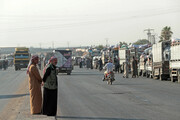
The situation of displaced Kurdish families who had set out to return to Sar-e-Kani and the attack on their first convoy were among the other issues raised in the meeting.After the Turkish and Syrian National Army’s Operation Peace Spring in October 2019, thousands of Kurdish families were displaced from Sar-e-Kani. Many of their homes and properties were also taken over by families of armed groups or people who had been transferred to the city from other areas.
Thousands of families have been living in camps in Hasakah, Qamishlo and Raqqa for the past seven years. The first group of them began returning to Sar-e-Kani last week; however, after the attack on the convoy, further returns were suspended due to security concerns.
From the failed March 10 agreement to the January 29 agreement
After the fall of Bashar al-Assad’s regime on March 8, 2024, the Hayat Tahrir al-Sham, led by Abu Muhammad al-Julani, also known as Ahmad al-Sharaa, seized power in Damascus.The new government signed an agreement with the SDF on March 10 that envisaged the disbandment of the force and its integration into the Syrian armed forces, but this agreement did not come to fruition.
Following the advance of Damascus government forces east of the Euphrates, the SDF agreed to a phased integration into the Syrian military and administrative structure in the agreement of January 29 of the following year.
US mediation and strengthening the central government
The integration process proceeded with the mediation of Thomas Barrack, the US ambassador to Ankara and the US special representative for Syria and Iraq, and focused on preserving Syria's territorial integrity and strengthening central sovereignty.
At the same time, Washington increased its distance from the SDF, its long-standing ally in Syria, and highlighted the Golan Heights government as a unifying force in the new Syrian structure. The easing of sanctions on Syria and the removal of some officials from the new government's terrorism-related lists are also considered part of this US orientation.Thousands of SDF members join army and interior ministry
In the past six and a half months, thousands of SDF members have joined the Syrian defense and interior ministries.
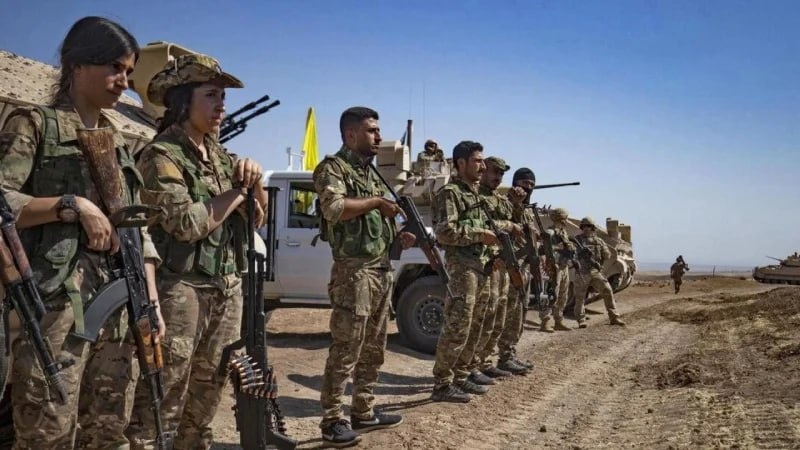
In Hasakah and Qamishlo, a military structure of three brigades has been established, and the Kobani forces have been organized into a brigade under the Aleppo command.
Along with the implementation of joint security plans, movement between former Syrian government areas and areas under SDF control has also been facilitated.
In a meeting in early August between Ahmed al-Sharaa and Mazloum Abdi, issues such as the status of women’s units, heavy weapons, and border arrangements were discussed.
Following this meeting, the Women’s Protection Units (YPJ) were designated to operate as a “counterterrorism force” under the Syrian Interior Ministry.Slow integration of civil institutions
Despite rapid progress in the military sphere, the process of integrating the civil institutions of the autonomous administration of northern and eastern Syria into the central government structure and determining the political representation of the Kurds is progressing at a slower pace.
The appointment of a governor for Hasakah and the linking of municipal, agricultural, education and health units with the relevant ministries are underway. Some prisons and judicial buildings have also come under Damascus’ control.
In addition to military and administrative issues, the January 2026 agreement also covered the cultural, educational and citizenship rights of the Kurds.
According to Decree No. 13 of Ahmed al-Shara, the Kurdish language was recognized as the “national language”, the process of restoring citizenship to thousands of Kurds who had been deprived of citizenship rights began, and the groundwork was laid for teaching the Kurdish language in Kurdish-populated areas.Dispute over Kurdish political representation
The way in which Kurds will be represented in the People's Assembly remains a contentious issue.
After 140 seats were determined through indirect elections in October 2025, Ahmed al-Sharaa appointed another 70 members in July 2026, bringing the number of members to 210.
In this composition, only 11 Kurdish representatives are present, and no figures associated with the SDF have entered the parliament. This situation has sparked criticism that the representation of the Kurds is not proportional to their population.
Ankara supports the integration process
With the aim of achieving what it calls a "terrorism-free zone", Turkey has supported the integration of the SDF into the Damascus structure and has expanded its economic, political and military cooperation with the new Syrian government.
At the same time, the Turkish Ministry of Defense has announced the continuation of security activities on the Syrian border without interruption and has denied any reduction in forces or personnel at border posts and bases.In the new Syrian structure, Russian and Iranian influence has also diminished compared to the Assad regime.
Damascus and Moscow agreed earlier this week to transfer the Russian military bases in Hmeimim and Tartus to civilian management and transform them into joint training centers. The changes are expected to be completed within three months at the latest.


Your Comment