
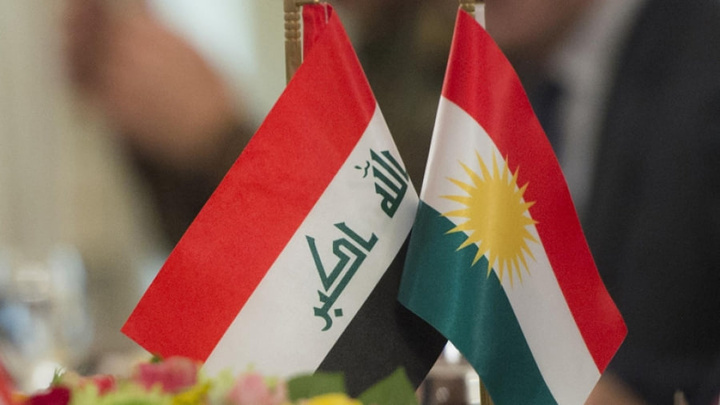
According to Kurdpress, after weeks of political deadlock and with the election of "Nazar Mohammad Saeed Amidi" as the new president, Iraq has entered a new stage of redefining the balance of power between Baghdad and Erbil, a change that, according to observers, is a sign of the reduction of the traditional Kurdish consensus mechanism and the increase of the role of Iraqi federal institutions in resolving the internal disputes of the Kurdistan Region.
According to Asia News, after a long period of disagreement between political currents, in the second round of parliamentary voting in mid-April, Nizar Amidi managed to win 227 votes, defeating his rival "Muthani Amin" who won only 15 votes, and was elected as the president of Iraq.
Amidi, who was born on February 6, 1968 in Dohuk province, is considered one of the less media-oriented but effective figures in the Iraqi political structure. Over the past two decades, he has worked as a legal and constitutional advisor alongside former presidents of Iraq, including Jalal Talabani, Fouad Masoom, and Barham Saleh, and has played a role in managing political crises and disputes between Baghdad and the Kurdistan Region.
In an interview with Asia News, Saad Salloum, professor of political science at al-Mustansariyyeh University of Baghdad, emphasized that Amidi's election is more than the result of a broad consensus, it is the product of the political elite's negotiations and the division between the main parties of Kurdistan.
According to him, in the past years, the presidency of Iraq was usually determined through an agreement between the major Kurdish parties, but this time, the difference between the Kurdistan Democratic Party and the Patriotic Union of Kurdistan caused the process of electing the president to be moved from Erbil to Baghdad, and the Iraqi parliament played a more decisive role.
Sallom added: "Amidi is simultaneously a product of the political multiplicity of the Kurds and a symbol of a new approach in solving their internal disputes, an approach that is formed on the axis of Baghdad more than in the past.
This Iraqi analyst also predicted that Amidi's presidency will be based on the three axes of "pragmatism, institutional continuity and crisis management" rather than a reformist and transformative period.
According to him, the new president will probably try to prevent the aggravation of internal divisions, manage the relations between Baghdad and Erbil, and keep Iraq away from entering the regional axis in the tense regional situation.
In another part of this conversation, Saad Sallom pointed to the next stage of Iraq's political developments, namely the appointment of a new prime minister, and said that with the end of the presidential election, the main competition has now shifted to negotiations between coalitions and parliamentary factions.
He clarified that although names such as "Basem al-Badri" have been mentioned in political circles, in the end, the future prime minister of Iraq will probably not be elected based on an overwhelming majority, but through a fragile agreement between the rival factions.
According to this university professor, in Iraq, stability is usually achieved not through centralized power, but through compromise between competing groups, and the main question is whether the future government will be able to prevent institutional paralysis in the middle of regional crises or not.
Your Comment