

According to Kurdpress, the analysis of the field realities of northern Syria shows that the population structure of this region had a limited capacity to realize a Kurdish nationalist project from the beginning, and this factor has made the gradual weakening and retreat of the political order under the leadership of the "Syrian Democratic Forces" (SDF) predictable to a large extent.
According to this assessment, the geographical dispersion of Kurds in Syria—in three separate areas of Afrin, Kobani, and Hasakah—along with the large presence of Arab and Christian populations, has prevented the formation of a continuous and stable territory. This is despite the fact that, unlike Syria, Kurds are more geographically concentrated in neighboring countries. Even estimates show that a significant part of the Syrian Kurdish population lives outside the areas controlled by the SDF; A factor that challenges any strategy based on focusing only on these areas.
Meanwhile, Haskeh province, as the main focus of the self-governance project, has the most complex population composition. The majority of the population in the rural areas of this province are Arabs, and in the main cities there is a diverse mix of Kurds, Arabs and Christians. In the city of Haskeh, Kurds are in a significant minority, and in Qamishlo, although the relative majority inside the city is Kurdish, the surrounding area is mainly Arab. This situation seriously limits the sustainability of any purely Kurdish project.
On the other hand, the Afrin region, despite its geopolitical importance—especially due to its proximity to the Mediterranean—has received less attention in the Kurds' strategic calculations. This is despite the fact that the geographical location of this area could provide more advantages than Hasakeh or Kobani in the long run. Focusing on the stabilization of self-governance in Haskeh, at the cost of weakening the position in Afrin, is considered a costly decision from a strategic point of view.
This analysis also rejects the assumption that another Kurdish political current could have produced better results. Conversely, a more overtly nationalistic approach would likely have dealt more harshly with demographic realities and yielded more limited gains. In fact, what the SDF achieved in Syria is considered a rare achievement compared to the existing conditions.
However, this is not to ignore the weaknesses of SDF governance. Inefficiency in providing public services, especially in cities like Haskeh, has been one of the chronic problems of this structure. But the main criticism of nationalist currents has not been these inefficiencies, but the SDF's degree of flexibility toward Arabs and Christians—an approach that, in practice, has been driven by the region's demographic imperatives.
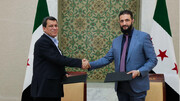
In the current situation, the framework of the agreement between the SDF and the Damascus government reflects these limitations. According to this framework, part of the local authorities will be preserved, but the control of the judicial and security institutions will be transferred to the central government; A structure that has wider legitimacy among different groups. This division of work is considered a practical necessity in such a demographic context.
At the executive level, the two sides have reached an agreement on the gradual reopening of government courts in Haskeh and Qamishli. Former government judges are also supposed to be integrated into the new structure, along with some judges appointed by the SDF—if they have the necessary qualifications. The exchange of prisoners is also underway in order to prepare the ground for handing over the detention centers to the government. In addition, the local SDF-affiliated forces are to be individually integrated into the official structure of the Syrian Army as Border Guard Forces.
Overall, the demographic and geographic data show that the Kurdish political project in Syria, rather than being influenced by tactical choices, has faced deep structural limitations that continue to cast a shadow over the future of this case.


Your Comment