
According to Kurdpress, Hiva Othman, an expert on Kurdish issues, has tried to analyze the crisis of political fragmentation in the Kurdistan Region and Iraq, referring to the Arabic translation of Jonathan Randal's book about the Kurds, in an analysis published in English on the X social network. He recalls that Rundle's book was originally titled "After This Scandal, What Forgiveness?" It had been published, but the Arabic publishers chose a different title for it, which at the time of publication seemed derogatory and unfair to many Kurds. However, Othman says that today's developments in Kurdish politics have made that title seem closer to reality than ever before; The fact that party differences and the lack of a single voice have become one of the most important political obstacles for the Kurds.
Hiva Othman believes that the more he looks at the current state of Kurdish politics, the less he can disagree with that title. Not because the Kurds lack history, identity, sacrifice or political weight, but because they have not yet been able to answer a fundamental question: Can they act as a single actor at critical moments?
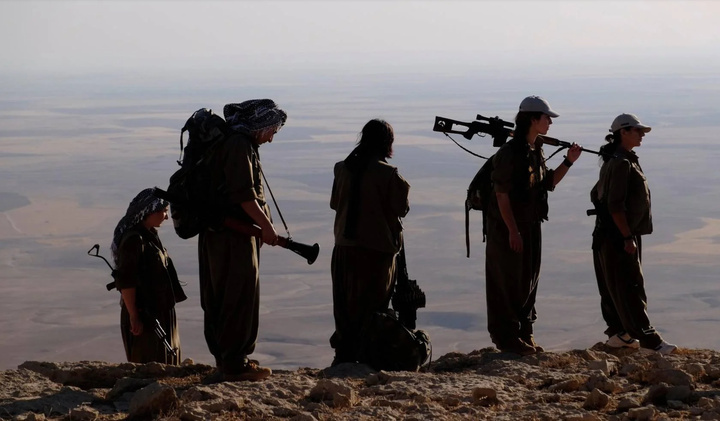
To explain this issue, he points to the recent statements of Donald Trump, the President of the United States of America. Trump claimed that weapons have been provided to the Kurds. According to Hiva Othman, the reaction of the Kurdish currents to this claim was itself a sign of a deeper crisis. Denials were swift, but not from a common position. Each of the two main parties of Iraqi Kurdistan tried to distance themselves from the responsibility and indirectly blame the other; A repeated pattern of competition and mistrust that has cast a shadow on the political atmosphere of the region for years.
For years, the common explanation for the Kurdish problem in the Middle East was that they were being used by the big powers and then put aside, Hiwa Osman says. According to him, this explanation still tells part of the reality, but it is no longer enough. The issue today is not only what others are doing to the Kurds; Rather, it is whether the Kurds themselves can appear as a single actor in regional and international equations.
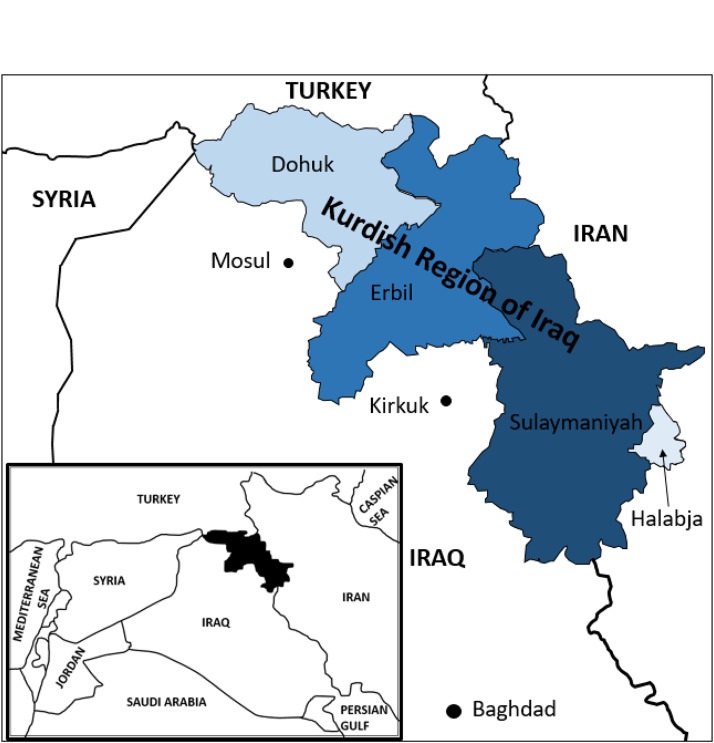
According to him, the internal gap is no longer an exception, but has become the rule. This situation can be seen in the process of forming the Kurdistan Regional Government; Because more than a year has passed since the elections, the negotiations are still stuck in the deadlock of endless bargaining. There is no unified Kurdish representation in Baghdad, and each movement negotiates in a separate direction. Even the presidency of Iraq, once considered a historical share of the Kurds, has now become an arena of intra-Kurdish competition.
He writes that these divisions have led to a recurring scene in Iraqi politics: the obliging prime minister goes to Erbil, then travels to Sulaymaniyah, and finally returns to Baghdad with several different positions, without facing a common Kurdish vision. In Iraq's political structure, which is based on complex ethnic, religious and party balances, this fragmentation actually weakens bargaining power.
According to him, only weak actors are not eliminated in politics; Actors who do not have a unified position are also marginalized. Regional and international powers are looking for transparency more than they are looking for justice; That is, the party that knows what it wants and can make a commitment about it.
Hiwa Othman emphasizes that internal division is no longer just a political choice, but has become a stable structure; A structure where every foreign crisis turns into an internal conflict and every political opportunity turns into a competition for party points.
In another part of his analysis, he takes the issue beyond the internal disputes of the Kurds and believes that in the history of the Middle East, many internal conflicts are not deliberately led to a final solution. Not necessarily because one side cannot win, but because the regional environment basically does not welcome the formation of a powerful and independent decision-making center. For this reason, crises are neither resolved nor allowed to reach a definitive conclusion; Rather, they are merely "managed" to maintain a fragile balance.
In such a situation, internal conflict is not just an internal problem, but part of a larger equation; An equation that neither wants unity nor a final solution to the crisis, but relies on the continuation of the state of suspension and dispersion.
This expert on Kurdish issues concludes that for this reason, every time a decisive moment arrives - whether in war, in negotiations or even in the face of a political accusation - the main question is not "what to do", but "who speaks for the Kurds?"; According to him, Iraqi Kurds have not yet found a clear answer to that question.
In the end, he writes that the biggest obstacle facing the Kurds today is not just external pressures, but the inability to prioritize collective identity and interests over party rivalries. From this point of view, when Trump spoke of the "Kurds" as a single actor, he was actually not using an existing reality, but its vacuum; Because he knew that the answer of the Kurds would be heard not from one voice, but from several scattered voice.
Your Comment