

According to Kurdpress, the current talks between the PKK and the Turkish government should be understood in the context of regional and global developments, because the PKK issue has long gone beyond the domestic level of Turkey and has become a regional and even international issue. Now a series of factors have come together that have made it possible to reach an agreement more than ever before. To properly understand these negotiations, it must be examined in a broader geopolitical context.
Geopolitical context
The world is gradually transitioning to a multipolar order, which has been highlighted by the Russia-Ukraine war and the October 7 attacks by Hamas on Israel. One of the main features of this transition is the increase in global instability, the signs of which are already visible in many parts of the world.
With the return of Donald Trump to the White House, according to one European diplomat, the world has entered a stage that can be called "survival of the fittest". The war in Ukraine has also forced Europe to focus on its internal problems more than before. From the sharp reduction of military power and long-term security dependence on the United States to the demographic crisis and the difficulty of increasing defense production.
On the other hand, Türkiye has prepared itself for such conditions at least during the last two decades; Through the development of indigenous defense industries and maintaining an army with combat readiness and manpower more extensive than many European countries. This military and industrial preparation was one of the reasons for Türkiye's prominent invitation to the London meeting on European security, and it can be seen as the beginning of the formation of the new European security architecture.
Türkiye, Israel and the new Middle East
These global changes have occurred simultaneously with deep transformations in the Middle East after October 7. After the attack by Hamas, Israel started wars on several fronts. However, if power is not measured in purely military terms, Israel's gains do not seem very sustainable. Assad's fall does not mean that Syria will become safer for Israel; Rather, his government has given its place to an Islamist group that may be a more serious threat to Israel in the long run. Especially since this current has the support of Türkiye, which has a wider regional influence due to its Ottoman heritage and Sunni identity.
The height of Turkish power and the height of Kurdish political influence
In such a regional and international environment, peace negotiations between Öcalan and the Turkish government are ongoing.
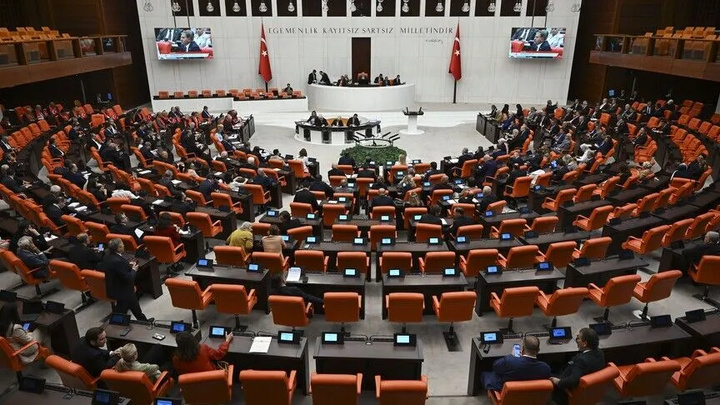
Domestically, a remarkable picture has emerged: Türkiye is now at the height of its regional power since the founding of the Republic a century ago. On the other hand, although the PKK has been weakened militarily, the political movement close to Öcalan has reached the highest level of political influence. This trend now holds more than 10% of the seats in the Turkish Parliament and plays a decisive role in many political equations; An achievement that cannot be compared with the situation of the Kurds at the time of the establishment of the PKK.
From this point of view, Abdullah Öcalan's recent positions gain a clearer meaning. At least during the last two decades, Öcalan had started to lay the groundwork for such a stage. His ideological transformation in prison - from Marxism-Leninism to "democratic confederalism" - was actually the beginning of a new phase.
It is noteworthy that the PKK started its armed struggle in response to the 1982 military constitution; A law that suppressed Kurdish political participation. Now, however, this organization is moving towards dissolution in a situation where the Turkish government is seeking to draft a new constitution that will open up the political space for the Kurds more than before. This situation can be considered a historical point and "return to the starting point" in the relations between Turks and Kurds.
Why is this time different?
Although efforts were made to resolve the Kurdish issue and end the conflict with the PKK, the current situation is different for three main reasons:
Unlike the previous periods when the peace initiative was pursued by Turgut Özal and Recep Tayyip Erdoğan - both outside the traditional power structure - this time the negotiation process has the support of the "deep state" and nationalist currents that have extensive influence in the army, judiciary and police.
This process started in complete secrecy and the negotiations between the Turkish government and Öcalan took place about a year before the publication of his message; An issue that shows extensive grounding has been done before.
These negotiations are taking place at the same time as huge geopolitical developments in the region and the world.
Ojalan's look; Return to the "civilized state"
Öcalan emphasizes an important point in his message: the modern nation-state system has separated Kurds and Turks during the last one to two centuries. He argues that the Kurds and Turks have been allies for more than a thousand years, that is, since the Battle of Melazgerd, when the Turks spread from Central Asia and the Caucasus to Anatolia.
According to Öcalan, "Turks and Kurds had to maintain this voluntary alliance in order to maintain their existence and survival against the dominant powers."
Öcalan has a very special place among PKK supporters and it is almost unthinkable to distance himself from his positions. What he proposes is a kind of return to the concept of "civilized state"; A pattern that the world seems to be moving towards again; An order based on multiple centers of power and cultural diversity, not the classic nation-states of the 20th century.
In such a framework, Türkiye can release new capacities to expand its regional influence, and in return, the Kurds will also benefit from this development. The presence of Kurds in different countries of the region becomes a potential tool for Türkiye to increase regional influence; Of course, provided that the structure of the Turkish government moves away from the ethnic definition of citizenship and moves towards the civil citizenship model. so that the Kurds accept this model within themselves.
According to Öcalan, the Kurds have cooperated with the Turks more than any other people in the past thousand years, and this alliance has been beneficial not only for the Kurds but also for the expansion of the influence of the Ottoman Empire.
Accordingly, Öcalan's main question seems to be this: Is it better for Turkey's Kurds to form a small and limited government, or to become a partner and shareholder of a country that is an important regional power? For this reason, his new project can be described as "transition from war with Türkiye to participation in shaping Turkey."
Türkiye's military evolution and balance change
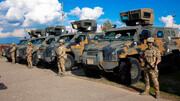
Türkiye's situation has changed drastically in recent decades. At the end of the 20th century, Türkiye's operations against the PKK were affected by Western arms embargoes and restrictions. But since the 2000s and especially in the 2010s, Türkiye has reached a significant level of military self-sufficiency by developing indigenous defense industries.
The development of drones, surveillance systems, and smart munitions fundamentally changed Türkiye's ability to counter the PKK. These technologies enabled constant surveillance and precise targeting and took the safe space from PKK forces. The result was that from 2018 and 2019 onwards, the casualties of the PKK forces were several times the casualties of the Turkish army, and Ankara managed to shift the battlefield to Iraq and Syria.
This transition from military dependence on the West to self-sufficiency in defense now allows Turkey to enter negotiations from a position of strength.
The two main pillars of Türkiye's new strategy
This new model is based on two main pillars:
First, internal reforms in Türkiye; Including drafting a new constitution and expanding the cultural rights of Kurds. These reforms mark Türkiye's gradual transition from the classic nation-state model to a "civilized state."
Second, Türkiye's regional strategy, especially in Syria; A part that still has many uncertainties.
Türkiye's complex strategy in Syria
It seems that Türkiye's strategy in Syria is multi-layered. The main goal is to integrate the Syrian Kurds into the structure of the new Syrian government, not to eliminate them completely. But Ankara is not ready for the Syrian Democratic Forces (SDF) to remain as an independent military force.
Türkiye is apparently trying to separate the issue of the Syrian Kurds from the PKK case and at the same time introduce itself not only as an enemy of the Syrian Kurds, but as a "supporter" of their rights in the new Syria. This approach allows Turkey to talk about the political rights of the Kurds at the same time as guaranteeing the dissolution of the military structure of the Kurdish forces known as the SDF/YPG.
However, circles close to the PKK reject this impression. They believe that Öcalan will never agree to an agreement that ignores Syria or leads to the full integration of the SDF into the new government in Damascus. From the point of view of these currents, the Syrian issue is an integral part of Amrali's negotiations.
America's role and the future of the SDF
Although some reports talk about the continued presence of the United States in Syria and Washington's support for the SDF, the evidence shows that Donald Trump is still in favor of the withdrawal of American forces from Syria; A position that existed from the first term of his presidency.
The difference today is that the circle close to Trump has more isolationist tendencies than in the past, and Republican opposition to his policies has also decreased. Therefore, the possibility of US withdrawal from Syria seems more serious than in the past.
In such a situation, some analysts talk about behind-the-scenes negotiations between Türkiye and the United States about the areas controlled by the SDF; The talks, which are probably aimed at preventing a military attack by Türkiye after the US withdrawal and providing some kind of smooth transition of power.
summary; A win-win agreement?
From Turkey's point of view, this peace process is a kind of strategic engineering of the government: by resolving the conflict with the PKK and integrating the Kurds into the country's political structure, Turkey neutralizes an internal security threat and prepares the ground for becoming a more regional power.
Türkiye does not seek peace from a position of weakness; Rather, he entered the negotiations from the position of power and now he is trying to determine the framework of political participation of the Kurds.
On the other hand, from Ocalan's point of view, the transformation of the PKK does not mean surrender, but rather a kind of strategic evolution; The understanding that the Kurds can have much more influence in the form of participation in the Turkish power structure than an armed movement on the margins.
It seems that Amrali's long negotiations were focused on this central idea, that is, redefining the relationship between Turks and Kurds in a way that both secures the interests of the Turkish government and answers part of the historical demands of the Kurds in a new format.
National Context


Your Comment