

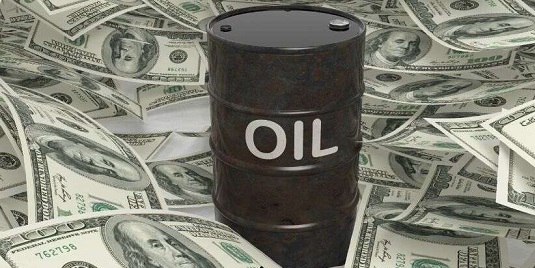
According to Kurdpress, the closure of the Strait of Hormuz and the sharp drop in Iraq's oil exports have made Baghdad more than ever in need of an urgent agreement with Erbil to revive oil exports from Turkey. In a situation where Iraq's oil exports have decreased from about 4.3 million barrels per day to nearly 800,000 barrels and the government is losing hundreds of millions of dollars in daily income, the Iraq-Turkey pipeline has now become the most important option for Baghdad to prevent the financial crisis from intensifying.
The current crisis was formed after the escalation of the American-Israeli war against Iran and disruption of the passage of oil tankers through the Strait of Hormuz; The route that is the main pillar of Iraq's oil exports. The decrease in exports has put a heavy pressure on the government budget, because about 90% of Iraq's income depends on the sale of oil. This issue has directly affected the payment of employees' salaries, the financing of the security forces and the political stability of the country.
In the meantime, the resumption of exports from the northern route through the Turkish port of Ceyhan has become Baghdad's fastest solution to compensate for part of the lost oil. In March, the Kurdistan Region of Iraq agreed to resume oil exports from the fields under the control of the federal government, and the transfer of oil from the Kirkuk-Ceyhan route initially began with about 170,000 barrels per day. Baghdad hopes to increase this number to 250,000 barrels per day.
But this measure is considered only a temporary solution. Before the stoppage of exports in 2023, the Iraq-Turkey pipeline transported between 420,000 and 450,000 barrels of oil per day, and its potential capacity reaches about 700,000 barrels per day. For the full return of this capacity, Baghdad and Erbil must reach a comprehensive agreement on how to manage exports, share revenues and the role of the state-owned company Sumo in the sale of regional oil.
The main difference between the two sides is still the issue of governance and control of energy resources. Over the years, Baghdad has tried to keep control of oil infrastructure and pipelines in the hands of the central government, as it sees increasing climate energy independence as a threat to federal authority.
On the other hand, Erbil also wants to guarantee the payment of the region's budget share, recognize oil contracts and provide security guarantees for foreign companies operating in Kurdistan.
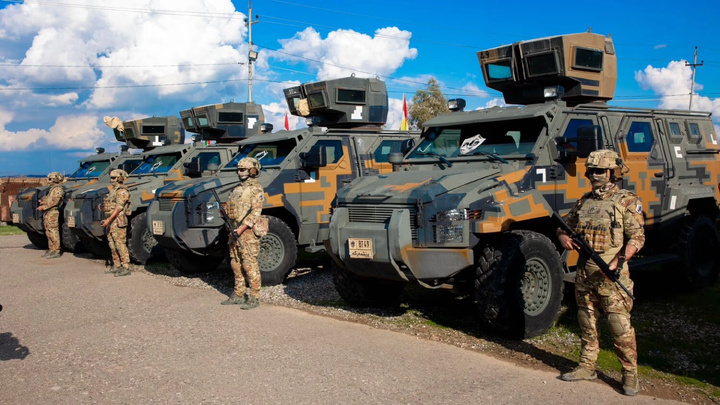
The security of the oil infrastructure in northern Iraq has also become another challenge. Attacks by Iraqi armed groups on energy facilities in the Kurdistan region have reduced the region's oil production and prevented the full use of the export capacity of the north. Meanwhile, the Kirkuk oil fields produce about 360,000 barrels of oil per day, part of which is used for Iraq's domestic consumption.
Along with Baghdad and Erbil, Türkiye has also become a decisive actor in this equation. Ankara has announced that the current agreement on the Iraq-Türkiye pipeline will end in the summer of 2026 and wants a broader agreement in the fields of energy, gas, petrochemicals and transportation. This issue has caused time to work against Baghdad, because as long as the agreement between the central government and the region is delayed, the bargaining power of Türkiye increases.
At the same time, Iraq is pursuing alternative projects such as the Basra-Aqaba pipeline to reduce its dependence on the Persian Gulf. However, these projects are still in the early stages and face financial, security and political obstacles. For this reason, in the short term, the only practical option for Iraq to increase exports is to fully restore the northern route and reach a stable agreement with the Kurdistan Region and Türkiye.










Your Comment