

According to Kurdpress, Turkey's policy towards the Iraqi Kurdistan Region, which was based on close cooperation with the Kurdistan Democratic Party and the leaders of Erbil for years, has now shown signs of change. The recent meeting of the Turkish ambassador in Baghdad with Bafel Talabani, the head of the Patriotic Union of Kurdistan, is evaluated by observers as a sign of the beginning of a new chapter in the relations between Ankara and Sulaymaniyah.
This development takes place in a situation where the peace process between the Turkish government and the Turkish Kurdistan Workers' Party or PKK has entered a new stage and Ankara is trying to expand the scope of its communication with various Kurdish actors in Iraq.
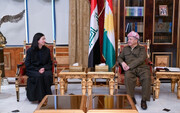
Turkish Ambassador to Iraq Anil Bura Inan met Bafel Talabani, the leader of the Patriotic Union, and Qabad Talabani, the deputy prime minister of the Kurdistan Region, on June 4. According to the announcement of both sides, the focus of the talks was investment, trade, formation of the new regional government and bilateral cooperation.
Although the officials of the two sides did not publish more details, this meeting is important because it is the first official meeting of a high-ranking Turkish diplomatic official with the leader of the Patriotic Union in the past few years. Relations between Ankara and Sulaymaniyah have been tense in recent years due to Türkiye's accusations about the closeness of the Patriotic Union to the PKK.
According to Amwaj Media, the peace process between Türkiye and the PKK is one of the most important factors in changing Ankara's approach towards the Patriotic Union.
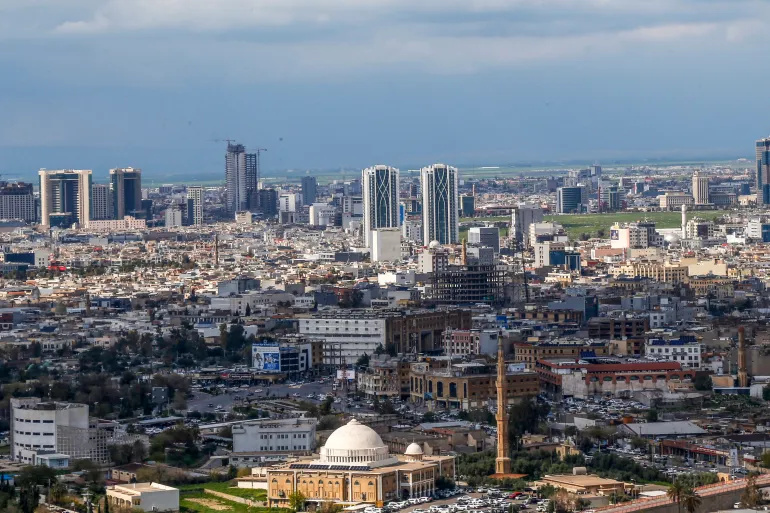
Türkiye has accused this party of supporting the PKK for years, but Sulaymaniyah has now become one of the main channels of communication in the dialogue process. On the other hand, Ankara has also shown signs of a desire to normalize relations with measures such as lifting the ban on flights to Sulaymaniyah airport.
According to analysts, in the new situation, Türkiye prefers not to rely on only one political partner in the region and maintains its relationship with both main parties of Iraqi Kurdistan.
Despite the warming of relations between Türkiye and the Patriotic Union, many experts believe that this development does not mean a decrease in the importance of the Kurdistan Democratic Party for Ankara.
Mehmet Alaja, a researcher of Iraq issues, told the media that Türkiye's policy is more "resetting" than fundamental change. According to him, Ankara still considers the Democratic Party as its main partner in strategic issues.
The control of the Ibrahim Khalil border crossing, which is the most important trade route between Iraq and Turkey, is still in the hands of the Democratic Party, and this issue has preserved the party's position for Ankara.
The change in Türkiye's approach occurs simultaneously with the continuation of the political deadlock in the Kurdistan Region. Months after the parliamentary elections, the Democratic Party and the Patriotic Union have not yet reached an agreement on the formation of a new government.
The Patriotic Union formed an alliance with the New Generation Movement in February; An action that some see as an attempt to increase the bargaining power of this party against the Democratic Party.
Meanwhile, the competition between the two parties continues in Baghdad. Although the Democratic Party won more seats in the Iraqi parliamentary elections, the Patriotic Union was able to maintain its position in the federal power structure by attracting the support of the Shiite coalitions and part of the Sunni currents.
Along with the expansion of relations with the Patriotic Union, Türkiye has also tried to strengthen its relations with other Iraqi political actors. The Turkish ambassador's meeting with Qais Khazali, the leader of Asaib Ahl al-Haq, is also evaluated in the same context.
According to observers, Ankara is now seeking to increase its influence in Sulaymaniyah and Baghdad while maintaining close relations with Erbil. A strategy that can highlight Türkiye's role in the peace process with the PKK and the future developments in Iraq.
However, this change does not seem to mean abandoning Türkiye's traditional ally in the region. The Kurdistan Democratic Party is still the most powerful political actor in the region, the controller of the most important border crossing with Türkiye and one of the most influential Kurdish parties in Iraq.
For this reason, what is seen in Ankara's politics today, rather than a complete turn, is an attempt to create a balance between the two main parties of Iraqi Kurdistan and increase the scope of Turkish influence in the equations of the region and Baghdad.

Your Comment