

Kordpress - Simultaneously with the start of the Barzani Grand Mosque construction project in Erbil and widespread reactions to its political, cultural and identity aspects, Salahuddin Khadio, Kurdish writer and political analyst, in a note that he published in two parts on his dedicated channel "Sharnameh", took a critical look at why this project was implemented and its possible consequences for the future of the Kurdistan region. In this note, Khadio analyzes the Jame Barzani Mosque from the perspective of political legitimacy, developments in the discourse of Kurdish nationalism, the role of religion in politics, the competition of traditional parties and new regional balances. What follows is the full text of the first part of this note.
The Prime Minister of the Kurdistan Region followed in the footsteps of Türkiye, UAE and Saudi Arabia in the mosque building competition by unveiling the super project of Barzani Grand Mosque.
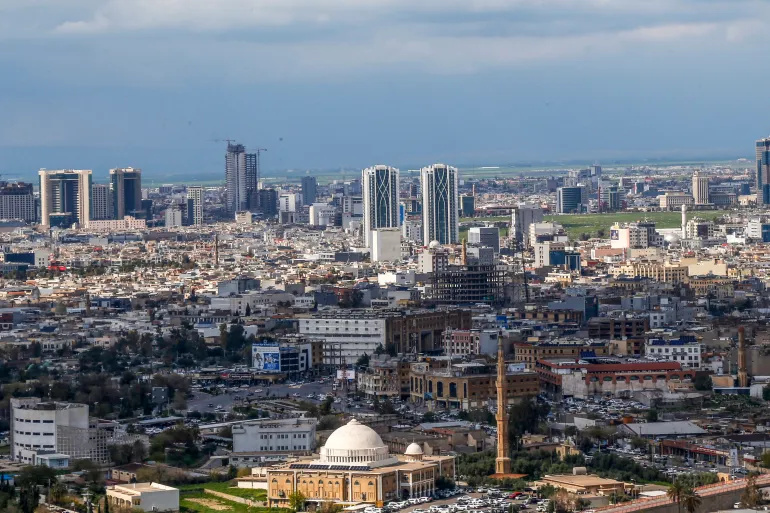
Barzani Grand Mosque will be built in the heart of Erbil on a land of 200 hectares and an infrastructure equal to two million square meters.
Barzani said during the groundbreaking ceremony: This mosque will be a display of the glory of authentic Kurdish architecture and a harbinger of the close connection between religion and national identity. The main nave is supposed to be transformed into a geometric curve inspired by Kurdish nomadic tents.
As mentioned, currently, Saudi Arabia, Turkey, and the UAE are three active countries in the construction of luxurious and huge mosques in the world.
The mosque-building diplomacy of these countries is part of their branding policy and an attempt to influence culture and increase soft power. But at the same time, each of them pursues separate goals.
The United Arab Emirates is fundamentally opposed to any kind of political approach to Islam, and its Sheikh Zayed Mosque is more than a religious center, it is a tourist attraction and a showcase of its flamboyant wealth and prosperity. At the same time, along with some other religious symbols, the preacher of the so-called moderation and moderation of Islam is the Emirati model.
The account of Türkiye and Saudi Arabia differs to a great extent. Each of these two countries is somehow a defender of a form of political Islam and an interventionist in social organization, and the mosque building policy is considered a part of their soft influence strategy.
The interest of Erbil and its ruling political family in the governance model of the UAE and its macroeconomic political and economic orientations cannot be hidden. But there are also important differences between them.
Islam in the Kurdistan region has deeper social, historical and political roots than the UAE. Contrary to the new and relatively fake title of Emirati Islam, Kurdish Islam is a familiar term in Oriental studies and historical researches conducted by Orientalists in the past centuries.
Unlike the UAE, Kurdistan is a semi-independent political unit and has much less regional ambitions. What has brought Erbil to build the world's largest mosque in Kurdistan, before external considerations, is the need to gain legitimacy inside.
The Kurdistan Region is facing the biggest gap and internal divisions among the main parties. About two years after holding the parliamentary elections, not only the new government has not been established, but basically the parliament has not held a meeting.
During the past years, in parallel with the decline of people's favor for the two main parties and the erosion of their voter base as preachers of secular Kurdish nationalism, the trend towards religion has increased significantly.
The reflection of concern about this transformation can be observed in the form of increasing appeal of leaders of ruling parties to religious symbols and metaphors.
Even single-purpose parties such as the New Generation movement and the Halvest movement, which, unlike the two major political camps of Yekiti and the Party, have been formed around specific issues and protests, like the new generation movements, are not safe from the temptation of clinging to religious attractions and using religious feelings and emotions.
The Kurdistan Democratic Party, as the largest party in the Kurdistan Region, is aware of the changing taste of the people and the exhaustion of the traditional voter base of the existing parties. Currently, the similarities between the party and the unity, which were born from the political split of 1964 in the Kurdish national movement, are much more than their differences.
In addition to this late re-emphasis on religious identity and Kurdish identity, it puts neglected capacities in front of Kurdish nationalism.
It is worth mentioning that the first emergence of Kurdish nationalism in the late nineteenth century did not happen through the thinkers of Makla, but through mosques, monasteries, clerics and elders.
The Kurdistan Democratic Party, which has important roots in a Naqshbandi monastery, is naturally inclined to combine religion and nationalism, and its hands are fuller than its competitors in this regard.
Kurdistan is not the United Arab Emirates, which is considered a full-fledged economic state with a majority non-indigenous and non-Muslim population.
Islam has a deep and unparalleled influence in Kurdistan, and playing with its card cannot be without danger.
In addition to that, in a divided atmosphere, the rival party will undoubtedly make up for the losses and spend more generosity to charm the conservative and religious social groups.
No real policy will succeed without a list of fundamental political and economic reforms that will end the existing division in the first place and reduce the concentration of the existing partisanship in the later stages.
Your Comment