

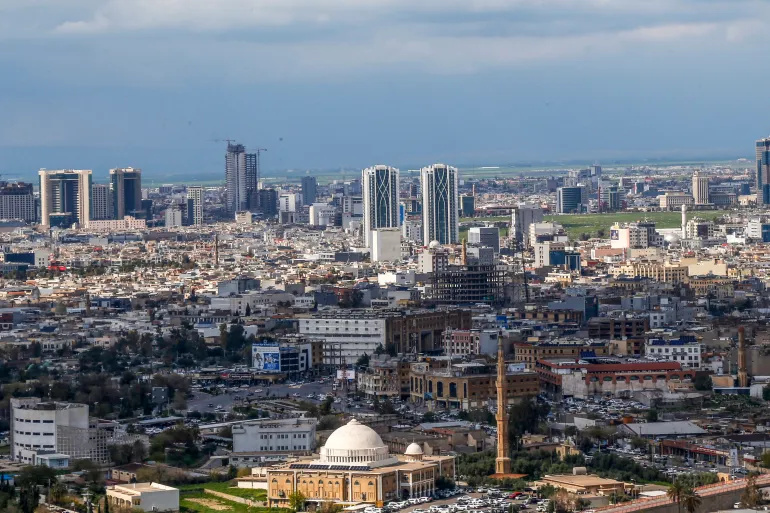
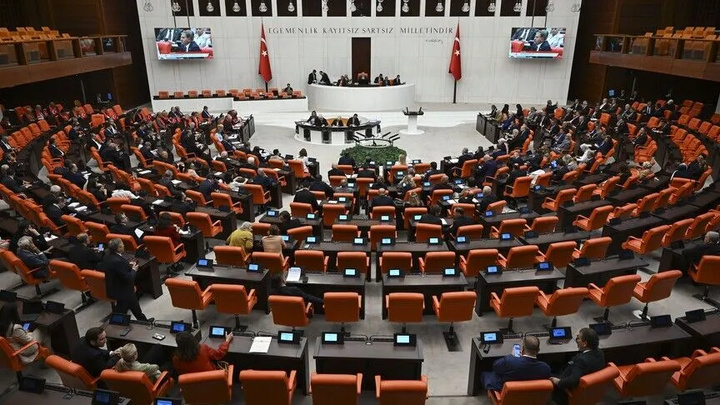
According to KurdPress, nearly two years after the parliamentary elections in the Kurdistan Region of Iraq in October 2024, the region is still being governed without a new government. The regional parliament has not been able to fully begin its legal activities, the cabinet remains in a temporary state, and long negotiations between the two main parties, the Kurdistan Democratic Party of Iraq and the Patriotic Union of Kurdistan, to form a new government have reached an impasse. More than 30 meetings have been held between the two parties, but disagreements over how to divide power, the structure of the future government, and the status of each party remain.This situation has reduced public trust and has called into question more than ever the traditional power-sharing model between Erbil and Sulaymaniyah that has been in place since the end of the civil war in the 1990s. In an interview with Amarji, Kurdish researcher Winthrob Rogers and political analyst Dr. Sardar Aziz examined the roots of this crisis, the breakdown of the power-sharing system, the differences between the Democratic Party and the Patriotic Union, the status of the Peshmerga forces, and the future of the Kurdistan Region.
Winthrob Rogers believes that the current impasse cannot be seen simply as the result of a dispute over ministries or government positions, but rather as rooted in two different perspectives on the future of the Kurdistan Region.According to him, the Kurdistan Democratic Party (KDP) considers itself the main political force in the region after the 2024 elections, when it won 39 seats and became the largest parliamentary faction, and believes that it should have a more decisive role in governing. In contrast, the Patriotic Union of Kurdistan (PUK), which won 23 seats, continues to emphasize the traditional model of a balance of power between the two parties; a model according to which neither party can marginalize the other.
Rogers says the problem is that both parties consider their views to be part of their political identity. The Democratic Party does not want to ignore the election results, and the Patriotic Union does not want to retreat from its historical position in the power structure. In his opinion, the weakness of the region’s official institutions has also exacerbated the crisis.From the beginning, many government institutions have remained under the influence of party networks and political leaders, rather than operating independently of the parties.
Dr. Sardar Aziz sees the root of today’s crisis in the failure to truly move beyond the legacy of the 1994-1998 civil war between the Democratic Party and the Patriotic Union. According to him, the 1998 Washington Agreement between the two parties, although it ended the military conflict, was more of a power-sharing agreement than a real project of political reconciliation and state-building. He believes that the two parties moved from the battlefield to the realm of government, but they maintained the mentality of military competition and distrust.
Sardar Aziz says: “We moved beyond the trenches where we were shooting at each other, but we brought the same logic into the administration of government. This time, the war continued in the form of dividing departments, the economy, the media, and political structures.» In his opinion, the 50-50 model between the Democratic Party and the Patriotic Union helped to stop the war, but at the same time prevented the formation of independent institutions and a real government.
After the fall of Saddam Hussein, the Democratic Party and the Patriotic Union signed a strategic agreement in 2006 to unify the regional government and transform the separate structures of Erbil and Sulaymaniyah into a single system. But this agreement failed to lead to the creation of strong institutions in practice. Rogers believes that the main reason for the failure was that the two parties refused to transfer their real power to formal institutions. The ministries, parliament, the regional government and the Ministry of Peshmerga were supposed to gradually replace the party structures, but the parties still preferred to maintain their direct control over the sources of power. As a result, state institutions became arenas of competition between the two parties, rather than pillars of a modern government.A significant part of the current crisis stems from the disagreement between the two new generation leaders of Iraqi Kurdistan: Masrour Barzani, the regional prime minister and the main figure of the Democratic Party, and Bafel Talabani, the leader of the Patriotic Union. They have completely different views on each other. The Patriotic Union accuses the Democratic Party of seeking to centralize power in Erbil and reduce the role of Sulaymaniyah since 2019. In contrast, the Democratic Party argues that the region needs a stronger and more efficient government after the failure of the 2017 independence referendum, the war with ISIS and the economic crises. Dr. Sardar Aziz believes that creating a strong region is possible, but this power must be based on law and institutions, not on the concentration of power in the hands of an individual or a political family. According to him, the main problem is that in Iraqi Kurdistan, “personal power” still replaces “institutional power”.One of the important points of this discussion is the change in the internal structure of Kurdish parties. Sardar Aziz believes that in the past, the political offices of the parties played a more important role and there were disagreements, competition and different trends within them; but today, decision-making is more concentrated in the hands of family leaders. According to him, politics in Iraqi Kurdistan has moved from the era of organized parties to the era of individual-oriented leaders; a period in which family and personal closeness to leaders has become more important than party structures.
One of the important developments after the 2024 elections is the rapprochement of the Patriotic Union and the New Generation Movement. These two parties, with a total of 38 seats, are now in parliament, almost opposite the Democratic Party's 39 seats. Winthrop Rogers says that the Patriotic Union is trying to use this coalition to return to the balance of power model.But the Democratic Party believes that the elections have shown that the people have chosen it as the largest political force and that the election result cannot be changed by a parliamentary coalition. Therefore, the main dispute is not over a few ministries, but over the definition of the future of the region: should the region be governed under the leadership of a strong party or continue to be based on a balance between the two main parties?
The region’s internal disputes have now also spilled over into foreign relations. In the years since 2003, the Democratic Party and the Patriotic Union usually had more coordinated positions in Baghdad and in their interactions with the United States and Western countries. But today the two parties follow separate paths on many foreign policy issues.Dr. Sardar Aziz believes that the historical differences between the two parties regarding the relationship with Baghdad have also become apparent again, as the Patriotic Union emphasizes federalism and presence in the Iraqi structure, while the Democratic Party focuses more on the autonomy of the region. Winthrop Rogers also says that party differences have caused the Kurdistan Region to no longer speak with a single voice in Washington. According to him, in the past, the Kurdistan Region’s representative office in the United States represented the common interests of the region, but now the Patriotic Union is pursuing its own independent lobbying path. He believes that this situation has occurred in a situation where the importance of Kurdistan for American foreign policy has decreased compared to previous decades, and Washington is now focusing more on other issues such as China, Ukraine, and global competition.
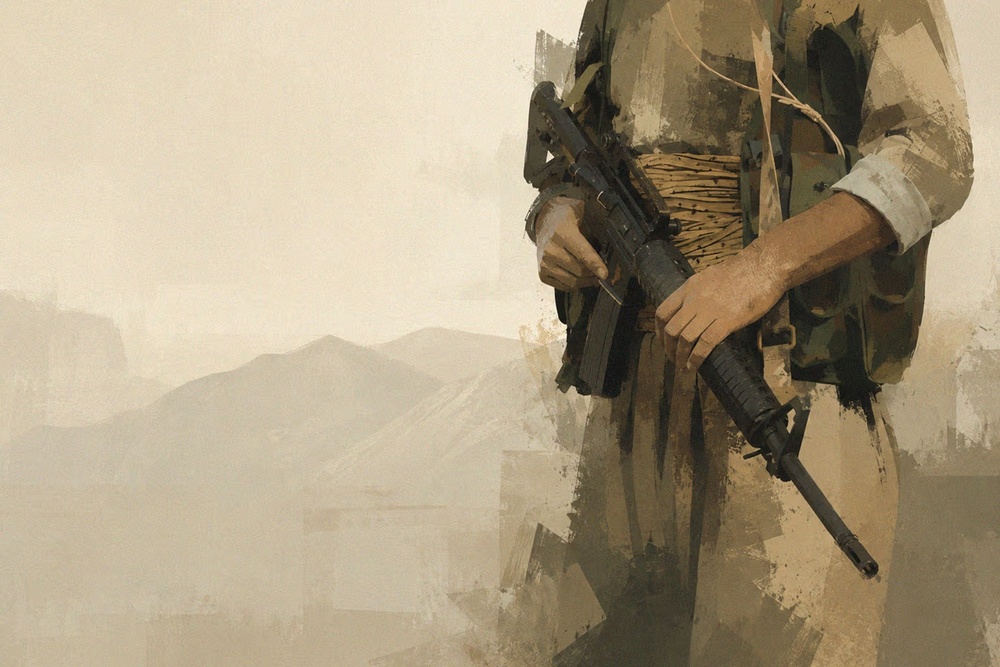
One of the most important unresolved crises in the region is the issue of the unity of the Peshmerga forces.Despite years of support from the US and European countries for military reforms, the Peshmerga forces remain dependent on two main structures. Dr. Sardar Aziz says that the Peshmerga problem is political before it is military. According to him, until the Democratic Party and the Patriotic Union reach an agreement on the real transfer of power to formal institutions, the creation of a unified military force will not be possible. He emphasizes that the Peshmerga must act like a professional army within the framework of the law, not as a tool of a political party. Rogers also believes that the international community initially thought that reforming the Peshmerga system could lead to political unity, but the main mistake was not understanding the depth of political differences between the two parties.
At the end of the conversation, both analysts emphasized the need for a fundamental change in the political structure of the region.Rogers believes that the region’s most important need is to strengthen an independent civil society, because without a social force independent of parties, there is no possibility of real reform of the political system. He says: “In order to rebuild itself, the Kurdistan Region must move beyond purely partisan politics and provide the necessary space for a real civil society.” Sardar Aziz also believes that the definition of power must change. According to him, power is not only having armed forces, financial resources and areas of influence, but also having a cohesive society, strong institutions, a dynamic economy and political legitimacy. He warns that if the region cannot move beyond the logic of erosive competition between the two parties, it will weaken its position in the new Middle East order.Therefore, the current crisis in the Kurdistan Region of Iraq is not the result of a simple electoral dispute; it is the result of three decades of institutional weakness, the continuation of the legacy of the civil war, the personalization of power, and the failure of the project to create a unified government. The Democratic Party and the Patriotic Union still insist on preserving the existence of the region, but their disagreement over how to govern this entity has put the political structure of Iraqi Kurdistan in one of its most difficult periods. The way out of this crisis is not a return to the traditional division of power nor the concentration of power in the hands of a single movement, but a transition to independent institutions, legalism, the creation of a professional army, and the adoption of democratic politics.
Your Comment