

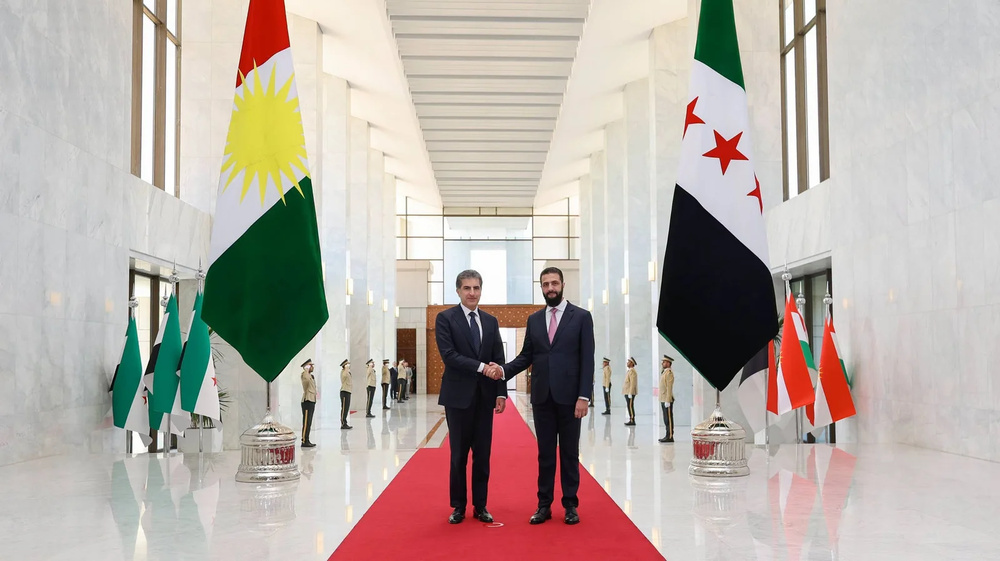
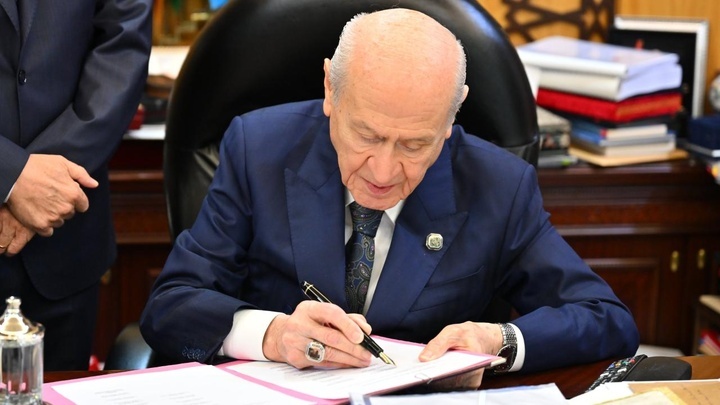
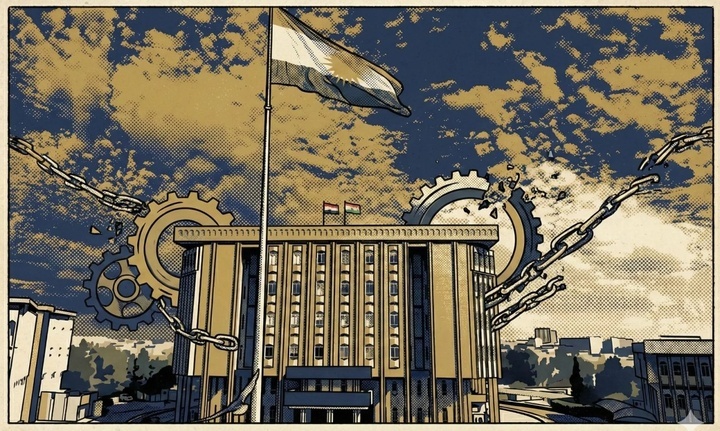
According to KurdPress, the visit of Nechirvan Barzani, President of the Iraqi Kurdistan Region, to Damascus and his meeting with Ahmed al-Shara, President of Syria, beyond a regular diplomatic meeting, carries important symbolic and political messages for the future of Damascus' relations with the Kurds, as well as the regional status of the Kurdistan Region.During this visit, Barzani was officially welcomed at the People's Palace in Damascus, and for the first time since the fall of Bashar al-Assad's regime in December 2024, the official flag of the Kurdistan Region was flown alongside the Syrian flag at the presidential palace, an event that many consider the most important symbol of the trip.
Syrian state media reported that the talks between the two sides focused on developing bilateral relations and economic cooperation, but Syrian sources told AFP that one of the main areas of the talks was advancing the process of integrating the Syrian Democratic Forces into the structure of the Syrian government and army.
The raising of the Kurdistan Region flag in Damascus is of particular symbolic importance, as it is the first time the flag has been officially raised in the Syrian capital, despite the fact that Syria has the smallest Kurdish population.The Iraqi constitution first recognized the regional flag as the official symbol of the regional government in 2005. The flag was officially displayed in Ankara in 2015 during a visit by regional officials and was raised at official ceremonies in Turkey two years later.
The visit comes at a time when the Syrian Democratic Forces (SDF) have entered a new phase. Since the January clashes, the Syrian government has recaptured much of the territory held by the SDF, and the forces are now largely confined to the Kurdish border strip in northeastern Syria. Analysts believe that this shift in the balance of power has led the SDF to accept an agreement that emphasizes maintaining a centralized and unified structure of the Syrian government and rules out the creation of any federal or autonomous region.Therefore, the current phase is more focused on the implementation of this agreement and the gradual integration of the military and administrative structures of the Syrian Democratic Forces into government institutions, rather than on military ones.
National Context’s analysis believes that Ahmed al-Sharaa will gain more benefits from this meeting than its appearance. According to the base, Damascus is now trying to transform the Kurdish issue from a security crisis to a manageable political issue, and the official welcome of Nechirvan Barzani is part of this strategy. On the one hand, the raising of the regional flag at the presidential palace sends a positive message to the Syrian Kurdish community about the acceptance of their cultural identity, and on the other hand, without changing the principle of the centralized structure of the government, it presents an image of coexistence between the government and the Kurds.
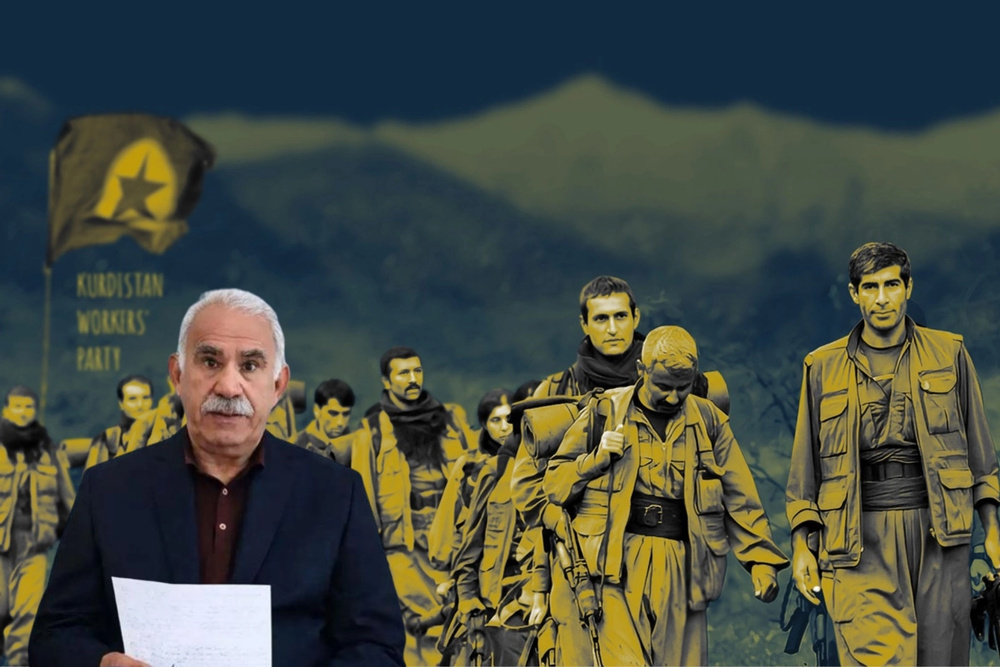
At the same time, this action also has another political function.According to National Context, the Syrian Kurdish political community is made up of three main currents: Kurds close to the traditional structure of the Syrian state, a current close to the Kurdistan Workers' Party (PKK), whose axis is the Syrian Democratic Forces, and a current close to Massoud Barzani, who operates within the framework of the Syrian Kurdish National Council. The flag raised in Damascus symbolizes the current close to the Kurdistan Region; a flag that was not recognized by structures close to the PKK in northeastern Syria for years and its use was even limited. From this perspective, welcoming Barzani could strengthen the position of parties close to Erbil in the Syrian political equation and at the same time prevent the formation of a united Kurdish front; a situation that, from the perspective of Damascus, makes it easier to manage the Kurdish issue.
This approach is also seen in the distribution of government positions.According to this analysis, the SDF has gained a greater share in the military and administrative integration process, including in the Hasakah governorate, while parties close to Barzani have taken a greater share of the seats reserved for Kurds in the Syrian legislature. Such a division of labor allows both main Kurdish currents to participate in the new structure, but at the same time prevents the complete concentration of power in the hands of a single current.
From the perspective of Damascus, the result of this process is to consolidate the principle of a unified Syrian state and transform the issue of the SDF from a challenge related to the future structure of the country into a manageable issue within the framework of official institutions.At the same time, the images of the Kurdistan Regional Government flag being raised in Damascus could also send a message to Western countries that the new Syrian government is not in conflict with Kurdish identity and recognizes the cultural rights of the Kurds within the framework of a unified state.
In contrast, Nechirvan Barzani also has specific goals for this trip. In addition to developing economic relations between the Kurdistan Region and Syria, this trip indicates acceptance of new political realities in Syria. According to National Context, with the consolidation of the new government in Damascus and its recognition by Europe and the United States, expanding relations with the government of Ahmed al-Sharaa and trying to guarantee the cultural and political rights of the Syrian Kurds within the framework of the new structure is considered the most realistic option for Erbil.From this perspective, Nechirvan Barzani's visit to Damascus was not simply a bilateral meeting, but rather a sign of the Kurdistan Region's relations with the new Syrian government entering a new phase and part of the process of redefining the position of the Kurds in the new Syrian political order; an order that is based on preserving the territorial integrity and centralized structure of the country, but at the same time tries to manage the Kurdish issue through dialogue and integration by granting some cultural rights and political participation.


Your Comment