

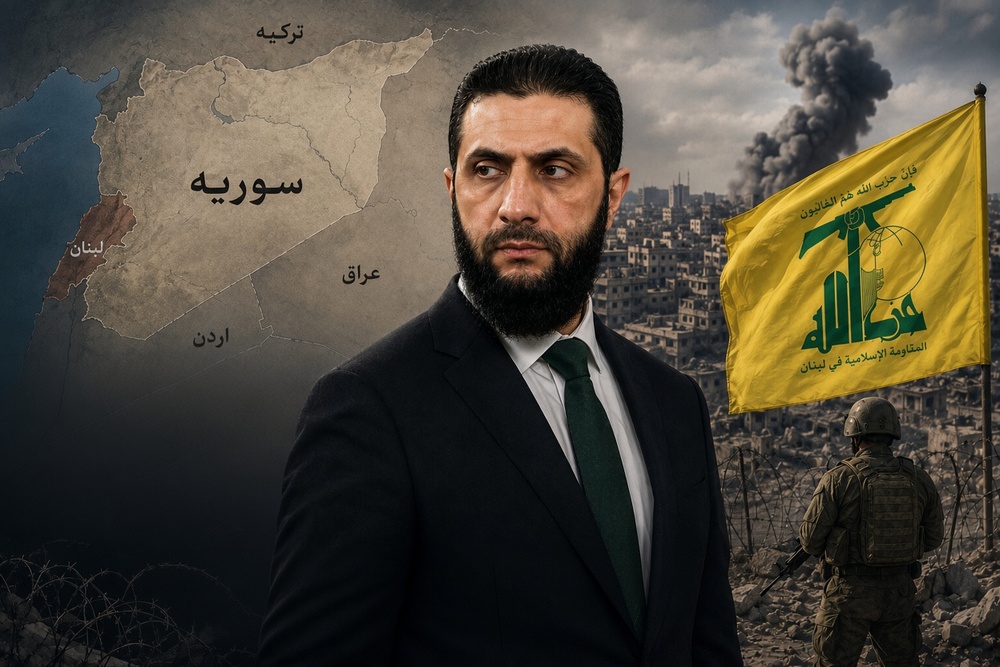
According to Kurdistan Press, in recent weeks, the name of "Ahmed al-Sharaa", the head of the Syrian interim government, has been raised more than before in connection with developments in Lebanon, and especially the Hezbollah case. This issue was first raised with US President Donald Trump's statements about al-Sharaa's readiness to help resolve the Lebanese crisis, and then reports were published about Washington's pressure on Damascus to play a more active role towards Hezbollah.At first glance, these developments could create the impression that the new Syrian government is moving towards a direct entry into Lebanon and even a military confrontation with Hezbollah. However, juxtaposing the statements of Syrian and American officials, the internal conditions in Syria, and regional considerations shows that there is an important difference between “increasing Syria’s role in the Lebanese case” and “military entry into Lebanon.” It seems that the likelihood of Ahmed al-Shara’s direct entry into the Lebanese war is low under the current circumstances, but the likelihood of Damascus’s increasing political and security role in this case is higher.
Part One; Syria’s Role in the Lebanese Case
An important point in these developments was Donald Trump’s statements. He praised Ahmed al-Shara’s performance and announced that the head of the interim Syrian government was ready to help resolve the Lebanese crisis.US Secretary of State Marco Rubio continued by emphasizing that Syria should first focus on its internal problems and secure its borders with Lebanon.
This difference in positions shows that Washington's goal is not necessarily to send the Syrian army to Lebanon. Syria, due to its long border with Lebanon and its location on communication and equipment transfer routes, can influence Hezbollah's equations even without military entry into the country. Controlling the crossings, preventing the transfer of weapons, and cooperating with Lebanon in intelligence could achieve some of America's goals.
On the other hand, Ahmed al-Sharaa has repeatedly emphasized that Syria has no plans to enter Lebanese territory and does not want to repeat the pattern of past military interventions in the country. This position is also consistent with Syria's internal conditions.The new government is still rebuilding its military and security structures, integrating various forces, and consolidating central authority, and entering a foreign war could complicate this process.
The Lebanese war is also not a simple military operation. Hezbollah is a powerful player in Lebanon’s political and military structure, and the entry of the Syrian army could increase the scope of the conflict. On the other hand, the memory of the Syrian military presence in Lebanon still exists in a part of the country’s society, and even Hezbollah’s opponents may oppose the return of the Syrian army.
In such circumstances, Damascus’ military intervention could have a result contrary to the initial US goal. Hezbollah may present the presence of Syrian forces as “foreign intervention” and position itself as the defender of Lebanon.As a result, the war with Hezbollah could not only not weaken the group, but also give it the opportunity to rebuild some of its political and social position.
From this perspective, the less costly option for Damascus is to increase its security role on the Syrian side of the border; control official and unofficial crossings, combat arms and drug smuggling, prevent the transfer of military equipment, and increase cooperation with the Lebanese army. Such a role would allow Syria to influence Lebanese equations without entering the war.
Part Two; Political and Discursive Limitations of the Golan
In addition to military and political considerations, there is also a discursive challenge. Ahmed al-Sharaa and some of the forces around his movement have a history of activity in Salafi Islamist movements, and the direct entry of the new Syrian government into the war with Hezbollah could be questioned by some of these movements.In other words, if Golani were to enter the war against Hezbollah alongside the US and Israel, this action could be seen in part of the Salafi discourse as a war of one Muslim against another group of Muslims, contradicting some of the discursive foundations of these movements.
This could increase the political cost of al-Shara’s decision, especially since the new Syrian government is simultaneously trying to present itself as a realistic and inclusive government and consolidate its position at home. Therefore, Damascus is likely to maintain a certain distance between its political stance towards Hezbollah and direct military involvement in the war with this group.
In addition, Syria still faces numerous economic, security, and political problems. The new army is not yet fully integrated, and local forces still play an important role.Therefore, entering the Lebanese war could drain Damascus’ political, economic, and military resources and complicate the process of stabilizing the new government.
Turkey, the United States, and Israel also have different calculations about the future of Syria and Lebanon, and Damascus cannot make decisions in a vacuum. On the one hand, Al-Sharaa needs its relations with the United States and regional countries to rebuild Syria, and on the other hand, it must prevent its country from entering wars that could threaten internal stability.
For this reason, the most likely scenario seems to be an increase in Syria’s political and security role in the Lebanese case, without its army directly entering the war. Damascus could become more active in border control, limiting arms transfers, security cooperation with Lebanon, and political dialogue.
Ultimately, the main issue is not whether Syria will play a role in the Lebanese case; but rather how far this role will go.If Washington only wants to control the borders and limit the transfer of weapons, Damascus is more likely to cooperate. But if US and Israeli pressure for Syria to enter the war with Hezbollah increases, al-Shara’s calculations will become more complicated.
Therefore, it seems that in the current situation the likelihood of Ahmed al-Shara’s direct entry into the Lebanese war is low, but an increase in Syria’s political and security role in this case is more likely. For Damascus, entering the war could be an opportunity for influence, but at the same time it carries the risk of becoming one of the biggest challenges to the new Syrian government’s foreign policy.
Author: Bahman Mirani
Syria Service KurdPress News Agency


Your Comment