

According to Kurdistan Press, the US-Israeli war with Iran and the closure of the Strait of Hormuz have pushed Iraq to revive an old route but under new conditions. Baghdad now transports some of its fuel oil via Syrian roads to the port of Banias on the Mediterranean coast, which is an economically costly option in normal times, but could be a vital alternative route for Iraq in times of crisis.
According to a note by Dr. Sardar Aziz at the Amarji Institute, about 500 tanker trucks travel this route daily.The trucks carry fuel oil, known as “black oil,” which is mainly used in shipping and power generation. At the same time, Iraq and Syria have signed an agreement in Washington to rebuild and revive the Kirkuk-Banias oil pipeline, which, if rebuilt, could provide much greater capacity than road transport.
However, the formation of the truck route is not simply a temporary response to the energy crisis and could have wider economic and geopolitical implications for relations between Baghdad and Damascus.
Iraqi oil exports via the Syrian route are carried out through a centralized mechanism managed by the Iraqi government, with coordination on the Syrian side being carried out by officials in Damascus.Drivers who intend to participate in this operation must provide their personal, family and residence information to Iraqi authorities, and after going through security procedures and receiving a permit, their trucks are equipped with a tracking system.
Each truck receives two GPS devices so that its movement on the return journey is also monitored. This monitoring is implemented to prevent the trucks from deviating from the designated route and to ensure security considerations, and according to local information, there have even been cases of drivers being detained for violating the designated route.
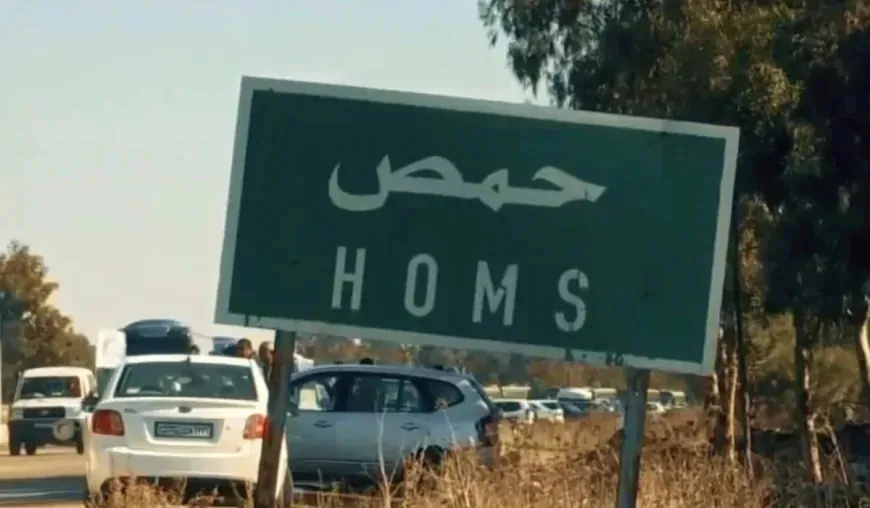
The trucks enter Syrian territory through the Al-Walid border crossing in Anbar province. This crossing connects to Homs province on the Syrian side, and the route passes through mainly desert areas.Once in Syria, the trucks are organized into convoys of 50 to 100 vehicles, and Syrian police and military forces escort them to their destination.
The Syrian government charges an entry fee of $250 per truck, which, while an additional cost for the Iraqi side, is a significant source of income for the Syrian government in the current difficult economic conditions.
The final destination is the port of Banias on the Mediterranean coast, where the Banias oil refinery, Syria’s largest, is located. Built in the 1970s with the participation of a Romanian company, the refinery could once again play an important role in transporting and processing Iraqi oil in the context of new regional developments.
One of the points of interest in evaluating this route is its comparison with the previous oil transportation route. According to one of the drivers, the journey from Iraq to Banias takes about 10 days.Despite the length of the route, some drivers and local activists consider it safer and less troublesome than the previous route, believing that it is less prone to obstacles and corruption.
But the route has its own limitations. Drivers in Syria have little freedom of action and are monitored and accompanied by security forces almost the entire time they travel. In fact, the new model of transporting Iraqi oil in Syria is more of a state-run and securitized corridor than a free trade network.
This situation shows that the sustainability of the truck route depends not only on economic issues, but also on Syria’s political and security stability and Damascus’ ability to ensure the security of the corridor.
The movement of Iraqi tankers to Banias is also politically significant. Just a few months ago, it was difficult to imagine Baghdad’s extensive cooperation with the Syrian transitional government.The ruling political coalition in Iraq was skeptical of the new Syrian government’s political and religious approach. Ahmed al-Sharaa was also still known in some Iraqi political and security structures for his jihadist background.
But the energy crisis and regional war have changed Baghdad’s calculations. Iraq, with an economy heavily dependent on oil revenues, cannot afford to ignore alternatives when traditional energy export and transit routes are disrupted. In this sense, oil cooperation with Syria is part of a larger shift in relations between the two countries, a shift that also involves US pressure and support.The Iraq-Syria route also fits into the so-called “Four Seas” plan being floated in US policy circles, a framework that aims to create a network of energy and transit routes between the Persian Gulf, Caspian Sea, Mediterranean Sea and Black Sea via Syria and Turkey. In this framework, Syria could transform from a war-torn country into a transit link in the regional energy network.
For Damascus, the importance of this route is not limited to revenue from truck tolls. The Syrian government is trying to present itself as a safe and reliable transit route in the region. The transfer of Iraqi oil to Banias is an opportunity to prove this claim.
At a time when Syria is facing an economic crisis, a lack of financial resources and an urgent need to rebuild its infrastructure, the revenue from the passage of oil and goods could help bolster the government’s finances.On the other hand, the creation of trade and energy corridors could also enhance Syria’s geopolitical position.
US pressure on Damascus to reduce imports of Russian oil also becomes important in this context. If Syria can simultaneously reduce imports of Russian oil and become a destination or transit route for Iraqi oil, the country’s energy structure will gradually move away from wartime dependencies.
The main question is, if the Kirkuk-Banias pipeline is restored and activated, will oil transportation by truck end? From an economic perspective, the pipeline is likely to be a more efficient and cheaper option and can transport much larger volumes of oil. However, some local activists believe that trucks will continue to operate even after the pipeline is restored.The reason for this assessment is that road transport is more flexible and can cover areas that do not have direct access to pipelines.
In addition, recent developments in Iraqi-Turkish relations are also important. The new agreement between Baghdad and Ankara on oil exports could make northern Syria and its peripheral routes part of Iraq’s broader energy export network. Thus, the Syrian truck route may evolve from an emergency solution to overcome the crisis into part of a multi-route energy export network.
However, this prospect should not be taken for granted. Transporting oil by truck is more expensive than by pipeline and, on a large scale, is more economically difficult. Its continuation will only make sense if the benefits of security, flexibility, and access to Mediterranean markets can compensate for the higher transportation costs.The new Iraq-Syria oil route is at the intersection of three factors: Iraq’s urgent need for alternative energy export routes, Syria’s need for revenue and economic reconstruction, and the US’s efforts to shape a new energy and transit network in the Middle East.
For this reason, the importance of this route goes beyond the 500 daily tanker trucks and the revenue they generate. This corridor could signal a gradual shift in Syria’s place in the regional economy, and could also move relations between Baghdad and Damascus from primarily security and political ties to economic cooperation.
But its future depends on a decisive variable: security.
If Syria can secure Iraq’s route to the Mediterranean, cooperation between the two countries could expand, and even after the reconstruction of the Kirkuk-Banias pipeline, road transport could remain a component of Iraq’s export network.But all these calculations could change if Syria were to enter a new round of regional conflict, especially in connection with developments in Lebanon or other war fronts.
Consequently, Iraqi oil exports via Syria cannot be seen as merely a temporary solution to bypass the Strait of Hormuz crisis. This route is becoming a test of Baghdad and Damascus’ ability to create a sustainable trade and energy corridor, the success or failure of which could affect the energy and transit map of the Middle East for years to come.



Your Comment