

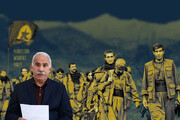
According to Kurdpress, Siamand Ali, the spokesman of the People's Protection Units (YPG), announced in an interview with Al-Monitor that the Syrian government forces, with the operational support of Turkey, are following a strategy based on disconnecting Kurdish cities and towns and gradually encircling them; A strategy that, according to him, could lead to wider conflicts and a new wave of Kurdish displacement.
While the extended ceasefire between the Syrian Democratic Forces (SDF) and the Syrian Army is officially in place, fighting continues on several key axes in northern and northeastern Syria. These clashes coincide with the fragile negotiations that are going on with the mediation of the United States to implement the January 18 agreement between Damascus and the SDF.
Referring to the situation in the field, Siamand Ali divided the conflicted areas into two main parts, "Jazeera" and "Kobani" and said that heavy clashes are going on around the Lafarge cement factory as well as the Kharab Eshgh (Chalbiyeh) area in the southeast of Kobani. According to him, the Syrian government forces have carried out four separate attacks using armored vehicles, artillery and Turkish drones, including Birqdar, all of which have been repelled. During these attacks, five civilians from the same family were killed by shelling.
He added that the YPG had managed to destroy two Syrian army tanks and five military vehicles, but declined to give exact numbers of internal casualties. According to him, the three main groups supported by Turkey, including the Hamza Brigade, the Sultan Suleiman Shah Brigade and the Sultan Murad Brigade, have been in the front line of the attacks, although they were all fighting in the uniform of the Syrian Army.
A spokesman for the YPG told the Jazeera front that heavy fighting is going on around Chil-Agha, and that government forces are aiming to cut communication routes along the M5 highway to separate the towns from each other. He emphasized that the main effort of Damascus is to advance towards the Samalka border crossing and separate the regions of Tarbespi and Remilan. In Haskeh province, three main axes of conflict have been reported in Shadadi, Tel Tamer and Tel Brak.
Siamand Ali clarified that the ultimate goal of the Syrian forces is to cut Qamishlo's connection with the Iraqi border. According to him, the strategy of Damascus is based on the gradual isolation of cities and then attacking them. He warned that if this scenario is realized, the Kurdish forces will have no other choice but military resistance. Despite emphasizing YPG's desire for the success of political negotiations, he said that Kurdish forces will defend themselves if the result of the talks is to impose disarmament and surrender. He added: "We don't want war, because it brings destruction for everyone, but as a military force, we cannot remain defenseless.
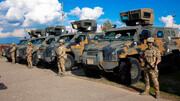
YPG spokesman also announced the widespread use of FPV, Matrix and Shahin drones by the attacking forces and said that these tactics were used by Turkey against the Kurdish forces before. According to him, many of the weapons used, including Akinci drones and armored vehicles, are made in Türkiye.
Rejecting Ankara's claim of non-interference, he emphasized that the field evidence shows that Turkey is directly involved in these conflicts, and the drone attacks on YPG positions in Kobani are a clear example of this involvement.
Siamand Ali warned about the human consequences of the advance of the government forces and said that the entry of these forces into Qamishlu or other Kurdish areas could lead to widespread fear of ethnic cleansing and as a result, the mass flight of Kurds to Iraq and Turkey. He added that many residents consider the forces under the command of Ahmed al-Shara, the interim president of Syria, to be jihadists and do not trust them.
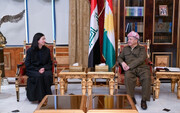
In response to reports about Kurds from Iraq and Turkey joining the ranks of the SDF, the YPG spokesman said that he was not surprised by the support of Massoud Barzani, the leader of the Kurdistan Democratic Party of Iraq, and recalled that he supported the Syrian Kurds in 2012 and 2014.
He considered the role of the international coalition forces to be limited to protecting the American forces and ISIS prisons and said that there is no indication that these forces are trying to prevent the attacks of the Syrian army. According to him, unlike in 2019, when the American Central Command had active positions, this time it remained silent and practically handed over the field to diplomats.
Siamand Ali described this silence as a form of indirect support for Ahmad al-Shara and said that the escape of ISIS prisoners from prisons such as Shadadi and Raqqa, near American bases, is questionable and strengthens the suspicion of the revival of ISIS.
Referring to the US bases in Qasrak, Remilan and Haskeh, he said that the YPG wants the continued presence of American forces and considers them to be the cause of creating balance in the region
In response to a question about the fall of SDF Arab forces in Raqqa and Deir ez-Zor, Siamand Ali said that the new Syrian government was able to attract a part of Arab tribes and forces to itself; According to him, this was not foreseen. However, he emphasized that there are still significant Arab forces fighting alongside the SDF, including members of the al-Shaitat tribe and a Sunni Arab brigade led by Omar al-Adilbi.
He previously announced the number of SDF forces at around 100,000 and said that half of them were Arabs; The forces, most of which have now joined the Damascus army and in practice have turned into an army consisting of tens of thousands of troops trained and equipped by the United States.
YPG spokesperson also attributed Russia's gradual withdrawal from Qamishli bases and airport to the country's loss of balancing role after the fall of Bashar al-Assad. In the end, Siamand Ali, referring to Ahmed al-Shora's past as the commander of Jabhat al-Nusra, described him as a disciplined commander, but emphasized that Turkey's support played a decisive role in his rise to power. He added that for the future of his children and the country, he considers it possible to even sit at the negotiating table and talk with the President of Syria and does not consider this issue personal.
Your Comment