
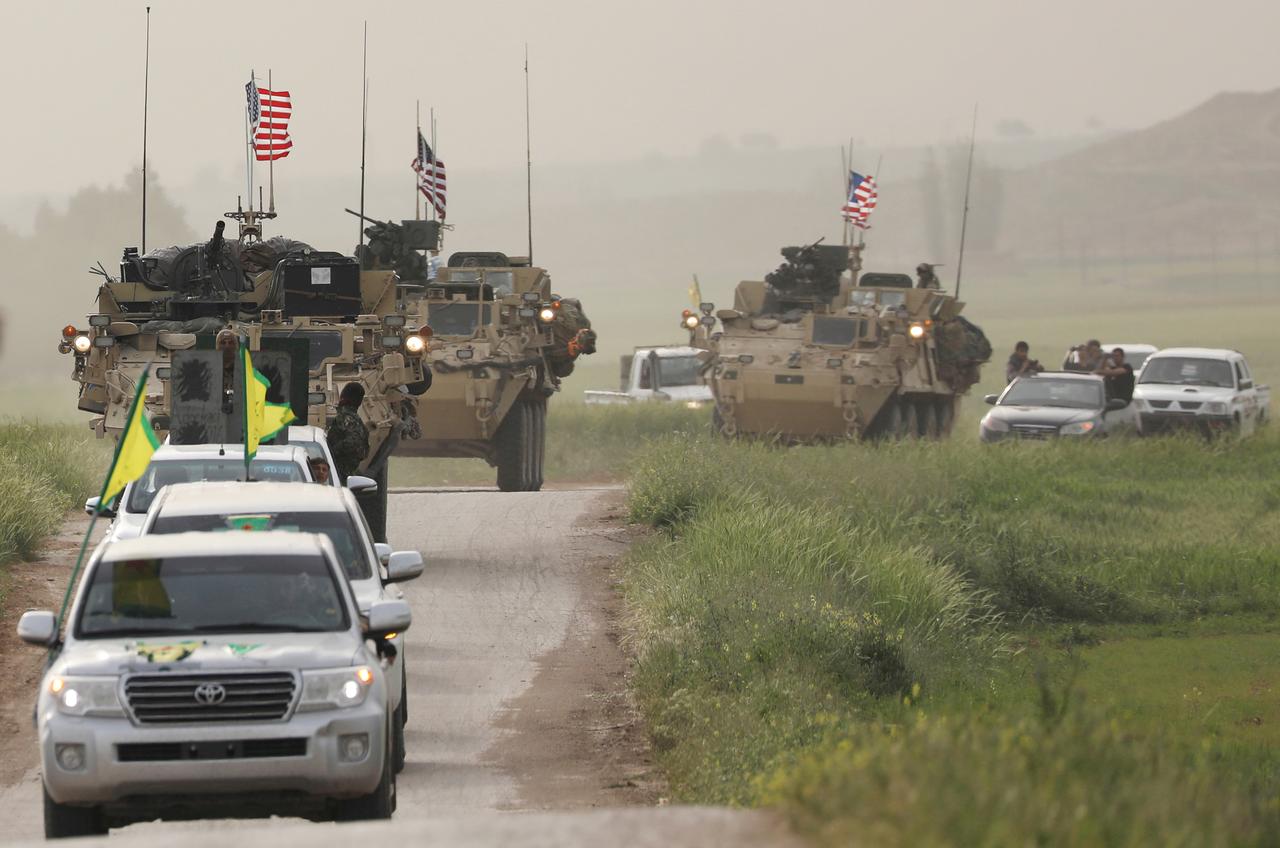
According to Kordpress, the analytical report of Newsspices magazine titled "Expedient partners; The limits of the commitment of the United States to the Syrian Kurds" show that Washington's decade-long alliance with the Syrian Kurdish forces was formed based on security considerations and sectional interests of the United States, rather than based on political support for the Kurdish self-government, and is now ending.
This report, which was published in March 2026, emphasizes that Syrian Kurds, who make up about 10% of the country's population, have been deprived of political participation, cultural rights and even citizenship for decades. With the beginning of the Syrian crisis in 2011 and the withdrawal of the central government from some northern regions, Kurdish groups, especially the Democratic Union Party (PYD) and the People's Protection Units (YPG), were able to take control of parts of northern Syria.
The emergence of ISIS in 2014 was a turning point in the relationship between the US and the Syrian Kurds. According to this report, in search of a reliable ground force to deal with ISIS, Washington went towards an alliance with the Kurdish forces, and from this cooperation, the "Syrian Democratic Forces" (SDF) was formed; A coalition whose main pillar was formed by Kurdish forces.
According to this analysis, the Syrian Democratic Forces played a key role in the liberation of Raqqa and the collapse of the ISIS territorial caliphate, and then took responsibility for holding thousands of ISIS-affiliated prisoners. At the same time, the US maintained its influence in northeastern Syria at a much lower cost than the wars in Iraq and Afghanistan and gained leverage against the interests of Iran and Russia.
However, the report states that this alliance has always been fragile. As a member of NATO, Türkiye considers the People's Defense Units to be a branch of the Kurdistan Workers' Party (PKK) and has repeatedly carried out military operations against Kurdish positions in Syria. Also, the administration of Arab-inhabited areas by Kurdish-influenced structures caused ethnic and local tensions.
The author believes that after the fall of Bashar al-Assad's government in December 2024 and the establishment of a new transitional government in Damascus, America's priorities have changed. Washington now sees the new Syrian government as a more suitable partner for providing stability, containing ISIS and reducing its direct military presence. For this reason, the Kurds are asked to integrate into the central government structure.
In another part of the report, it is stated that during the January 2026 clashes between the new Syrian government and the Syrian Democratic Forces, the US response was limited to a ceasefire request and, unlike in the past, decisive practical support for the Kurdish forces was not provided. From the author's point of view, this issue is a clear sign of the decline in the strategic value of the SDF for Washington.
The conclusion of the report is that the American policy towards the Syrian Kurds was not ideological, but completely instrumental; That is, whenever the demands of the Kurds were aligned with the geopolitical goals of Washington, they were supported, and whenever the equations changed, this support also decreased.
This report warns that the experience of the Syrian Kurds can have a negative effect on the trust of other non-governmental actors in the region in the security promises of the United States.







Your Comment