

According to Kordpress, the developments of the past year show that K. K has entered one of the most sensitive periods in its history; A stage that is accompanied by the withdrawal from Türkiye and Syria, the reduction of regional influence and the attempt to redefine the political and military position of this group. At the same time, the agreement between the Syrian Democratic Forces (SDF) and Damascus, Türkiye's pressures and the reduction of American support have made the future of the Kurdish political project in northern Syria uncertain.
After Abdullah Ocalan's call in 2025 for the disarmament and dissolution of the PKK, this group announced a unilateral ceasefire with Turkey and withdrew part of its forces from Turkish territory. Subsequently, dozens of PKK members left northern Syria and returned to the Qandil mountains within the framework of the agreement between the SDF and the Syrian government.
During more than a decade of the Syrian war, the PKK was able to create a stable sphere of influence in the north and east of Syria for the first time. People's Defense Units (YPG) took control of important Kurdish cities after the withdrawal of Bashar al-Assad's forces from the Kurdish areas in 2012, and later became the main ally of the United States in the war against ISIS in the form of the SDF.
But now this position is seriously weakened. "The PKK and its affiliates in Syria have lost a large part of their field influence, infrastructure and leverage," says Thomas McGee, a Kurdish affairs researcher at the European University Institute. He emphasizes that this situation has greatly reduced the influence of the Kurds in interaction with other Syrian actors as well as at the international level.
Although the government of Ahmad al-Shara has recognized some cultural and linguistic rights of the Kurds and opened the way to grant citizenship to thousands of Kurds without birth certificates, it has opposed any political autonomy or federalism.
Erdem Ozan, a former Turkish diplomat in the Middle East, says about this: "The bargaining power of the Kurds in Syria has greatly decreased with the loss of territorial control and the reduction of international support, and Damascus is now negotiating from a position of power." According to him, the Syrian government will likely only agree to "limited decentralization," not true autonomy.
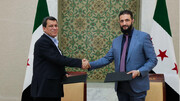
According to the January 18 agreement, the SDF agreed to integrate its military and administrative institutions in Hasaka province into the structure of the Syrian government, which effectively means the end of the "self-governing administration" project in northern Syria, although the implementation process is still facing disputes and stalls.
At the same time, America has also shown signs of distancing itself from the SDF. Tom Barak, the US special envoy to Syria, has announced that the SDF's main mission as an anti-ISIS force is "largely over"; A position that indicates a decrease in Washington's support for its long-time ally.
In Türkiye, the peace process has not yet entered the practical stage. Nazan Badirkhanoglu, a professor at Xavier University and a researcher of Kurdish issues, says: "The Turkish government sees this process not as a democratization process, but as a disarmament project; A project that can help Erdogan in the upcoming elections."
He also emphasizes that despite the high expectations, the Turkish government has not yet taken "any concrete action such as the release of political prisoners."
Analysts believe that Ankara sees the recent developments in Syria as a sign of the success of its security pressure strategy against the PKK. Erdoğan has also repeatedly rejected Kurdish demands for federalism in Syria and described it as a "crude dream."
Meanwhile, the possibility of Türkiye's new military operation against Syrian Kurdish forces is still raised; Especially if the SDF-Damascus merger process fails. Ozan says: "Türkiye has powerful motivations; From security considerations and internal politics to regional messaging to expand military operations.
Experts warn that the PKK in the new phase is likely to change from a regional actor with wide influence to a more defensive and fragmented organization. Ozan believes: "The PKK is resilient, but the loss of the Syrian base will push this group to a strategic contraction, and its priority will now be survival."
He also warns that in such a situation there is a possibility of an increase in asymmetric attacks or the emergence of branches: "When armed groups are under pressure, they may turn to more violent actions to prove their existence."
Thomas McGee also says that if the integration agreement fails in Syria, it is likely that groups close to the PKK will turn to irregular and underground wars against what they consider to be "occupying" forces.
However, many observers consider the complete collapse of the PKK unlikely. Ozan says: "Complete dissolution is not very likely; "Movements like the PKK usually morph, not disappear completely."
Nazan Badirkhanoglu also believes that the Kurdish movement has gone through difficult periods in the past and has always had a "long-term vision". According to him, instead of accepting defeat, this movement has tried to continue various forms of political and social resistance.
In sum, the current developments are more than the complete end of P.K. Whether it is the Kurdish movement, it is considered the sign of the end of a phase and the beginning of a new phase in the equations of the Kurds in Türkiye, Syria and the region.



Your Comment