

According to Kurdpress, Sirvan Qajo, an expert on Syrian Kurdish issues at the Middle East Forum think tank, wrote: The attacks of January 2026 by the Syrian government forces and their nomadic allies against the Syrian Democratic Forces (SDF), and the agreement that was imposed on the Kurds by the interim government of Ahmed al-Shora after that, created a new equation in the relations between Damascus and the Kurds, in which Damascus found the upper hand and the Syrian Democratic Forces were defeated. This fact now determines the framework of the relationship between the two sides and the direction of current developments.
Based on this new balance, the government of Ahmad al-Shora considers the concept of "integration" practically synonymous with "dissolution in the structure of Damascus" and acts accordingly. Damascus wants the Kurds to get the message clearly that the central government is in control of Kurdish areas.
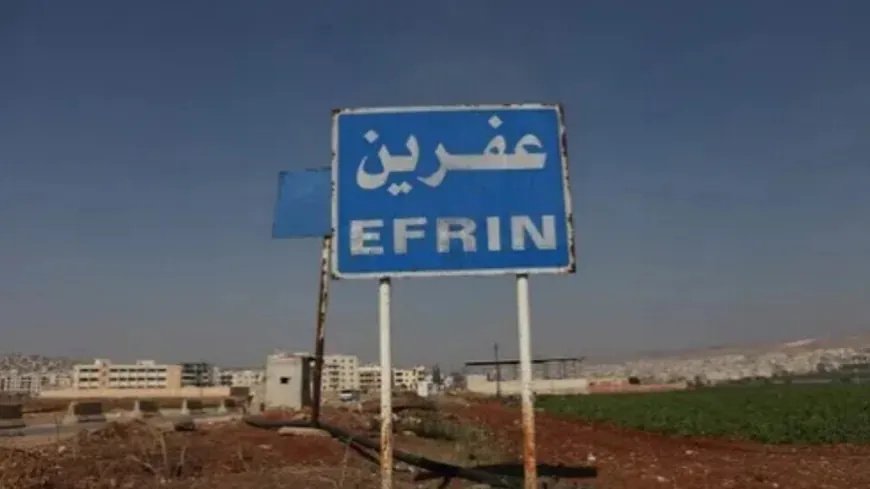
An example of this approach occurred on May 6, 2026; When the Syrian government removed the bilingual Arabic-Kurdish sign of the main justice building in Haskeh province and installed a new sign in which English was replaced by Kurdish; An action that angered the local youth despite the recognition of the Kurdish language as a national language by Damascus, and they pulled down the sign.
This event, according to the author, is part of a wider effort by Damascus to consolidate its authority and redefine the political reality in the Kurdish regions. It also shows that the Kurdish governor of Haskeh - who is considered one of the Syrian Democratic Forces - and other officials who were appointed in the framework of the recent agreement, have limited powers.
The author believes that the government of Ahmad al-Shora is clearly seeking to impose a cultural and uniform identity on Syria; An identity that is at least in line with the Islamist view of the new government. From his point of view, Damascus is trying to reproduce its desired "Kurdish identity"; An identity that weakens the independent political character of the Kurds and makes it subservient to the Syrian central structure.
In this analysis, it is stated that Ahmad al-Shara and his allied forces want to take advantage of the current balance of power - which has shifted in favor of Damascus - to change the long-standing realities of the Kurdish regions.
However, the author does not blame Damascus alone for the current situation and also accuses the Syrian Democratic Forces of "political negligence". According to his writing, the SDF leadership is trying to present the integration process as an opportunity to become a part of the Syrian government structure, but the realization of such a goal requires equality of position on both sides; Conditions that do not exist now.
In this analysis, it is emphasized that the Syrian government does not see the Syrian Democratic Forces as a partner, but as a subordinate and subordinate actor; While the Kurdish leaders either ignore this fact or are willing to accept it in exchange for a limited share of power.
The author adds that it is difficult for any actor in a conflict to accept defeat, but if the Syrian Democratic Forces want to maintain their political structure in the long term, they must be honest with their supporters; Something that has not happened yet.
Except for a number of second and third rank officials, the leaders of the Syrian Democratic Forces and the Autonomous Administration of North and East Syria have not only not accepted their defeat, but they continue to make the process of integration a political success.
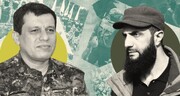
In another part of this analysis, the recent statements of Mazloum Abdi, the commander of the Syrian Democratic Forces, are mentioned. In an Arabic podcast, he struck a cautious and somewhat regretful tone when answering a question about hosting an interfaith dialogue conference in August 2025, attended by Druze and Alawite figures opposed to Damascus.
Also, one of the senior officials of the Democratic Union Party (PYD), the political branch of the Syrian Democratic Forces, has described the current situation as "democratic integration"; A description which, according to the author, not only does not help the situation of the Kurds, but has created a negative reaction among broad sections of the disaffected Kurdish society.
In this analysis, it is emphasized: "There is nothing democratic in the process imposed by military pressure on the Syrian Democratic Forces."
In the end, the author writes that the Syrian government has shown a high ability to play with political concepts and vocabulary. According to him, Damascus, with the support of its new partners in Washington, used the concept of "integration" to restore centralism to Syria and made the Kurdish self-governance experience largely meaningless.
However, this analysis emphasizes that the Kurds should not raise the "flag of surrender" because they still have powerful supporters in Washington, especially in the US Congress, who may prevent them from fully resolving their political situation in a highly centralized Syrian government.
Your Comment