

According to Kurdpress, the formation of a new government in Baghdad is usually associated with extensive political tensions and bargaining for the Iraqi Kurds, but now, while the dust of the new power-sharing agreement has settled in the Iraqi capital, a more dangerous crisis is forming inside the Kurdistan Region. A crisis that this time is not in Baghdad, but in Erbil.
In the past months, the Kurdistan Democratic Party and the Patriotic Union of Kurdistan have been involved in a fierce competition over taking over the positions of the new Iraqi government, especially the presidential seat. But now that these positions have been assigned, the center of gravity of the disputes has returned to the most important political case within the region, which is the formation of the new cabinet of the Kurdistan Regional Government.
According to the information obtained by "Amarji" publication, the Kurdistan Democratic Party is considering two main scenarios to bypass the veto power of the Patriotic Union. On the other hand, the Patriotic Union is also following a two-step plan to weaken the interim government of Masrour Barzani.
What emerges from this process is not just a political deadlock; Rather, it is a process in which the same parties who consider themselves the leaders of the region are actually destroying its political structure.
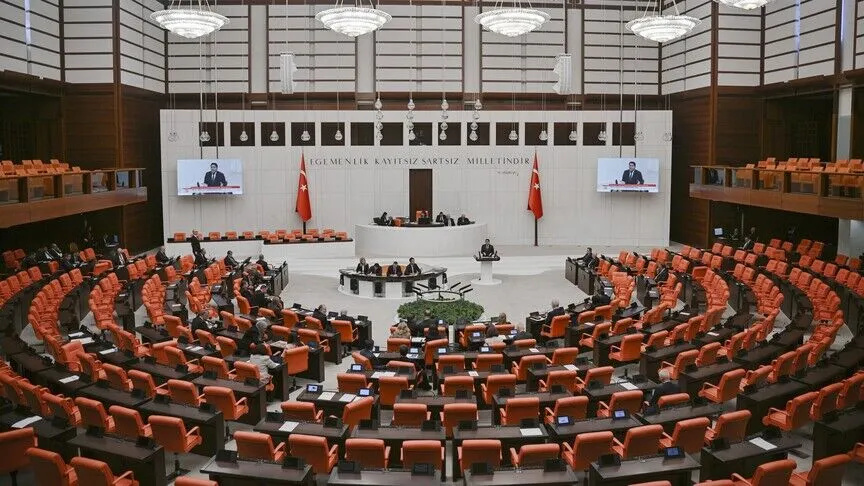
The parliamentary elections of the Kurdistan Region on October 20, 2024 were supposed to be the foundation for the formation of a new era of political legitimacy, but the result has been a political vacuum and stagnation. Due to the complete collapse of cooperation between parties on key positions, the new parliament has held only one session so far, which was solely dedicated to the swearing-in ceremony of the representatives.
According to the internal regulations of the parliament, the first meeting should lead to the election of the board of directors, but this meeting was left "open"; A political action that has been going on for nearly 19 months now.
"Amarji" research after the formation of the new Iraqi government shows that both parties are now moving in separate and destructive paths; A path that is more similar to the "scorched earth" policy.
According to two separate sources who spoke to Amarjee, the Democratic Party is considering two main scenarios for neutralizing the veto power of the patriotic union.
The first scenario is a new interpretation of the "50+1" quorum law in the parliament. The argument of the Democratic Party is that although the Regional Parliament has 100 seats, only 97 representatives have sworn a legal oath. Two members of the Kurdistan Justice Jamaat (Komal) have boycotted the parliament by order of their party, and Lahore Sheikh Jangi, the leader of the People's Front, has also refused to enter the parliament so that his seat will be given to another person.
To ensure the issuance of such an interpretation, the Democratic Party has already strengthened its influence on this council. After the retirement of five members close to the Patriotic Union last month, Masrour Barzani ordered the appointment of five new members affiliated with his party.
The second scenario is holding early elections. Considering that the mandate of the Independent Supreme Election Commission of Iraq ends in January 2027, the Democratic Party is considering a plan based on which the Kurdistan Regional Government appoints 10 judges to oversee early elections; An action that will practically lead to discarding the results of the current election.
On the other hand, the Patriotic Union did not wait for legal interpretations and at the same time pursued a dual strategy to limit Masrour Barzani's government.
The first path is to put pressure on Prime Minister Ali Zaidi through the new Baghdad government. The Patriotic Union is trying to fully implement the Federal Court's definition of "interim government" against Erbil, limiting the regional government's access to financial resources only to operational expenses, i.e. paying salaries and day-to-day expenses.
In such a situation, Baghdad can reject any other financial requests of the regional government, which are sent to the Iraqi Ministry of Finance through monthly financial reports.
While Erbil and Sulaymaniyah are hitting each other from the legal and financial side, the main victim of these conflicts is the legal and institutional position of the Kurdistan Region.
The deep enmity between these two has now pushed the status of the climate towards an unknown future. The signs of this erosion can already be seen in Baghdad.
In the official program of the government of Ali Zaidi, the new Iraqi Prime Minister, there is no mention of the federal system or the framework for regulating the relations between Baghdad and Erbil, which is not just an administrative omission, but a clear sign of the reduction of the political and legal influence of the Kurdistan Region in the structure of Iraq.
If the two parties cannot find a way to jointly govern the region, there may soon be little left to govern.



Your Comment