

According to Kordpress, the American company HKN has started the control and exploitation of seven oil fields in northeastern Syria within the framework of a 25-year agreement with Damascus; An agreement that is referred to as the first major "participation in production" contract between the new Syrian government and an international oil company.
These fields are located in the oil-rich region of Remilan in Haskeh province, which during the years of the civil war was managed by structures affiliated with the Kurdish forces and the oil department affiliated with the Syrian Democratic Forces (SDF). Now with the entry of HKN Energy, operational management, infrastructure reconstruction, technical development and increasing the production capacity of these fields have been entrusted to the American company.
Al-Monitor's report says that this contract includes seven oil fields from the large complex of Remilan and Sweidieh; A region that used to produce about 120,000 barrels of oil per day before the start of the Syrian civil war. The current production of these fields is estimated between 70 and 80 thousand barrels per day.
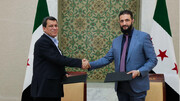
According to this report, initial negotiations between Damascus and the SDF-affiliated oil structure began in February 2026; When a delegation from the Syrian Oil Company arrived in Remilan to discuss the "integration of oil structures in eastern Syria". This process has now entered the implementation phase with the operational transfer of the fields to HKN.
The importance of this agreement is not only limited to the energy sector. Through this agreement, Damascus is trying to regain economic control of the oil resources of eastern Syria without a direct military confrontation and to transfer the oil revenues to the treasury of the central government. At the same time, this development is considered a sign of the gradual reduction of the economic independence of the regions under the control of the Kurds and their movement towards integration into the structure of the Syrian government.
Al-Monitor also describes this agreement as a sign of a change in Washington's approach towards Syria after the fall of Bashar al-Assad's government. According to this report, the United States now does not see Syrian oil as an economic issue, but considers it part of the process of reorganizing the regional order after the war.
In this context, the Financial Times newspaper also reported that the American company ConocoPhillips is on the verge of signing a new contract with the Syrian government to revive the country's gas production; According to this newspaper, the contract could be the first major agreement of an American oil giant with the new Syrian government.
According to the report of the Financial Times, ConocoPhillips together with Novatra Energy Company plans to develop the existing gas fields of Syria and explore new reserves at the same time. This contract is a continuation of the memorandum that was signed between the parties last November and is expected to be finalized in the coming days.
The Financial Times also reported that major companies such as Total Energy, Qatar Energy and ConocoPhillips have previously signed an agreement with the Syrian Oil Company to explore offshore exploration in Block 3 near Latakia, which is a sign of the gradual return of major Western companies to the Syrian energy market after years of isolation and sanctions.
According to this newspaper, the new Syrian government is trying to revive the country's gas production, which has been greatly reduced after the war, by attracting foreign investment. Damascus hopes that with the arrival of American and Arab companies, daily gas production in Syria will increase between 4 and 5 million cubic meters in the next year.
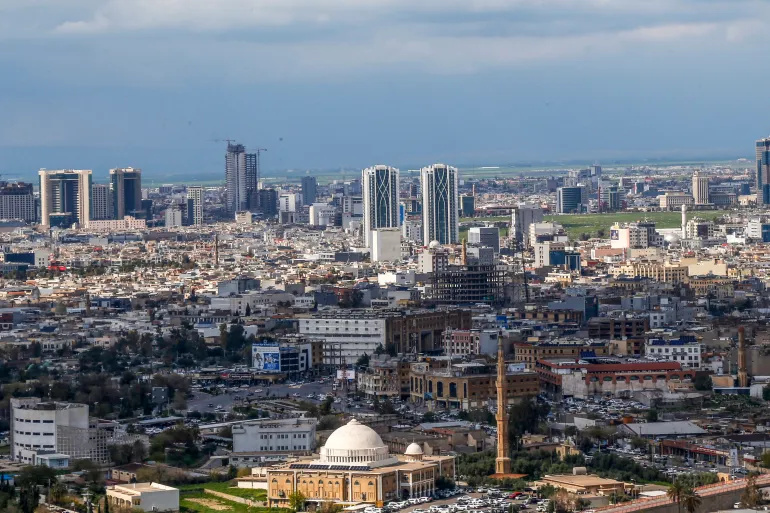
The American HKN company has previously been active in the Kurdistan Region of Iraq and has cooperated with energy networks near Erbil and the Kurdistan Region government. For this reason, some analysts consider the presence of this company in Remilan as an extension of the energy links between Washington, Erbil and Damascus.
These developments show that after years of war, Syria is now becoming a new competition field for large energy companies and part of a new geopolitical realignment in the Middle East.




Your Comment