

According to Kurdpress, Region magazine reported that the Ministry of Natural Resources of Kurdistan Region of Iraq announced that oil production will resume in a number of fields in this region in the coming hours, and the activity in another group of fields will also start from the beginning of July.
The ministry emphasized that the fields that were more damaged in drone attacks will need more time to return to normal production capacity.
According to regional officials, Kurdistan's oil production capacity has decreased to around 75,000 barrels per day following repeated attacks on energy infrastructure and recent developments in the region. Of this amount, 50,000 barrels are allocated for domestic consumption and another 25,000 barrels are provided to the Iraqi government for export.
Before the start of the US-Iran conflict in February, the Kurdistan Region produced about 250 thousand barrels of oil per day, of which 50 thousand barrels were domestically consumed and the rest were exported through the Iraqi Oil Marketing Company (SOMO). Before 2023, the oil production of the region was about 400,000 barrels per day.
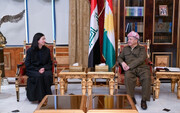
According to this report, the governments of Baghdad and Erbil reached a security agreement on Sunday aimed at protecting oil companies and ending attacks against energy infrastructure. This agreement was reached after the visit of a high-ranking Iraqi security delegation to Erbil and a meeting with regional leaders, on the orders of Iraqi Prime Minister Ali al-Zaidi.
Attacks on the Kurdistan region's oil fields increased in an unprecedented manner after the 12-day war of 2025 and also the American-Israeli war against Iran that began at the end of February. During this period, hundreds of drone and missile attacks were carried out in different regions of the region, a significant part of which targeted oil and gas facilities.
At the same time, the closure of the Strait of Hormuz by Iran also severely affected Iraq's oil exports, and according to this report, the country's oil exports decreased by 80% compared to before the war.
The decline in exports has led Baghdad to activate alternative routes, including the Kirkuk-Ceyhan pipeline through the Kurdistan Region, as well as western routes from Syrian territory. The Iraqi Ministry of Oil announced in May that it plans to increase the export capacity to Ceyhan port in Turkey to about 650,000 barrels per day by rebuilding the Kirkuk-Ceyhan pipeline and increasing the production of oil fields in Iraq and the region.
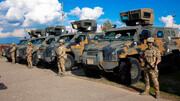
The Iraqi government has described the new security agreement with Erbil as an important step to protect the country's national wealth. The military spokesman of the Iraqi Prime Minister said that this agreement provides the necessary ground for the protection of oil companies and strategic projects and is the result of close coordination between the federal security forces and the Peshmerga forces.
He added that this coordination shows the joint decision of Baghdad and Erbil to protect national resources and prevent Iraq's vital infrastructure from being targeted.
The Iraqi government has also declared the full control of weapons in the government's possession as one of the main axes of its plan, and according to Baghdad officials, a number of armed groups have also declared their readiness to hand over weapons and integrate into official security institutions.






Your Comment