
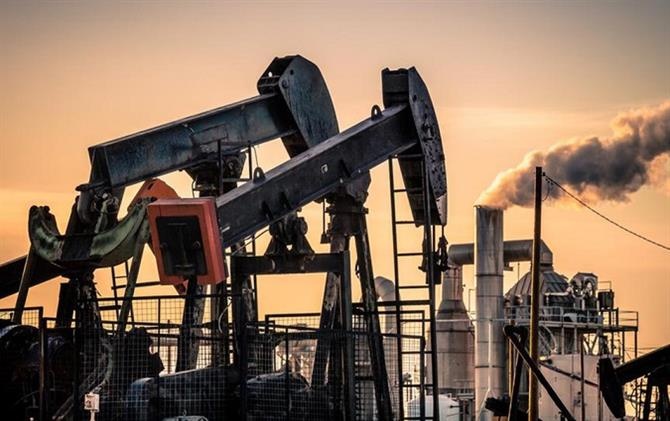
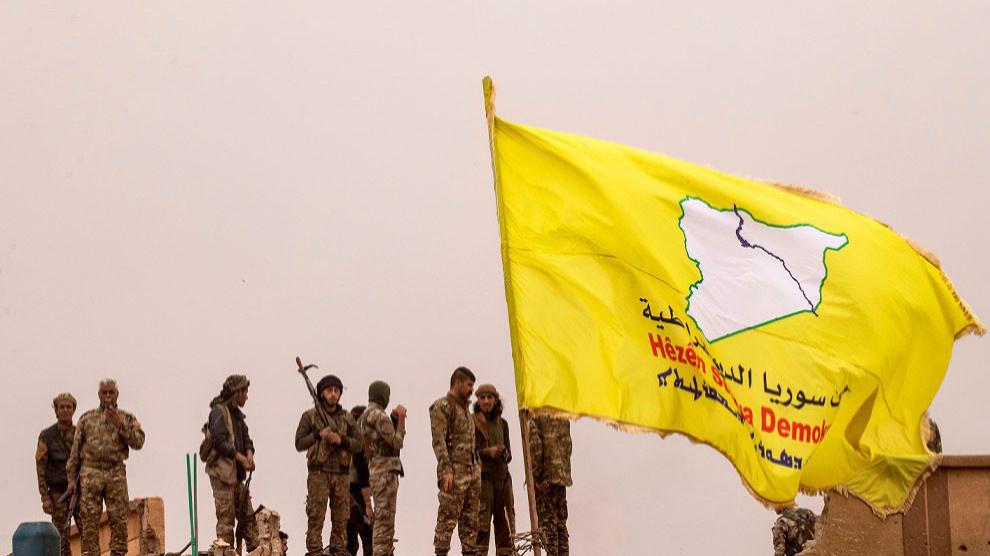
According to Kordpress, the agreement between the Syrian Ministry of Oil and the American company "HKN Energy" regarding the Remilan oil fields is not just an economic contract; Rather, it can show how much of the political, security and economic power of the Kurds will be preserved in northeastern Syria after the integration of the Syrian Democratic Forces (SDF) into the structure of the Damascus government.
According to published reports, the initial composition of this agreement is as follows:
60% for HKN Energy
32 percent for the Syrian government
8 percent for Al Jazeera Oil Company affiliated with QSD
The "Al Jazeera" company practically plays the role of the national oil company in the areas under the control of the SDF, and all energy cases in the northeast of Syria are under its supervision.
However, the full details of the contract have not yet been released, and this has led to different interpretations. Many analysts believe that HKN's 60% share does not mean the company's net profit, but is probably part of a "production sharing" or "cost recovery" deal; This means that the American company first covers the costs of well reconstruction, drilling, infrastructure development and technical operations, and then returns these costs from its share.
As a result, a large portion of that 60% may be spent on operating and capital expenditures rather than direct profits.
But the most important ambiguity is the 8% share attributed to Qasd. This share is not yet known:
is an official part of HKN's long-term contract,
It is considered a separate agreement between Damascus and Qasd.
Or it is a temporary mechanism to pay salaries and expenses during the transition period.
Some sources close to Damascus have said that this share is only for two to three months to complete the process of integrating the SDF institutions into the structure of the Syrian government.
According to a more likely interpretation, the original contract may actually be a 60-40 agreement between HKN and the Syrian government, with Damascus temporarily allocating 8 percent of its share to Al Jazeera Oil Company to cover the costs of SDF-affiliated institutions and forces during the transition period.
This narrative is consistent with the developments in the field. The SDF merger agreement stipulates that the oil fields must ultimately be handed over to the Syrian government. Elham Ahmed, one of the senior figures of the Kurdish Autonomous Administration, also confirmed that the final control of the fields will be transferred to Damascus.
Signs of this transition can also be seen at the field level. It is said that the "Kharab Al-Jir" base near Remilan is now under the control of the Syrian army and about 250 government forces are stationed there. However, the day-to-day protection of the squares is still mainly in the hands of the internal security forces affiliated with the SDF; A situation that indicates the incompleteness of the transfer process rather than the permanent division of power.
The political importance of the story comes from the fact that if the 8% share is really permanent and for the entire 25-year period of the contract, QSD will get an independent and stable source of income. Estimates show that this share at the current level of production can generate income of about 7 to 10 million dollars per month; The number will increase if the oil fields are reconstructed and production increased.
Such income can be enough to maintain a part of the administrative, security and political structures of the SDF after the official integration and lead to the formation of a "hard" and semi-independent structure alongside the Syrian government.
In contrast, if oil, customs, and other key sources of revenue are fully under Damascus' control, decentralization in northeastern Syria is likely to be reduced to a limited, service-oriented level; It means a kind of local urban and administrative management, not the political and security autonomy that the QSD was looking for in the past years.
Therefore, the real debate about the future of decentralization in Syria is tied to who will control strategic sources of income, rather than titles and local councils.
In the same framework, the way of managing the Remilan fields, customs revenues and financing of the merged entities will probably be the most important indicator to measure the real amount of authority that QSD retains after the merger.
The issue of paying the salaries of the merged forces also strengthens the "temporary" hypothesis of the 8% share. According to reports, the forces of the three SDF brigades who entered the Syrian army received their salaries in cash this month, and from next month, the payments will be made through Sham Kash bank cards directly from the Syrian government.
In such a situation, it seems unlikely that Damascus will take responsibility for paying the salaries of the integrated forces and will permanently hand over a part of the oil income to an independent institution affiliated with the SDF.
to hand over to an independent institution affiliated to QSD.
Therefore, if the 8% share is merely a temporary mechanism to cover transfer costs, it is not necessarily indicative of widespread political decentralization. But if this share is fixed permanently, it could mean the remaining of an independent financial and institutional structure dependent on the SDF within the Syrian government; An issue that will probably determine the real border of Kurdish power in post-war Syria.




Your Comment