
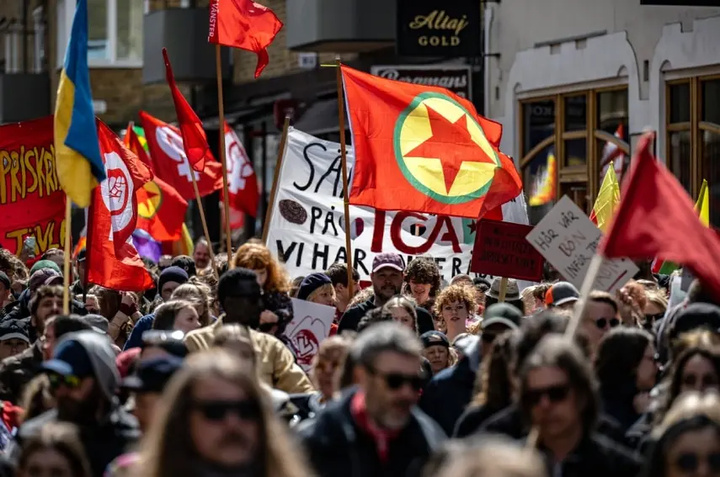
According to Kurdpress, citing British media, a court in England acquitted three of the six Kurdish defendants in one of the most extensive cases related to anti-terrorism laws in recent years; The case that was filed on the charge of connection or membership in the Kurdistan Workers' Party or PKK has now become one of the controversial examples in the field of civil liberties and the implementation of security laws.
This case came to a conclusion after more than four months of judicial proceedings and about 50 hours of jury deliberation. Finally, three defendants were acquitted and the jury did not reach a conclusion about the other three defendants; An issue that raised the possibility of holding a new trial for them in January 2028.
The accused were arrested in November 2024 during a coordinated anti-terrorism operation. During this operation, the Kurdish cultural center in London was also targeted for inspection. The police have described it as one of the biggest anti-terrorism measures in recent years by sending hundreds of officers and cordoning off the area.
The charges against the six members of the Kurdish community mainly included "membership in a banned organization" and "supporting related activities". However, the indictment made no allegations of direct involvement in violent acts.
The main part of the dispute in the court focused on the nature of the activities carried out in the Kurdish cultural center. The prosecution claimed that some meetings, commemorative ceremonies, speeches and information activities could be an example of supporting a banned organization.
On the other hand, the defense lawyers emphasized that these activities were carried out within the framework of cultural identity and civil activity of the Kurdish community and cannot be considered as membership in an armed organization. They argued that even in the presence of political alignment, this alone is not enough to prove guilt.
The case is raised in the broader context of UK and European counter-terrorism policies. The PKK has been on the list of banned organizations in the UK since 2001, and this has caused many activities related to it, even at the cultural or political level, to be under strict surveillance.
Critics believe that the implementation of these laws in some cases has led to the limitation of the space for civil and political activity of the Kurdish community in Europe. They warn that the line between cultural activity and "organizational support" is becoming blurred.
On the other hand, the judicial and security authorities emphasize that strict implementation of the laws related to banned organizations is necessary to prevent indirect support to armed groups.
The recent case has once again highlighted the tension between the two approaches of strict enforcement of anti-terrorism laws and protection of freedom of speech and civil activities. The result of this case, despite the acquittal of some of the defendants, shows that the legal interpretation of "membership in a prohibited organization" remains one of the complex and controversial issues in the British judicial system.






Your Comment