

According to Kurdistan Press, a century after Turkey, within the framework of the Ankara Treaty in 1926, was granted only the right to receive a portion of the Kirkuk oil royalties in exchange for waiving its claim to the province of Mosul, it has now once again returned to Kirkuk as one of the shareholders in the development project of the largest oil field in northern Iraq.The purchase of 15 percent of the shares of the Kirkuk Fields Development Project by the Turkish State Oil Company (TPAO), along with the presence of British BP and American ConocoPhillips, is a sign of a new arrangement in the energy geopolitics of northern Iraq.
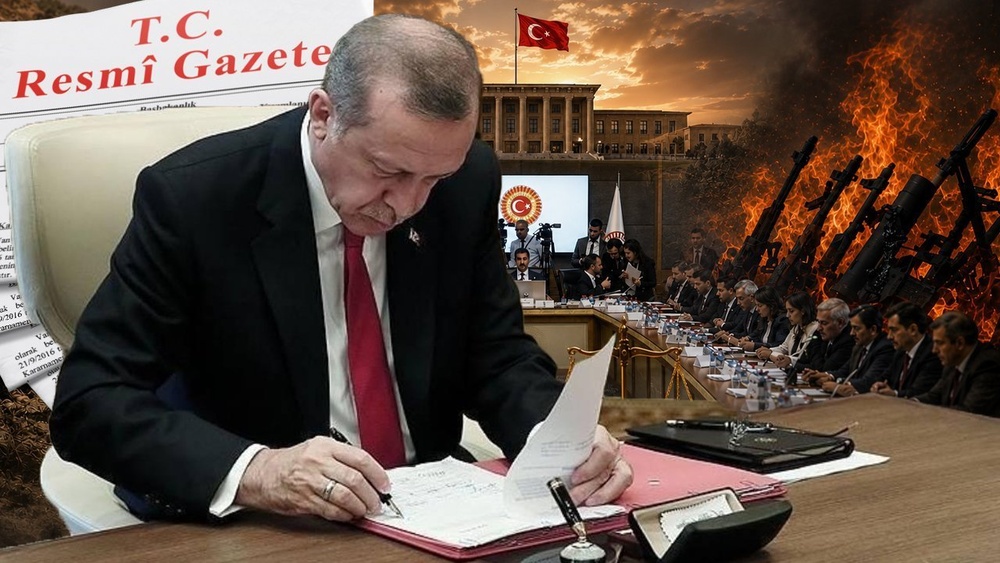
The Turkish State Oil Company (TPAO) signed an agreement in Ankara to purchase 15 percent of the shares of BP Energy Company of Kirkuk Limited, the company responsible for implementing the Kirkuk Oilfields Development Project. The agreement was signed in the presence of Turkish Energy Minister Alp Arslan Bayraktar and before Recep Tayyip Erdogan met with Iraqi Prime Minister Ali al-Zaidi.
The agreement came after the American company ConocoPhillips also purchased 42 percent of the shares of the same company during the Iraqi Prime Minister’s visit to Washington. As a result, the project’s shareholder composition will include 43 percent for BP, 42 percent for ConocoPhillips, and 15 percent for the Turkish State Oil Company.The project involves the development of the Baba, Awaneh, Bay Hassan, Jambur and Khabbaz fields, which have more than three billion barrels of oil equivalent in recoverable reserves. However, ownership of the oil resources will remain with the Iraqi government, and the Northern Oil and Northern Gas Companies will retain responsibility for the day-to-day operation of these fields.
From royalties to shareholding
The significance of this agreement becomes clearer when compared to Turkey’s position a century ago. Under the 1926 Treaty of Ankara, Turkey accepted the new borders following the collapse of the Ottoman Empire and renounced its claim to the province of Mosul. In return, it received the right to receive 10 percent of the oil royalties paid to the Iraqi government for 25 years.This right was merely a share of the royalty income and did not give Ankara any ownership or share in the Turkish Petroleum Company – which, despite its name, was controlled by a consortium of British, French and American companies.
Payment of this royalty also began only after the discovery of oil at Babagurgur. The first payment was made in 1931, and Turkish budget documents show that these payments continued until 1952, with the last payment being received in 1954. Therefore, the common narrative that Turkey initially ceded its right in exchange for £500,000 does not fully correspond to historical documents.
However, the economic value of this concession was limited, as Turkey’s 10 percent share was paid only from the Iraqi government’s royalties and in practice constituted about one percent of the economic value of the total oil produced.Kirkuk; From Trade Center to Energy Hub
Before the discovery of oil in 1927, the Mosul and Kirkuk region was part of a vast trade network that connected Aleppo, Baghdad, Damascus, and Anatolia. The economy of this region was based on land trade, caravans, and developing railway routes, and only a small part of its trade reached Europe.
The discovery of the huge Babagurgur field turned this historical geography into one of the most important oil production centers in the world, and since then, the competition between regional and international powers over Kirkuk has entered a new phase.
Turkey's return within the framework of the new regional order
Analysts believe that the entry of the Turkish state company into the Kirkuk project is not just an economic investment, but also part of a new security and energy architecture in the northern Middle East.In this framework, the United States plays a strategic and political role, American and British companies provide capital, technology, and project management, Turkey is the link between the project and global markets by owning the transmission routes, ports, and export infrastructure, and Iraq retains sovereign ownership of the oil resources.
From this perspective, Turkey’s 15 percent share does not mean control over the project, but rather reflects Ankara’s position as a strategic partner in the energy transmission chain. In fact, Turkey’s role is based more on control of export corridors, transmission infrastructure, and its geopolitical position than on ownership of resources.
The Difference Between 1926 and 2026
Comparing Turkey’s situation in 1926 and 2026 in terms of percentages alone can be misleading.The right to receive 10% of the oil royalties with the ownership of 15% of the shares of a development company are two completely different legal mechanisms and have no direct economic value for comparison.
What has been repeated in both periods is the simultaneous presence of the three main players, Turkey, Britain and Kirkuk Oil, in a common framework; with the difference that in 1926 Turkey was outside the operational structure of the project and received only a part of the revenues of the Iraqi government, but in 2026 it has become one of the official shareholders of the Kirkuk Fields Development Company.
At the same time, the overall structure of the project remains Anglo-Saxon in nature; management and technology are in the hands of American and British companies, sovereignty of the resources remains with Iraq, and Turkey has become the north pole of the new energy network of the region through its geographical location, pipelines and export infrastructure.This development shows that although the borders drawn after World War I have not changed, the energy, security, and trade systems in the northern Middle East are being reconfigured more than ever within an interconnected geopolitical space.
National Context


Your Comment