

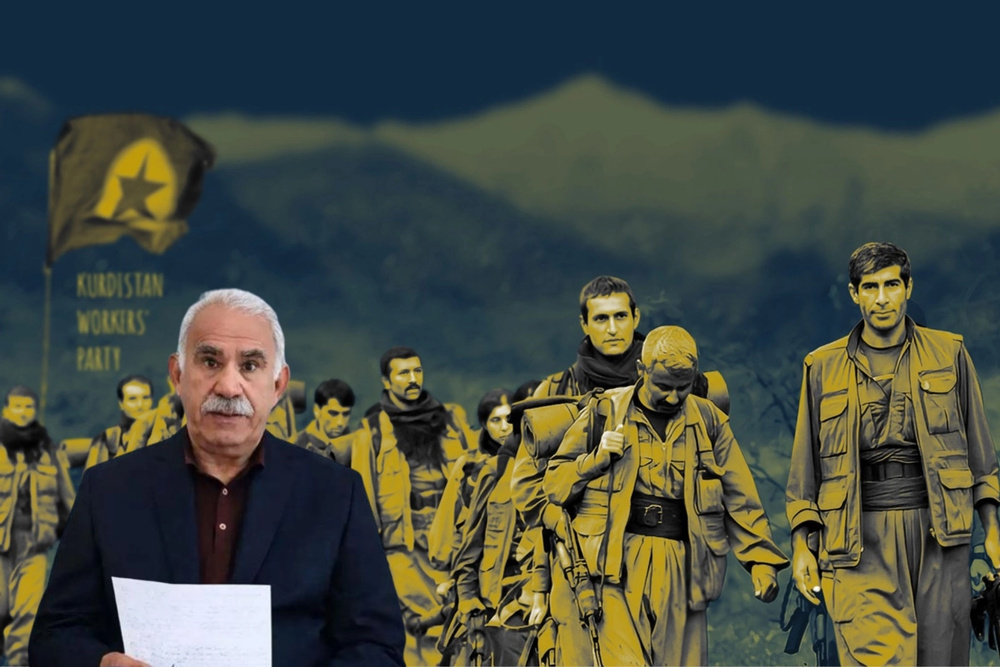
According to KurdPress, according to the analysis of the "National Context" publication, the draft "Law on Strengthening National Solidarity and Social Integration" cannot be considered simply a law to dissolve the PKK and end the armed activities of this group, but rather this law is the first stage of a multi-layered project to redefine the relationship of the Turkish government with the Kurdish movement within the country, as well as to manage developments related to the Kurds outside Turkey's borders.According to National Context, the 12-article text of the law is intentionally limited in scope and is not intended to resolve all aspects of the Kurdish issue in one step. The law does not include a broad amnesty, nor does it make a final decision on the legal status of Abdullah Öcalan. Its main purpose is to create a legal framework for the dissolution of the PKK, the disarmament of its members, and the path for the return of its forces. Broader issues such as political reforms, legal changes, and constitutional issues have been postponed to later stages of the process.
One of the most important features of the process, according to National Context, is that the Turkish government will maintain full control over all stages of its implementation. Based on this analysis, the government will determine when complete disarmament has been achieved, who is eligible to return, how the application process will be conducted, and who will receive legal benefits.In this way, the process of integrating former PKK members will not take place outside the security and executive frameworks of the state, and Ankara will have the main management of this phase.
The analysis also emphasizes the difference between the military end of the PKK's activities and the political integration of its members. According to National Context's assessment, the physical return of the group's members can be achieved in a shorter period of time, but the end of judicial and political restrictions and their full return to the public sphere will be a long process and may take five to 10 years. In other words, the end of the armed struggle will occur faster than the full normalization of the political status of those associated with the PKK.
Meanwhile, the People's Equality and Democracy Party, or Dêm Parti, is considered one of the most important political actors in the first phase of this process. National Context believes that this party, unlike the PKK's military forces,The PKK, whose return will be gradual, has already established its political position in this process. It has played a role in shaping the legal framework, will be present in the parliamentary oversight mechanism, and has become one of the main parties to the dialogue between the government and the National Movement Party. From this perspective, the role of the PKK is no longer limited to representing Kurdish demands, but has become part of the broader equation of Turkish politics.
According to this analysis, Abdullah Öcalan has also accepted the phased implementation of the process. After negotiations with the Peoples’ Equality and Democracy Party delegation, he has withdrawn from the simultaneous implementation of all the expected demands and provisions and has accepted the new law as the “key to starting the process.” His goal now is to convince the PKK bodyThe PKK and its commanders in Qandil are ready to accept the gradual process of disbandment and the transfer of activities from the military to the political arena.
National Context believes that Ankara’s ultimate goal is not just to end an internal security threat. From the perspective of this analysis, the Kurdish issue has been one of Turkey’s most vulnerable points to external pressures and interventions over the past decades. Resolving this issue could free up Turkey’s security and political resources and allow Ankara to play a more active role in regional developments.
Accordingly, this process is regional in nature and is not limited to Turkey’s borders. National Context sees this project as consisting of three main axes: first, the disbandment and disarmament of the PKK in Turkey; second, the integration of the Syrian Democratic Forces into the Syrian army and government structure while maintaining part of their political and administrative structure; and third, the management of the activities of another important branch of the PKK.K with the aim of preventing the expansion of its influence and the re-formation of military ties between the various branches of the Kurdish movement.
However, this analysis emphasizes that the new process does not mean the end of the Kurdish movement, but rather a change in its nature and the transfer of its center of gravity from armed struggle to legal politics. In this context, the power and influence of the Kurdish movement in Turkey will be more than ever manifested in parliament, municipalities, political parties and official negotiations; in Syria, it will continue through participation in the state structure and elsewhere through networks associated with its branches.
National Context considers the draft 12-article law as the first step in a broader project to create a new model for managing the Kurdish issue; a model in which the Kurdish movement distances itself from an independent military capacity, but in return gains a new position in the domestic political arena of Turkey and regional structures.From the perspective of this analysis, Ankara's ultimate goal is not to completely eliminate the Kurdish issue, but to transform it from a security challenge into a manageable issue within a political framework; a framework that can increase Turkey's influence in Kurdish equations in Syria, Iraq, and other regions.






Your Comment