

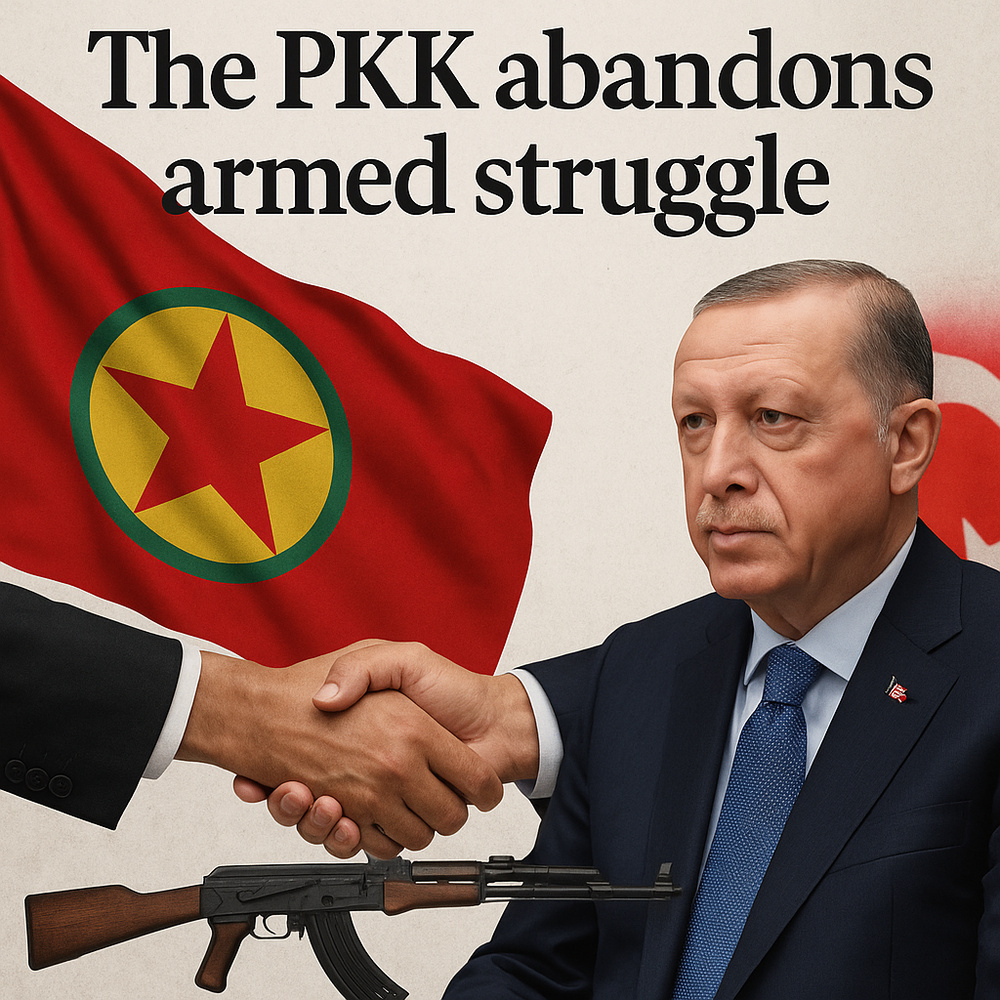
According to Kurdpress, the passage of the new law in the Turkish parliament on the disarmament and reintegration of the Kurdistan Workers' Party (PKK) forces, from the perspective of a number of experts and diplomats, could be a turning point in the decades-long conflict between the Turkish government and the Kurds; however, the assessments presented show that this law, rather than meaning a complete solution to the Kurdish issue, provides a legal framework for ending the PKK's armed struggle, and its success will depend on the manner of implementation and subsequent political actions of Ankara.On August 10, the Turkish parliament passed the “Strengthening National Solidarity and Social Integration” law by a vote of 468 to 88. The law provides a conditional legal path for the disarmament, structural dissolution, and return of thousands of PKK members, and provides for the suspension of sentences and legal protection for some prisoners convicted solely of membership in the group and not of serious terrorist crimes.
Asli Aydintasbas, a Turkey and foreign policy expert at the Brookings Institution, described the development as a “historic moment” and the most important law passed in Turkey in decades. He said the law could pave the way for a full and formal end to the PKK’s armed insurgency and, in that sense, would mark a fundamental shift in the Turkish government’s relations with the Kurds.Aydintasbas also believes that this development could be a significant geopolitical achievement for Turkish President Recep Tayyip Erdogan, because if the reconciliation process succeeds, the Kurds will transform from a largely opposition force into part of Turkey’s domestic political coalition. In his view, an increased role for the Kurds in domestic politics in exchange for compromise with the government could help Ankara reduce its concerns about disintegration or instability in Syria and Iraq.
But Doğa Aralp, an associate professor of security studies at the US Marine Corps Command and Staff College, sees Ankara’s motivations as more of a geopolitical and realistic calculation than a democratic one. He says Turkey is trying to become a dominant regional power, and the peace process with the Kurds is being pursued within the framework of these calculations.According to Aralp, Ankara needs an agreement with the Kurds to consolidate its regional role and ensure stability in its surrounding environment.
Aralp has also emphasized the role of developments in Syria in accelerating the process of negotiations between Turkey and the PKK. In his view, the beginning of a new phase in Syria after the fall of Bashar al-Assad in December 2024 has been one of the main factors in Ankara’s change of approach. Turkey needs a stable environment to consolidate its influence in Syria, and this requires that Kurdish forces and groups associated with the PKK also find a defined place in the new political structure of Syria.
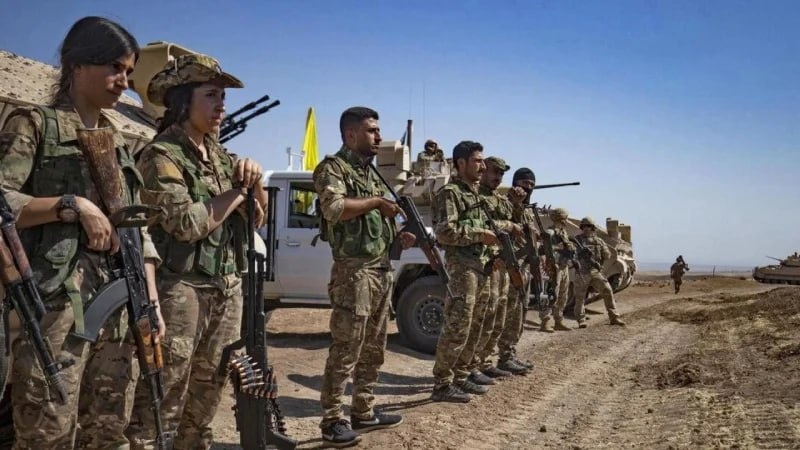
He has emphasized that the peace process between Turkey and the PKK cannot be considered solely the result of domestic developments in Turkey, and that political changes in Syria have played a direct role in shaping this process. According to Aralp, if the PKKIf the KDF in Turkey lays down its arms, it is likely that its associated forces will operate within certain frameworks in the new Syrian political order.
James Jeffrey, a former US ambassador to Turkey and Iraq and a fellow at the Washington Institute for Near East Policy, also sees this development as a potential factor for broader stability in the Middle East. He sees the new relationship between the Turkish government and the Kurds as similar in some ways to the position of the Iraqi Kurds in the country’s political structure, and believes that such a model could contribute to greater peace, stability, and political integration in the region.
Jeffrey also suggested that Erdogan could use the reconciliation process with the Kurds to strengthen his political position within Turkey.According to him, the passage of the law with broad parliamentary support could allow Erdogan to push for constitutional changes or early elections in the future, paving the way for his continued presence in power beyond 2028. Aralp also raised this possibility, saying that the current process could politically “pave the way for a kind of lifelong presidency for Erdogan,” although Jeffrey stressed that this part of his assessment was merely speculative.
However, the most important doubt about the fate of this process has been raised by the PKK itself. In response to the new law, the group’s leadership has stated that the resolution has “serious errors and shortcomings” and only targets the issue of disarmament, without directly addressing the Kurdish issue. From the perspective of PKK leaders,K, this approach shows that the Kurdish issue has not yet been comprehensively addressed in the new legal framework.
The PKK has also stressed the need for the release of its imprisoned leader, Abdullah Ocalan, and warned that without his release, a significant part of the law’s provisions may remain ineffective in practice. Ocalan has been in Turkish prisons since 1999 and in February 2025 called on the PKK to end its armed struggle and disband the organization.
But a Kurdish expert in Washington believes that the new law does not address the roots of the Kurdish issue, defining it mainly as a “terrorist group” issue. According to him, this approach does not address the reasons and demands that have driven the PKK to armed struggle over the decades, and therefore the Kurdish issue cannot be considered resolved simply by implementing the provisions related to disarmament.Eralp also stressed the fragility of the process, saying that the negotiations between the Turkish intelligence agency and Öcalan played an important role in advancing it, but the current process is still facing great uncertainty and distrust. According to him, the process is very vulnerable to possible attempts to sabotage or defeat it due to the changing political situation in Syria and the sudden calculations of regional actors.
Aydintaşbaş, referring to the same fragility, also stressed the need to speed up the implementation of the agreements, saying that maintaining public support for the peace process depends on Ankara's timing and rapid actions. In his view, the window of opportunity to stabilize the reconciliation process is limited and the Turkish government must take more practical steps before political or security developments in the region once again exacerbate the atmosphere of distrust.Overall, the experts’ assessment shows that the law passed on August 10 should be seen more as a legal framework for ending the PKK’s armed struggle than as a final agreement to resolve the Kurdish issue. The success of this process will depend on Ankara’s commitment to implementing its commitments, the future of the political status of the Kurds in Turkey, the fate of Abdullah Ocalan, and the fate of Kurdish groups in Syria. Therefore, although the passage of the law is a historic development on the path to ending the four-decade conflict between Turkey and the PKK, the decisive stage now is the implementation phase and the transformation of disarmament into a sustainable political settlement.






Your Comment