

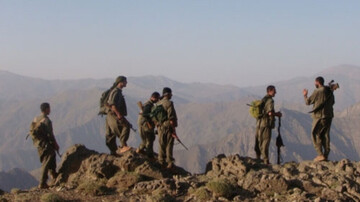
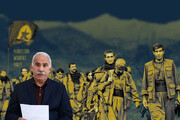
According to Kurdpress, at the same time as International Workers' Day, new developments in the decades-long conflict between the Turkish government and the Turkish Kurdistan Workers' Party (PKK) have once again drawn attention to the future of the peace process. After months of relative silence in the mountainous axis of Qandil-Gare-Jodi, Murad Karailan announced that the peace talks have "stopped". This stance is taken while only a few days ago, Abdullah Ocalan, the imprisoned leader of the PKK, spoke about the possibility of transferring the conflict from the battlefield to the field of law. This short period of time actually indicates a deeper gap: the gap between the theoretical conception of peace and the historical experience of power in Türkiye.
From Karilan's point of view, if one side still has the army, prison, judicial system and the authority to determine the future terms and the other side is simply called to disarm and retreat, then such a process is not peace, but a kind of political surrender expressed in diplomatic terms.
Observers remind that the Turkish government has introduced the new process under the title of "Turkey free from terrorism", but the general pattern has been similar in the past, that is, whenever the negotiation was aligned with the political and security interests of the government, the dialogue process went forward, and whenever this overlap disappeared, the negotiations were stopped.
A clear example of this was the peace process of 2013-2015. That period was considered the most serious stage of negotiations between Ankara and the PKK and led to the "Dolma Baghche Agreement"; The agreement included discussions on cultural rights, local self-government, general amnesty and legal guarantees. However, Recep Tayyip Erdogan personally blocked its implementation. After the Justice and Development Party lost its parliamentary majority in the June 2015 elections, the peace process ended within days and military operations resumed.
Based on this, some analysts believe that the beginning and the end of that process were both subject to domestic political considerations, not a sustainable strategy to solve the Kurdish problem.
In the current situation, part of the change in the equation is related to the developments in Syria. For Ankara, the issue is not only limited to the PKK in the mountains of Iraq, but the existence of the Kurdish self-governing structure in the north and east of Syria has always been a part of Türkiye's security concerns. The decrease in influence and autonomy of this structure in recent months may have reduced part of Türkiye's motivation to continue negotiations.
From this point of view, requests such as immediate disarmament, evacuation of positions, and the promise of legal review in the future are seen by critics not as a road map for peace, but as managing the failure of negotiations.
At a deeper level, some Kurdish thinkers, including Ismail Besikci, argue that the Kurdish question is not just an everyday security or political dispute, but is rooted in the historical structure of the Turkish nation-state and policies of forced assimilation. Based on this view, without a fundamental reform in the legal and political structure, no peace process will last.
As a result, what is called today the "freezing of the peace process" is not simply a halt to a negotiation; Rather, it is a sign of the return of the same old question: Is peace based on equality and guaranteeing mutual rights, or is it just another name for unilateral surrender?
The author is Karim Farneschi, an expert on Kurdish issues


Your Comment