

According to Kurdpress, more than a year has passed since the beginning of the new round of talks by the government of Recep Tayyip Erdogan with the aim of ending the decades-long conflict with the Kurds, but according to experts, this process still lacks tangible achievements in the field of Kurdish political rights, and instead, it was the Kurdish forces that took more practical steps.
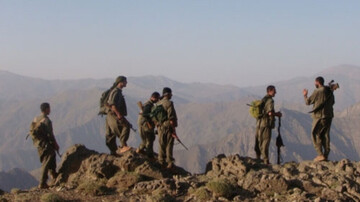
In this context, Eliza Markus, a researcher of Kurdish issues, announced in an interview with Al-Monitor website that the Kurdistan Workers' Party has practically stopped its armed struggle and promised to disarm, but the full implementation of this commitment is conditional on countermeasures from Ankara.
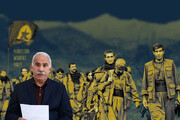
Referring to the current situation of this group, Marcus described it as similar to the period after the arrest of Abdullah Ocalan in 1999; The period when PKK was facing some kind of internal disorder and strategic ambiguity. According to him, although stopping the guerrilla war is a logical decision in the current situation, it has also caused an identity crisis in this organization, because an important part of its internal cohesion was formed on the axis of armed struggle.
This expert also emphasized that the return of the PKK to the war against Türkiye seems unlikely in the current situation. According to him, the changing nature of wars, the widespread use of modern military technologies, including drones, and regional pressures have significantly limited the group's operational capacity.
However, Marcos emphasized that even in the event of a military dissolution, the PKK will continue to exist as a political and social force. According to him, over the past two decades, this group has created a wide network of political, cultural and social institutions that play an important role in shaping the Kurdish society.
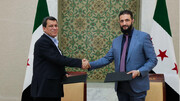
In another part of this conversation, developments in Syria and the situation of the Kurds in this country were discussed. Referring to the agreement between the forces close to the PKK and the Damascus government, Markos stated that although it is still too early to make a final assessment of this process, the Syrian Kurds have now been recognized for the first time as part of the country's political structure.
He also raised the possibility of increasing the independence of PKK regional branches, especially in Syria, and said that the new conditions may lead to a gradual reduction of centralism in this organization.
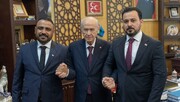
Meanwhile, one of the most important recent developments is the issue of granting "official status" to Abdullah Ocalan by the government of Baghçeli, the leader of the Turkish nationalist movement; A proposal that is seen by observers as an unprecedented change in Ankara's political approach. According to Marcos, if such a plan is realized, Ocalan's position can be upgraded from a political prisoner to an official actor in the peace process.
Overall, this analyst believes that although the negotiation process is slow and uncertain, the cessation of armed conflicts should be considered as an important achievement. According to him, in the current situation, the possibility of returning to a large-scale war has decreased and the PKK will rely on political tools more than before to pursue its demands.



Your Comment