

According to Kordpress, written by Draw Media, on May 31, 2026, the President of the United States, Donald Trump, announced the appointment of the United States Ambassador to Ankara, Tom Barak, as the special presidential envoy for Iraq and Syria. Barak is one of the big billionaires and one of Trump's closest friends who has long-standing ties in the Middle East; He has worked in Saudi Arabia for many years and is in contact with several countries in the Persian Gulf. This step represents the official expansion of his missions in the region. Trump also praised Barack's role, noting that he has the full support of the US State Department and will continue to serve the United States through this new position.
This was despite the fact that a day before this announcement, Marco Rubio, the US Secretary of State, had emphasized that Tom Barak, despite the end of his previous mission as special envoy for Syria affairs, will play a leadership role in both Iraq and Syria cases within the framework of the Trump administration.
Marco Rubio's statements and Trump's statement give an official dimension to the role that Barack started in the Iraq case in the past months. He became one of the most prominent figures in the American relationship with Baghdad after creating obstacles on the way to the official start of "Mark Sawaya" as the special envoy in Iraq.
The appointment of Tom Barak reflects the White House's approach to handling Baghdad affairs within the framework of an integrated regional perspective. While experts count on his direct influence with Donald Trump to reset relations with Iraq, at the same time, the challenges of Iran's influence, the future of coalitions and armed groups, and the structure of the Iraqi government stand out as the most prominent cases on the table of this new envoy.
Currently, Tom Barak is considered one of the most prominent American figures who has been assigned to follow up on the cases of the Arab East, especially Iraq, Syria and Lebanon. This is due to his social background and relations in the region, along with his connection with the Turkish case, which has given him an influential position in managing the transformations of these countries.
Tom Barak, who is a billionaire in real estate and one of the people close to Donald Trump, has been the main envoy of the US government in Syria since 2025 and also served as the US ambassador to Turkey, before the Iraq case was also added to his responsibilities.
In the past period, Tom Barak has followed up a number of issues related to Iraq-US relations in a private manner, so in recent months he has not been far from the Iraq case and had the opportunity to gain a deeper understanding of the details and complexities of the Iraqi political scene. Experts point out that one of Barak's distinctive characteristics is the speed in making decisions and unifying positions, while he also enjoys the direct support of the White House; This gives him a wide margin of maneuver to influence the course of relations between Baghdad and Washington in the next phase.
Barak is not seen as just another envoy to Syria or Iraq, but represents a different theory of how to organize the region, manage conflicts within it, build relationships and impose demands.
The emergence of Barak reflects a turn in the regional policy of the Trump era; That is, changing the focus from independent or small actors to focusing on powerful central governments and main decision-making actors, through direct cooperation with them. As Barak noted in a post on the X social network, he has established a policy of "ignoring other parties or entities that are less influential, less wealthy, and decentralized." Trump's policy, implemented by his envoy Barack, places great importance on working closely with the legitimate government in Syria and the new government in Iraq, while ignoring smaller political parties.
At the same time, Barak's economic background as a businessman and investor may reflect the American approach towards expanding economic partnerships with Iraq, encouraging foreign investment and reducing dependence on Iran in some vital cases, through building a relationship based on common economic interests. Therefore, Barack's appointment is consistent with America's new vision for resetting Middle East priorities; An approach that is different from the traditional policies of Washington in the past years and is compatible with the current developments in the region.
Barack's election takes place at a time that is associated with rapid political and security movements in Iraq; including the continuation of talks regarding the future of Iraqi-American relations, the mechanisms for implementing security and political understandings between the two sides in the framework of the strategic agreement, and the movements in the case of the dissolution of armed groups.
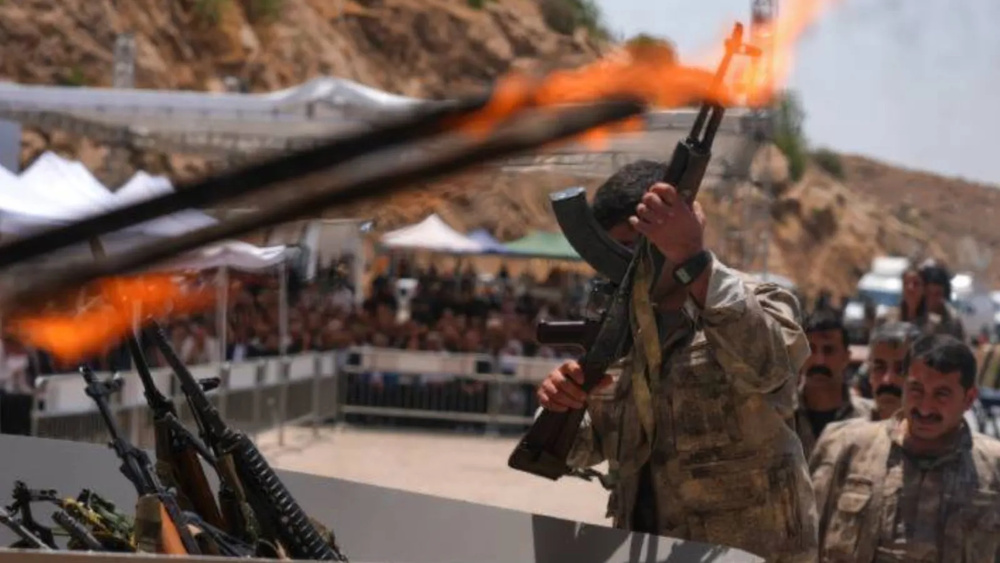
In his first statement after being appointed as Iraq's envoy, Barak praised Prime Minister Ali Zaidi's action to collect weapons and monopolize them in the hands of the government, and congratulated the groups that decided to hand over their weapons to the government.
Barak sees the Middle East as "a collection of tribes and villages artificially divided into nation-states after the Sykes-Picot Agreement of 1916"...and managing this diversity requires a strong central power.
Some of the observers believe that Barak has a different perspective in dealing with Iraq, which is based on learning from the mistakes of America after 2003; Especially the mistakes related to the weakness of the central power and the expansion of federal and regional tendencies. His previously stated positions show support for the idea of a strong central government and its ability to run the country.
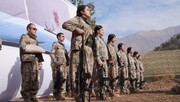
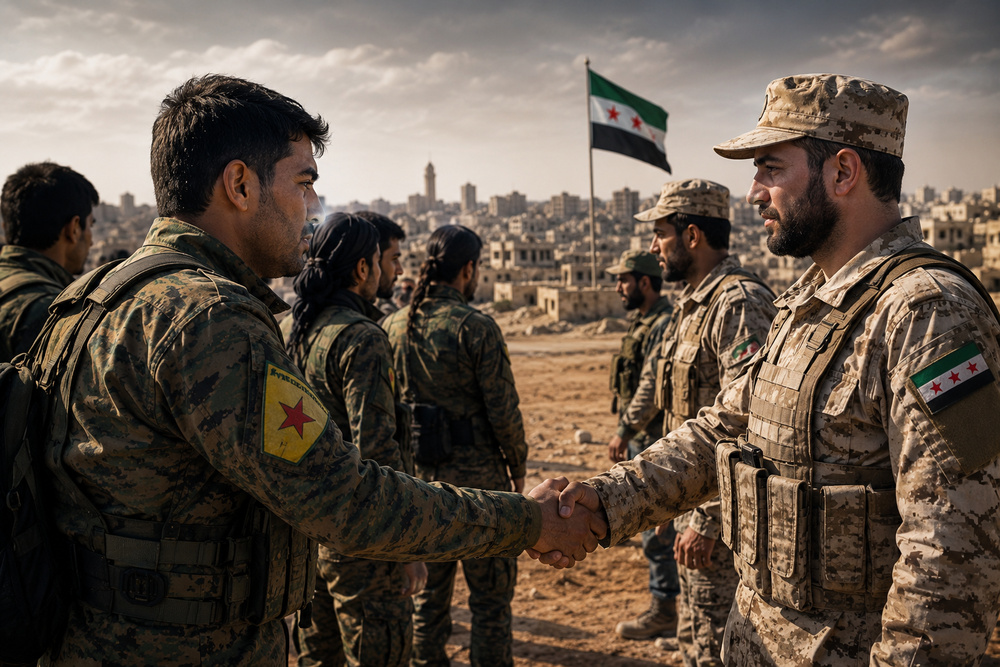
It is certainly impossible to talk about Tom Barak without mentioning the situation he created for the Syrian Kurds; When Barak ignored the Syrian Kurds and announced that the role of the Syrian Democratic Forces (SDF) had ended with the end of the Islamic State Organization (ISIS) in January this year; That's after a partnership that lasted several years, in which his predecessor, Joel Rayburn, focused on partnering with the SDF despite strong opposition from Turkey, while Barak focused on strengthening the center in Damascus.
Accordingly, during the war with ISIS, the Kurds were a "strategic partner" for America, but in the view of Barack and the new Trump administration, when the war is over, the partners become a "political burden". Barak's statement that the Kurds are always a problem for the center is a clear sign that Washington is no longer willing to spoil its relations with the "powerful" Baghdad for the sake of preserving the special character of the Kurds. Barak wants to strengthen Baghdad to confront Iran, and in this way he is willing to sacrifice some regional powers.
Some observers believe that one of the most obvious challenges that Barack will face in Iraq is dealing with the Iranian influence case and trying to strengthen the partnership between Baghdad and Washington. In addition to supporting the opening of Iraq's relations with its regional environment in a way that helps restore balance to its foreign relations.
Also, the Iraqi scene still contains complex cases that require long-term solutions and realistic follow-up. Does Tom Barak have the ability to create a network of relationships and understandings inside Iraq that will help him manage these cases more efficiently in the future?
Barak's future mission will probably focus on getting closer to Prime Minister Ali Zaidi and forming joint Iraqi-American (and perhaps Arab) work teams to accompany the political transformations in the country and support the process of rebuilding government institutions and strengthening its authority away from the influence of illegal weapons and foreign influence; Something that requires patience and persistence.


Your Comment