
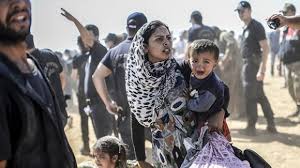
According to Kurdpress, citing Amarji magazine, seven years after Turkey's military operation in northern Syria and the displacement of more than 200,000 people, many Kurds from Srikani (Ras al-Ain) have still not been able to return to their homes. Although the agreement between the Syrian Transitional Government and the Syrian Democratic Forces promised the return of all displaced persons, according to residents and human rights activists, the continued presence of armed groups, changes in the demographic structure, insecurity and widespread destruction of properties have made this promise futile.
Despite the fall of Bashar al-Assad's government at the end of 2024 and the beginning of a new political process in Syria, the displacement crisis of thousands of Kurds living in Serikaniyeh (Ras al-Ain) and Tal Abidz (Grispi) continues.
In October 2019, the Turkish military, alongside groups known as the "Syrian National Army," seized control of approximately 5,000 square kilometers of northern Syria. The operation resulted in the displacement of over 200,000 people and forced a large portion of the region's Kurdish population to flee their homes.
Zaki Haji, a resident of Serekaniye who returned home for the first time in seven years, says that upon arriving at his house, he encountered a family from Aleppo who claimed to have purchased the property from one of the Turkish-backed armed groups.
Although the armed groups affiliated with the Syrian National Army have officially been integrated into the military structure of the Syrian Transitional Government, the actual control of Sirikani remains in the hands of these groups, according to residents. Many Kurdish houses are still occupied by non-indigenous people, and the return of the original owners is often accompanied by a demand for payments of between two and several thousand dollars; While there is no effective institution to deal with these violations. Also, the presence of Turkish military forces continues inside the city, and the checkpoints of the Turkish army are active in different parts of Srikanieh.
According to residents, the demographic composition of Srikani has changed dramatically over the past seven years. Now only a small number of Kurds remain in the city and most of the Assyrian and Yazidi families have not yet been able to return to their neighborhoods and villages. Human rights activists see this process as part of a project to change the population structure in areas under the control of groups supported by Türkiye.
The January 29 agreement between the Syrian Transitional Government and the Syrian Democratic Forces (SDF) emphasized the return of all refugees. However, the Syrian Refugee Committee states that the differences in the negotiations between the two sides, along with the obstacles caused by the role of Turkey and its affiliated armed groups, have seriously delayed the return process.
Another one of the most important obstacles is the widespread contamination of border areas with mines and ammunition. According to local officials, a joint committee consisting of internal security forces, the Syrian army and the Syrian Democratic Forces has been formed to clean up the contaminated areas, but this process will take time. In addition to the danger of mines, proliferation of weapons, security instability and the presence of armed groups are still obstacles to the safe and stable return of residents.
While the political negotiations continue, tens of thousands of Srikani residents are still living in refugee camps in Haskeh province. Despite the lack of facilities, extreme summer heat and difficult economic conditions, many displaced families still hope that one day they will be able to return to their homes collectively and with guaranteed safety. But until the landmines are cleared, the confiscated houses are not returned to the original owners, and the necessary security guarantees are not provided, the prospect of realizing this return will continue to be uncertain.





Your Comment