

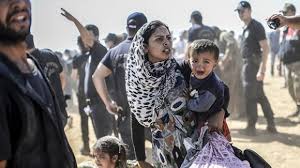
According to KurdPress, citing the New Region magazine, unlike millions of Syrian citizens who have returned to their country after the fall of Bashar al-Assad's regime in December 2024, the majority of Syrian Kurdish refugees living in the Kurdistan Region of Iraq are still unwilling to return.The uncertain future of Syria's Kurdish areas, insecurity, economic problems and concerns about the political status of the Kurds are cited as the most important reasons for this decision.
According to statistics from the UN High Commissioner for Refugees, there are about 281,000 Syrian refugees living in the Kurdistan Region, almost all of whom are Kurds. Since the fall of the Assad regime, only about 8,700 people have returned to Syria from Iraq, and in May 2026, only 227 people left the Kurdistan Region for Syria.
The results of a survey by the UNHCR at the end of 2025 also show that only two percent of refugees plan to return to Syria within the next year, although more than half of them hope that if conditions improve, they will be able to return within the next five years.The UN High Commissioner for Refugees (UNHCR) said that many Syrian Kurds are still waiting for clarity on the fate of the integration agreement between the Syrian government and the Syrian Democratic Forces (SDF), as well as on the implementation of the government’s commitments on Kurdish rights. The agency also stressed that insecurity, lack of reconstruction and lack of economic opportunities remain the main obstacles to voluntary return for refugees.
In the Darashkar camp in Erbil province, which is home to more than 13,000 Syrian refugees, few are willing to return. Camp residents say their confidence in the future of northeastern Syria has plummeted since heavy fighting in January 2026, when large parts of the territory under the control of the Syrian Democratic Forces were lost.
A resident of the camp said people remain fearful of insecurity, the presence of armed groups and possible reprisals against the Kurds.According to him, recent movements of some Arab tribes in Hasakah and threats against Kurdish security forces have also intensified these concerns.
Another refugee whose family still lives in Hasakah says that people only have about one hour of electricity a day and that living conditions are very difficult. He also considers the lack of job opportunities, educational problems and the uncertain future of children as other obstacles to return.
An important part of the concerns is related to the economic situation. Many refugees say that after the political and administrative changes in northeastern Syria, job opportunities have decreased, especially in administrative institutions, and many employees have lost their jobs. They emphasize that without economic guarantees and a stable income, return is not possible.Some refugees who have traveled to cities such as Qamishli and Deriq to visit family in recent months have spoken of high inflation, high prices, electricity shortages and the difficulty of making ends meet. They say daily life in these areas has become dependent on financial assistance from relatives abroad.
Lack of housing and assets is another important factor. Many camp residents lived in Damascus or other cities in Syria before the war and do not own property or farmland in Kurdish areas. Some have sold their belongings to make ends meet during the war and now have no shelter or source of income if they return.
The issue of education has also complicated the families’ decision.Many of the refugee children were born in the Kurdistan Region or have spent years in schools there, and are now accustomed to the Sorani dialect and the region’s education system. Families worry that transferring these students to Syria will pose serious problems for their educational future.
In addition, a number of refugees lack Syrian identity documents and only have Kurdistan Region residency permits, making the return process more difficult, although Damascus is said to be planning to open a consulate in Erbil.
Experts also believe that Syrian Kurds in the Kurdistan Region have developed deeper ties with their host society than in other host countries. Many of them live in cities, their children have studied in the region’s schools and universities, and have become part of the local community.Therefore, until political stability, security, and economic conditions improve in northeastern Syria, most of them will prefer to continue their lives in the Kurdistan Region.




Your Comment