

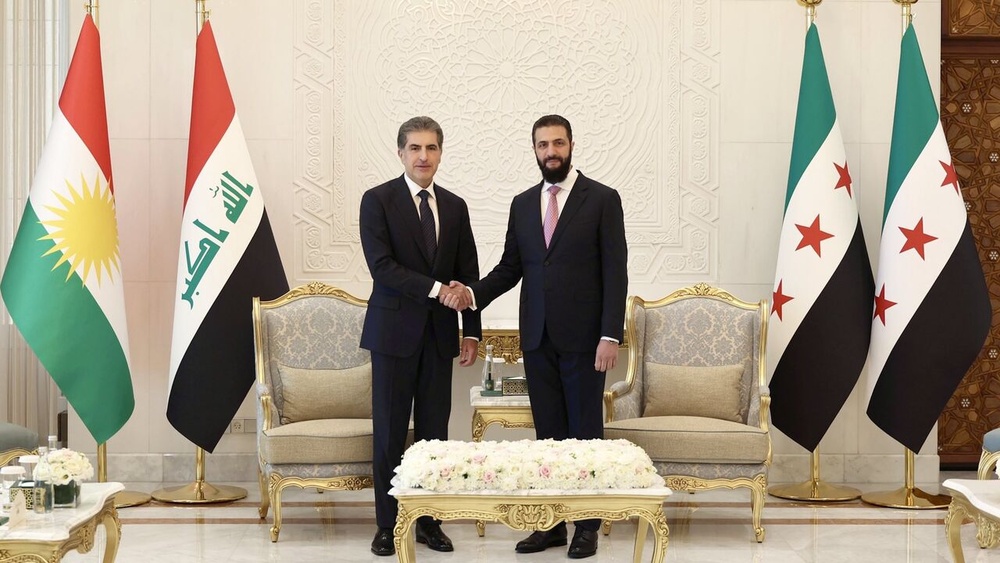
According to Kurdistan, Umbrien Zaman wrote in an analysis for Al-Monitor that this was Nechirvan Barzani’s first official visit to Damascus at the invitation of Ahmed Al-Shara. In this meeting, the two sides discussed the expansion of political, security and economic relations, as well as the process of integrating the Syrian Democratic Forces and the Autonomous Administration of North and East Syria into the central government structure. Barzani was also accompanied on this trip by a delegation of Kurdistan Region businessmen, which indicates the efforts of the two sides to develop economic cooperation.According to Al-Monitor, the images released from the meeting, including the raising of the Kurdistan Regional Government flag alongside the Iraqi flag at the Syrian presidential palace and the release of Ahmed al-Shara’s statement in Kurmanji Kurdish, sent symbolic messages to Kurdish public opinion inside and outside Syria, and indicated Damascus’s efforts to demonstrate an inclusive approach towards the Kurds.
The report adds that Nechirvan Barzani played a key role in helping the United States mediate between Damascus and the Syrian Democratic Forces in January, which led to a ceasefire and a revision of the March 10 integration agreement. Under the revised version of the agreement, the Syrian Democratic Forces and the autonomous administration should be fully integrated into the Syrian government by the end of this year.
Al-Monitor believes that the Damascus visit also reflects the changing balance of power in the Syrian issue.While Ahmed al-Sharaa is now meeting with regional leaders and has established his international standing, Mazloum Abdi, the commander of the Syrian Democratic Forces, no longer enjoys the status he once had. For this reason, contrary to some media reports, a meeting between him and Nechirvan Barzani did not take place in Damascus.
The analysis also emphasizes that by inviting the head of the Iraqi Kurdistan Region, Damascus is seeking to strengthen the region’s role in the developments among the Syrian Kurds and increase the political weight of the Patriotic Council of Syrian Kurds, a movement that is considered the main rival of the Syrian Democratic Forces and has close ties with the Iraqi Kurdistan Democratic Party. In the author’s opinion, this approach could change the political balance in the Kurdish regions of Syria in favor of the movements close to Erbil.Despite some progress in the integration process, including the formation of several joint military brigades, the employment of PA staff in government institutions, the recognition of educational qualifications issued in areas under PA control, and the start of the process of granting citizenship to Kurds without identity cards, significant differences remain. The official acceptance of Kurdish-language education, the integration of the Women’s Defense Units into the Syrian army, and the determination of an acceptable political status for Mazloum Abdi are among the most important unresolved issues between the two sides.
Another part of the report states that the process of integrating the SDF is directly related to the peace talks between Turkey and the Kurdistan Workers’ Party (PKK). According to Al-Monitor, Ankara has consistently called for the dissolution of the SDF due to its links to the PKK.K, and Nechirvan Barzani, given his close ties to Recep Tayyip Erdogan, has encouraged Mazloum Abdi to accelerate the process of merging and dissolving the current structure of these forces. Al-Monitor concludes that the meeting between Nechirvan Barzani and Ahmed al-Sharaa was not just a diplomatic event, but part of the process of redefining the position of Kurdish actors in Syria; a process that could have a decisive impact on both the future of the Syrian Democratic Forces and the political structure of northern and eastern Syria, as well as the peace process between Türkiye and the PKK.


Your Comment