

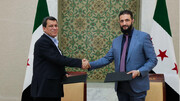
According to KurdPress, the announcement of the formation of the temporary executive office of Hasakah province by the Syrian government is considered one of the most important steps in the process of implementing the agreement between Damascus and the Syrian Democratic Forces (SDF).The composition of this office, with about 60 percent of its members close to the SDF and 40 percent appointed by the central government, has provoked reactions among some Arab activists in the region, but this ratio does not necessarily mean the SDF has a strategic advantage.
It seems that Damascus’s main priority at this stage is not to fully control the management composition, but to restore the formal structure of government to Hasakah province. From the Syrian government’s perspective, restoring the administrative hierarchy and returning government institutions is more important than who currently holds these positions. The temporary nature of this structure also suggests that Damascus will likely gradually change the composition of these institutions in the future, as it increases its executive and security capabilities.According to this model, first state institutions are re-established, then the security and executive capacities of the state are expanded, and in the next stage, with elections, management changes will be carried out within the framework of a legal process with electoral legitimacy.
However, the transitional conditions in Syria have meant that the weight of individuals and their networks of influence is no less than that of official structures. Local managers can gain influence beyond their administrative positions by creating economic, political, and social networks; therefore, the current management composition continues to be important in power equations.
Another feature of recent appointments is Damascus’s attempt to move the integration process away from a purely ethnic framework.The Syrian government has appointed SDF-affiliated administrators in areas such as Qamishli and Dirak, which are divided between the government and the SDF, while appointing Arab administrators close to the government in areas such as Jawadiyah, which is largely under SDF control. This arrangement creates a kind of joint administration based on geographical territory, not ethnic divisions.
On the one hand, this policy increases cooperation between administrators affiliated with the two sides, but on the other hand, it also carries the risk of a different perception of this process, as the SDF may view these appointments as a sign of recognition of its institutional position and seek to further consolidate its influence.
Expanding Security Influence; Damascus’ Main Advantage
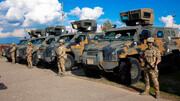
Apart from administrative advantages, the most important development is the expansion of the presence of Syrian Interior Ministry forces in areas that were previously completely under SDF control.In recent weeks, a number of checkpoints at the southern entrance to Hasakah have been handed over from the SDF to Interior Ministry forces, and these forces are now also deployed in parts of the city’s east and west, areas that were not even under government control during the January military operation.
There are also reports of Interior Ministry forces being deployed inside Hasakah and a government checkpoint being set up at the entrance to Kobani, developments that indicate a gradual increase in the government’s security presence in areas formerly under SDF influence.
It is not yet clear whether this will extend to Qamishli, a city of particular symbolic importance to the Kurds, although Hasakah is more important to the Syrian government due to its administrative centrality and strategic location.
A Bargain of Administrative Power for Instrument of Governance
What is taking shape in Hasakah is a bargain between the two sides.Damascus has handed over some of the management of non-security institutions to individuals close to the SDF, but in return, it is gradually taking control of the main instruments of governance, including the police, the judiciary, the power of arrest, and field presence.
This approach could explain why the Syrian government has so far not reacted harshly to some protest actions, including the repeated destruction of signs at the Hasakah Palace of Justice because of the lack of Kurdish language. Damascus seems to have preferred to avoid direct confrontation until its security presence is established and then resume full activity of the judicial institutions.
Competition over hidden power structures
In contrast, the SDF is also unlikely to agree to the complete dissolution of its parallel structures.It is expected that this force will try to maintain its power behind the formal structures by maintaining informal networks, economic influence, local connections and some security structures.
Therefore, the two sides have different perceptions of the integration process. Damascus sees this process as the beginning of the full absorption of the administrative and financial structures of northeastern Syria into the central government, while the SDF sees its wider presence in executive institutions as an opportunity to maintain influence from within the new structures.
On a larger scale, this model could also serve as a model for resolving other ethnic and religious issues in Syria. It seems that Ahmed al-Sharaa is trying to create a framework for managing the demands of other minorities, including the Druze of Sweida, by using the model of limited participation in the northeast; a model in which the central government, while maintaining security control, cedes some local administration to regional actors.
National Context




Your Comment