

According to KurdPress, the Amarji magazine's report on the process of integrating the Syrian Democratic Forces and the Autonomous Administration of North and East Syria into the structure of the Syrian transitional government presents a picture of a decisive stage in the future of the Kurdish regions of the country; a stage that, if completed, will lead to the official dissolution of these two institutions and the beginning of a new political and administrative framework.According to the report, the Syrian Democratic Forces and the Autonomous Administration are expected to announce their official dissolution in the near future, a move that is part of the process of implementing the January 29 agreement between Damascus and the Syrian Kurds. Meanwhile, discussions have begun in northern and eastern Syria about new horizons for Kurdish politics and the participation of democratic forces in the new structure of the country.
Dr. Jahan Saeed Hossam, the newly appointed governor of Qamishlo region and the first woman to hold such a position in Syria, said of the process of implementing the agreement: “There are no major obstacles to the implementation of the January 29 agreement.” She also added: “As a Kurdish woman, I am proud to be at the forefront of responsibility in Hasakah province and I will do my best to live up to the trust that the people have placed in me.According to Hossam, the period in which northern and eastern Syria struggled to maintain autonomy and defend itself against the central government is now over. “Syria is in the process of reconstruction in many areas,” he says. “The self-governing administration has managed this period over the past fourteen years, despite limited resources and difficult conditions. But the stage ahead will bring major changes that will transform not only administrative structures but also the realities on the ground.”
Sihanouk Diphu, an official in the self-governing administration, also acknowledges that fundamental changes are coming, but emphasizes that this process does not simply mean the end of the self-governing administration, but “a transition to new political frameworks.”
In the administrative sector, the integration process has progressed at a remarkable pace.“From day one, we have jointly handled many cases and responsibilities, and now most of the institutions have been integrated into the government structure. Only a few institutions remain, awaiting the arrival of delegations from the Damascus ministries to complete the integration process,” says Hossam.
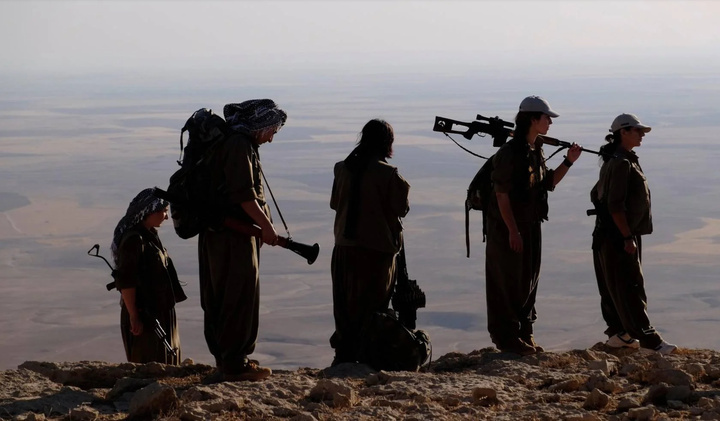
One of the most important unresolved issues is the fate of the Women’s Protection Units (YPJ). “Some former YPJ fighters are being integrated into forces affiliated with the Interior Ministry, but the issue of their joining the Defense Ministry is still under discussion,” Ibrahim Olabi, Syria’s UN envoy, told Amarjit. “We have repeatedly said that the role of women is very important,” he stressed, noting that a special training academy for women’s police and security forces is now operating.
There has also been progress in the areas of education and cultural rights.“The Kurdish-language curriculum that the autonomous administration was implementing, along with primary and secondary school certificates, has been officially recognized by Damascus,” says Hossam. “We are currently reviewing the situation of universities in the Kurdish regions and other higher education institutions in the region, and the transitional government’s Minister of Higher Education has also traveled to Hasakah province to assess the situation,” he says.
According to him, one solution is to establish a new university in Hasakah province. The Syrian Minister of Education has also announced that preparations are underway to develop new educational programs in Kurdish in the Kurdish regions. “The Kurdish, Syriac and Arabic languages have been officially recognized in Hasakah province, and the necessary agreements have been signed,” adds Hossam. “We consider these measures to be very progressive steps, the effects of which will become more apparent in the future.”
However, the report emphasizes that for citizens, political achievements become meaningful when they have an impact on their daily lives.“We are implementing various projects to meet the needs of the people. Education is a priority, and at the same time we are focusing on urban services. The infrastructure is worn out and no longer meets the needs; therefore, the sewage, roads, electricity and water networks will be renovated, and a new power line for the city is currently being built.”
But the reality on the ground remains difficult. The economic crisis, the removal of subsidies and the increase in the cost of living have created widespread dissatisfaction. “People are complaining about salaries, unemployment, lack of electricity, lack of gasoline, the poor condition of roads and water; it doesn’t matter if they are Kurds or Arabs. There are so many problems and not much has been done,” says Mohammad Inu, a resident of Qamishlo. Comparing the current situation with last year, he adds: “During the autonomous administration, goods were cheaper and fuel was distributed.Some say that if this is what integration is supposed to be, it is destroying us. The government may say in the media that it has done this and that, but we do not see any improvement in our daily lives.”
Another problem is the inadequate distribution of new Syrian banknotes. As the deadline for collecting old money is approaching, people are worried that they will miss out on exchanging their money. “How can people trust the government when it does not even send enough new money to the region?” asks Inoue. Nevertheless, Hossam remains optimistic, saying, “There is a clear difference with the previous regime; now the administrators are elected from the local community, and this will give the people more power and rights.”
Finally, the report points to unresolved cases that will determine the ultimate fate of the integration process.“Whether you like it or not, some people are not happy with this agreement and want to destroy it,” says Maryam Jindu, a Yazidi woman from Afrin. “This agreement must resolve many issues, from military integration to the return of displaced people and the integration of institutions into the state structure. I want this agreement to be implemented to the end, because if new problems arise, it is the community that will suffer.”
In his conclusion, Amarji concludes that the possible dissolution of the Syrian Democratic Forces and the Autonomous Administration is not simply the end of a political and military structure, but could also be the beginning of the formation of new political forces and frameworks for the Syrian Kurds and even the future of the country’s political system; although what form these new structures will take and which actors will play a decisive role in them remains an unanswered question.


Your Comment