

According to Kurdpress, with the official approval of Recep Tayyip Erdogan to draft a law to speed up the dissolution of the Turkish Kurdistan Workers' Party (PKK), the most important question now is not the principle of passing the law, but the time of implementation and its content. Although the Turkish government has confirmed the existence of such a plan for the first time, it is still silent about the scope of amnesty, the fate of senior commanders, the position of Abdullah Öcalan and even the time of presenting the bill to the parliament; The silence that has caused the publication of contradictory narratives in the media close to the government and political circles.
According to the National Context analytical report, what is clear so far of Ankara's official positions has been limited but relatively consistent. The Turkish government emphasizes that this law will be developed only for the PKK case, its implementation period will be limited and it will be implemented only after disarmament is achieved. Also, Ankara is trying to present the process not as a "peace agreement" but as a "dissolution and termination of illegal armed structures" to avoid any perception of equal negotiations with the PKK or the granting of a general amnesty.
The main ambiguity comes back to the details of the law. Different media have presented completely different narratives.
Aydinlik newspaper has claimed that the bill will contain seven to twelve articles and will cover more than 20,000 people. According to this report, PKK members will be classified based on their organizational position, type of charge and the amount of participation in armed activities. Low-ranking forces and part of the armed people may enjoy a reduced sentence or parole, but the senior commanders of the Union of Kurdistan Communities (KCK) will either be kept for some time in Amrali prison or transferred to third countries under supervision.
On the other hand, "Nafs" news site has presented a much more limited picture. This media writes that the law will probably have less than ten articles, it will only include members who have not been involved in criminal offenses, judicial supervision and a multi-year ban on political activity will be considered for them, and neither senior commanders nor Abdullah Ocalan will be subject to it.
These differences are not even consistent with the previous reports of the same media. The publication previously wrote that the initial draft could provide the basis for Ocalan's participation in the negotiations, but now insists that he will remain a convicted prisoner. These contradictions show that there is still no consensus among the Justice and Development Party, the National Movement Party, the security institutions and the Dem Party regarding the final form of the law.
According to the author, the main difference is the order of implementation of obligations; A problem that is rooted in the deep mistrust of both sides.
The Turkish government wants to first ensure that the disarmament process is irreversible and then pass the law. On the other hand, the PKK believes that if it hands over its weapons before the law is passed, it will only lose its means of pressure, without any guarantee that the government will fulfill its obligations.
This difference also has a practical dimension; PKK forces cannot leave the mountain and enter Türkiye without a legal framework, because they will still face the risk of arrest. Therefore, both sides want the other to take the first irreversible step.
Turkish officials believe that the process of handing over weapons is still not satisfactory.
Omar Celik, the spokesperson of the Justice and Development Party, stated that the amount of delivered weapons is not enough, and "Turkey" newspaper quoted security sources and wrote that the government only observed signs of the movement of troops, but disarmament has not yet been verified.
On the other hand, PKK and its allies argue that the most important measures; They have done, including leaving Turkey, dissolving the organization and ending the armed struggle. From their point of view, it is now the government's turn to provide the promised legal framework.
According to this report, Israel's war against Iran caused the legislative process in Türkiye to practically stop. During this crisis, Israel tried to take advantage of the capacity of Kurdish groups against it, but the PKK refused to enter into this confrontation, which was a positive sign from Ankara's point of view and showed that this group does not intend to work on a front aligned with Israel against Iran at the same time as the disarmament process.
However, the relative end of the war and the reduction of immediate threats against Türkiye have also reduced the government's incentive to speed up the agreement process. The author believes that the more secure Ankara feels, the less pressure it will have to quickly finalize the agreement.
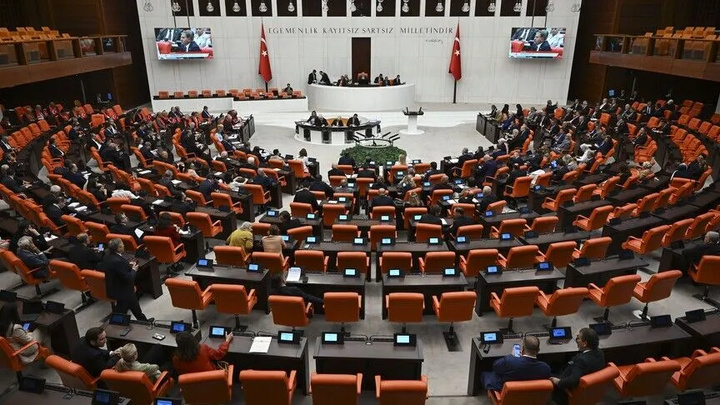
National Context concludes that some kind of PKK-specific law is still likely to be passed this summer, but it would likely be limited, temporary, and conditional on disarmament, and would fall short of amnesty or sweeping reforms to the Kurdish issue.
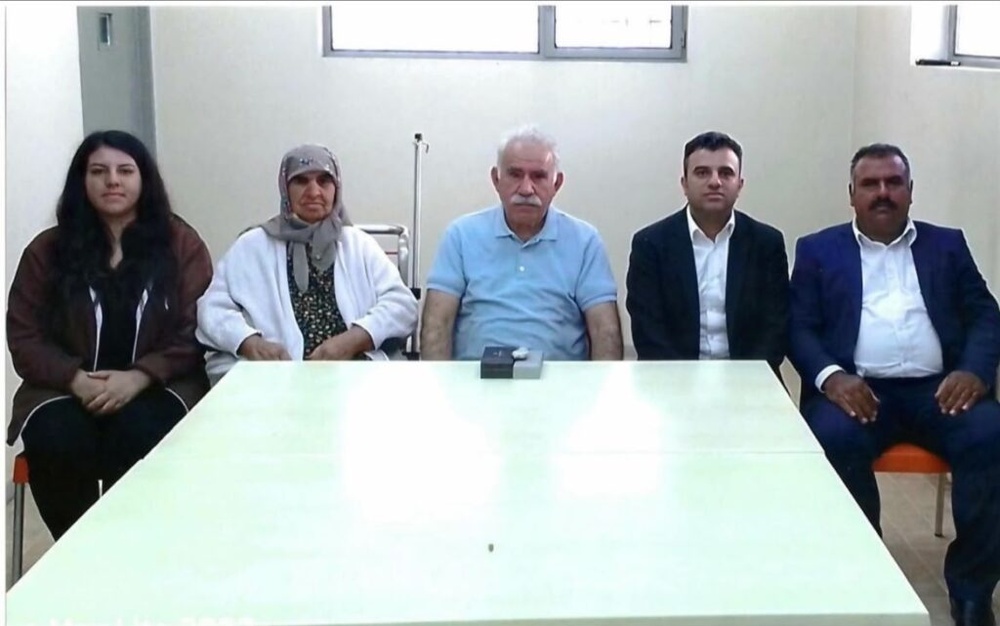
At the same time, the author suggests that Abdullah Öcalan's situation will undergo changes in the future. The proposal of Dolat Bagheli, the leader of the National Movement Party, to play the role of Öcalan in coordinating the peace process, could be the basis for his transfer from Amrali prison to some form of house arrest or limited supervision; However, due to the complexity of negotiations in Türkiye, Iraq and Syria, such a change will probably proceed much slower than the expectations of both sides.




Your Comment