

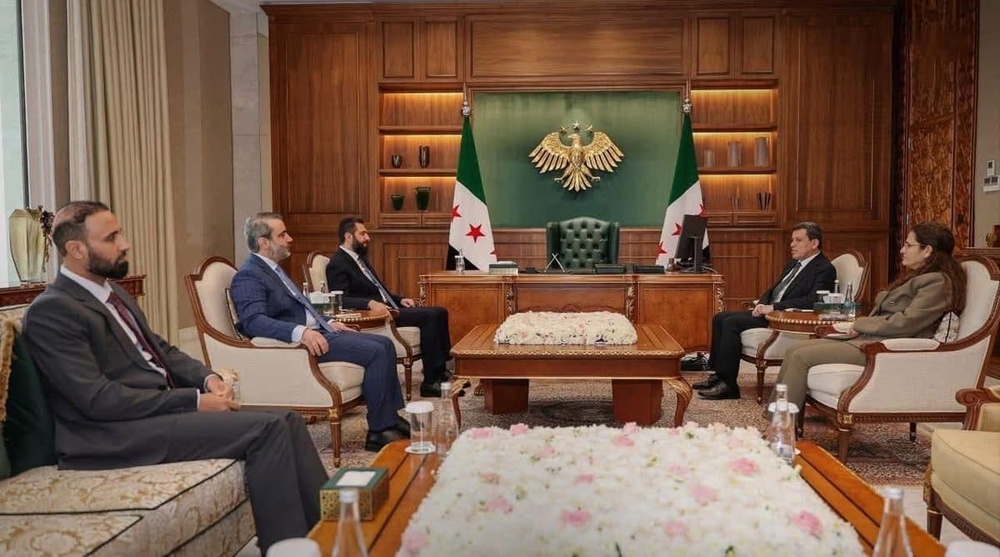
According to KurdPress, the successive meetings of Syrian President Ahmed al-Sharaa with Nechirvan Barzani, President of the Kurdistan Region, and then Mazloum Abdi, Commander of the Syrian Democratic Forces, are considered the most important political development in the Syrian Kurdish case since the January 2026 agreement. Reports from the National and Asharq al-Awsat newspapers indicate that although fundamental differences between Damascus and the Syrian Democratic Forces remain, the atmosphere of the negotiations has changed significantly compared to previous months, and the two sides are now focusing more on the mechanism for implementing it rather than discussing the principle of the agreement.The most important development of these meetings is the breaking of the political deadlock between Damascus and the Syrian Democratic Forces. The direct meeting between Ahmed al-Sharaa and Mazloum Abdi in Damascus showed that the negotiations have moved beyond the level of technical talks and expert delegations and have been transferred to the level of political and military leaders of both sides. This shows that the political will to implement the January agreement still exists and that the path of negotiations has been reactivated after months of suspension.
According to the National, the main focus of the meeting between al-Sharaa and Abdi was the continuation of the process of integrating the Syrian Democratic Forces into the official structures of the Syrian government. This development shows that the main difference is no longer over the principle of integration, but over the manner, timing and structure of its implementation.In other words, the idea of ending the independent military structure of the SDF and integrating its forces into the security and military institutions of the Syrian government has gradually become an accepted framework in the negotiations.
Sources close to the SDF, cited by the National, have emphasized that Mazloum Abdi has also accepted the principle of ending the independent structure of these forces, but wants to guarantee the position of the commanders of these forces in the new Syrian army and maintain a broad role for the Kurds in the police forces of the Kurdish regions. Therefore, the main disagreement now is about how to maintain the influence and participation of the Kurds in the future security structure of Syria, not about the principle of integration.
Meanwhile, Nechirvan Barzani’s role in bringing the views of Damascus and the Syrian Kurds closer together has been noted by both media outlets.Asharq Al-Awsat, citing Kurdish sources, reported that the visit of the head of the Kurdistan Region to Damascus created a positive atmosphere for the next meeting between al-Sharaa and Abdi. The National also introduced Barzani as one of the important figures in the January agreement process who has tried to reduce the gap between the Syrian government and the Syrian Democratic Forces.
Another important topic of the negotiations is the possibility of transferring some local powers to the Kurds within the framework of the new Syrian government. According to the National, Damascus is likely to be ready to transfer some of the management of the police forces in northeastern Syria to local forces; an issue that could reduce some of the Kurds' concerns about maintaining security and administering the Kurdish areas. However, there are still serious differences over the status of the military forces and the army's command structure.The recent talks have not been limited to military issues, and have also included political, cultural and social issues for the Syrian Kurds. Asharq Al-Awsat reported that issues such as Kurdish language training, the return of refugees, public services, administrative issues and cultural rights were also raised in the talks. The raising of these issues shows that the current process is not only about the integration of the Syrian Democratic Forces, but also about the future of the Kurds’ place in the political and social structure of Syria after the war.
There are also signs of increasing optimism among the Kurds about the process of negotiations. Sources close to the Syrian Democratic Forces have told Asharq Al-Awsat that the recent talks could reduce remaining differences.This assessment comes at a time when the implementation of the January agreement has been virtually deadlocked in recent months and there are concerns about its failure.
The role of the United States is also considered to be one of the influential factors in this process. The National has recalled that the January agreement was brokered by Washington and that in recent months the United States has asked the Syrian Democratic Forces to cede parts of the Arab areas under their control to the Damascus government. These pressures, along with regional changes, have helped increase the willingness of both sides to reach an agreement.
The simultaneous presence of Mazloum Abdi, Ilham Ahmed, and Syrian government officials in the Damascus talks shows that the discussions go beyond security issues and also concern the political position of the Kurds in the future structure of Syria.If the negotiations progress, the possibility of formal participation of Kurdish representatives in state institutions and the consolidation of some of their cultural and administrative rights will increase.
Despite these positive developments, strategic differences remain. The most important unresolved issues include the position of the commanders of the Syrian Democratic Forces in the Syrian army, the status of the women's defense units, the extent of the powers of the local police forces, the method of training in the Kurdish language, the return of refugees, and the limits of the administrative powers of the Kurdish-populated areas.
Overall, the reports by The National and Asharq Al-Awsat show that the Syrian Kurdish issue has entered a new phase. If in recent months the main disagreement between Damascus and the Syrian Democratic Forces was over the principle of integration, now the negotiations have moved towards determining the implementation details of this process.Nechirvan Barzani's trip to Damascus and the direct meeting between Ahmed al-Sharaa and Mazloum Abdi are a sign of an effort to create a compromise between the two sides, which, if successful, could be one of the most important determining factors in the formation of a new political order in Syria.


Your Comment