

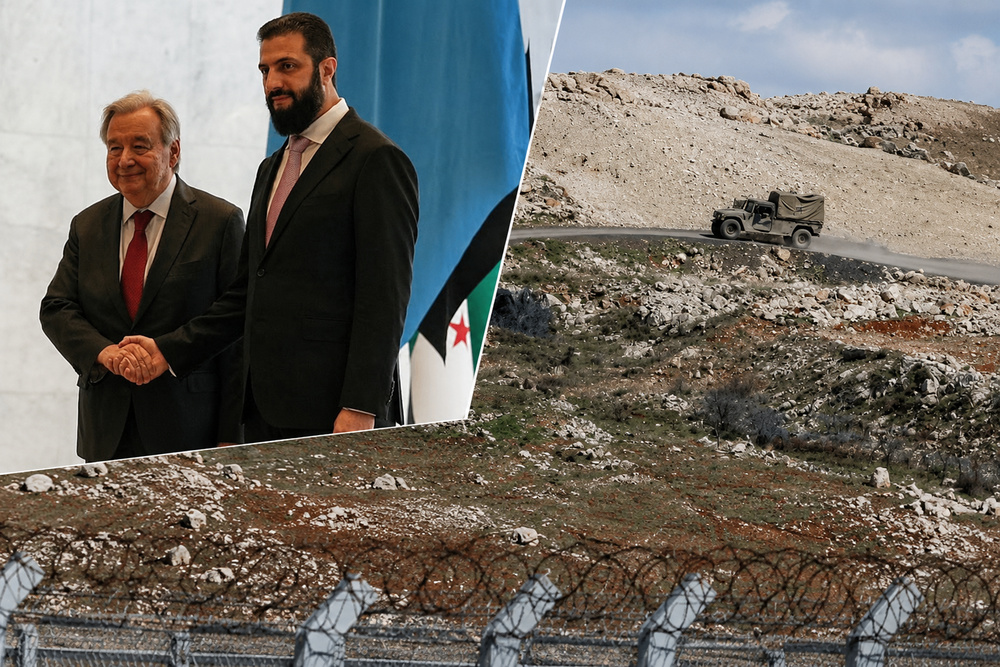
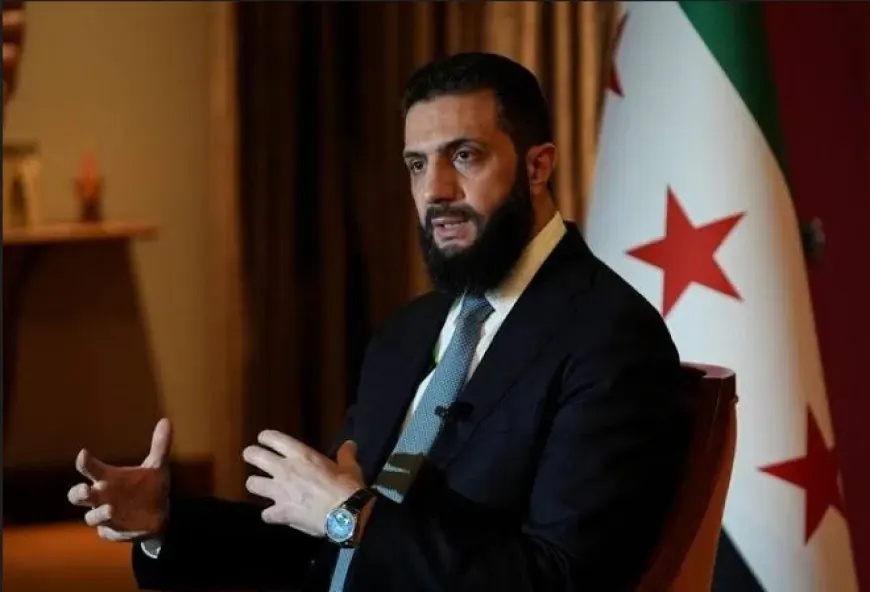
According to Kurdpress, French President Emmanuel Macron met with Ahmad al-Sharaa, the head of Syria's interim government, at the People's Palace during his visit to Damascus. During the meeting, both sides emphasized the signing of cooperation agreements across various sectors, support for Syria's reconstruction process, and the strengthening of economic ties between the two nations.
The meeting, attended by officials and business figures from both sides, focused on ways to expand economic cooperation between France and Syria. The parties announced that cooperation would resume based on mutual interests, particularly in the sectors of transportation, energy, water, airports, banking, the food industry, and digital infrastructure. It was also emphasized that this cooperation would not be limited to France and Syria alone; countries in the Persian Gulf region would also participate in certain projects.
Speaking at the meeting, Ahmad al-Shara' stated that Syria seeks to open a new chapter in economic cooperation. Highlighting the country's strategic location, he noted that Syria could become a hub connecting trade routes between the Mediterranean, the Persian Gulf states, and Iraq. He further emphasized that Damascus aims to establish a framework for economic agreements grounded in law and formal institutions.
The head of Syria's interim government cited France's previous agreements regarding the port of Latakia as an example of successful cooperation between the two nations, adding that reconstruction plans prioritize the development of ports, airports, and energy and power grids, as well as the modernization of digital infrastructure, the healthcare sector, the food industry, and the exploration of energy resources in Syrian territorial waters.
He also noted that last May, Syria signed contracts with the American company ConocoPhillips, the French company TotalEnergies, and QatarEnergy to conduct oil and gas exploration operations in Syrian territorial waters.
During the meeting, Emmanuel Macron announced the formation of joint economic committees to advance Syria's reconstruction process, stating that France is ready to participate in energy and banking projects and—in collaboration with Persian Gulf states—could establish joint ventures to implement economic initiatives.
Emphasizing his country's support for the Syrian people, the French President remarked: "Syria faces major challenges, yet it possesses significant opportunities for cooperation with French companies and institutions."
Macron also noted that, during his visit, he had met with representatives from various Syrian groups and witnessed firsthand the spirit of hope and mutual respect among them. He reiterated that France would continue to support Syria's unity, stability, and tranquility.
Continuing the meeting, Nidal Al-Shaar, Minister of Economy and Industry for the Syrian Interim Government, stated that Damascus seeks active French participation in the industrial, transport, infrastructure, healthcare, education, and vocational training sectors, noting that such cooperation could yield mutual benefits for both nations.
Talal Al-Hilali, head of the Syrian Interim Government’s economic agreements delegation, also described the meeting between French and Syrian officials as a significant step toward the economic development of both countries.
On the sidelines of the meeting, Patrick Pouyanné, CEO of TotalEnergies, remarked that Syria could become a vital route for transporting Iraqi oil to the Mediterranean, serving as an alternative to the Strait of Hormuz. He added that, given the recent tensions between Iran, Israel, and the United States and the potential for disruptions to shipping through the Strait of Hormuz, the route via Syria could take on special strategic importance for transporting oil to Europe.




Your Comment